U.S. Supreme Court Axes Protections for Deep State
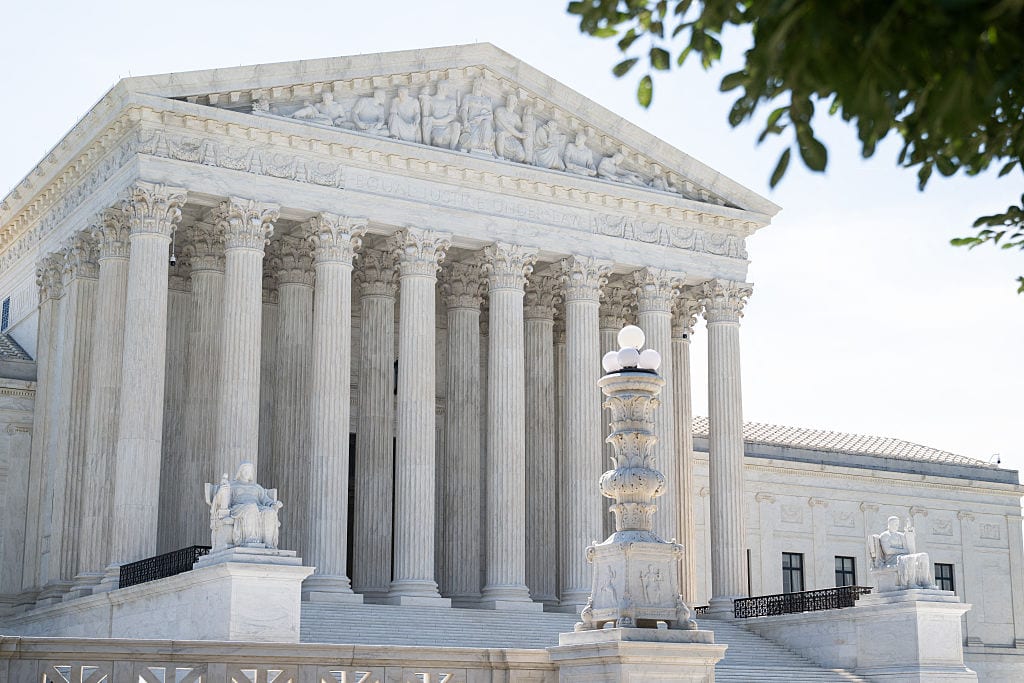
The U.S. Supreme Court ruled 6-3 that President Donald J. Trump can fire Democrat members of the Federal Trade Commission (FTC), overruling Humphrey’s Executor, a 90-year-old Court precedent that limited presidents’ ability to remove officers of so-called “independent agencies.”
The Court’s Ruling
“Nearly 250 years ago, the Framers decided to vest ‘[t]he executive Power’ in one person – ‘a President of the United States of America,’” Chief Justice John Roberts wrote for the Court’s majority.
“Since its creation in 1914, the FTC has accumulated vast rulemaking, enforcement, and adjudicatory powers under more than 80 statutes,” Roberts continued.
“Its powers, however, do not belong to the President or his appointees alone; they instead belong to five Commissioners, each of whom serves for seven years and may be removed by the President only ‘for inefficiency, neglect of duty, or malfeasance in office,’” Roberts explained, citing the Federal Trade Commission Act which insulated commissioners from democratic accountability.
“We hold that such protections from removal is contrary to the separation of powers enshrined in the Constitution.”
Chief Justice Roberts was joined in the majority by Justices Alito, Gorsuch, Kavanaugh and Barrett. Justice Thomas joined most of the Court’s opinion, while Justice Sotomayor authored a dissenting opinion, joined by Justices Kagan and Jackson.
Case Background
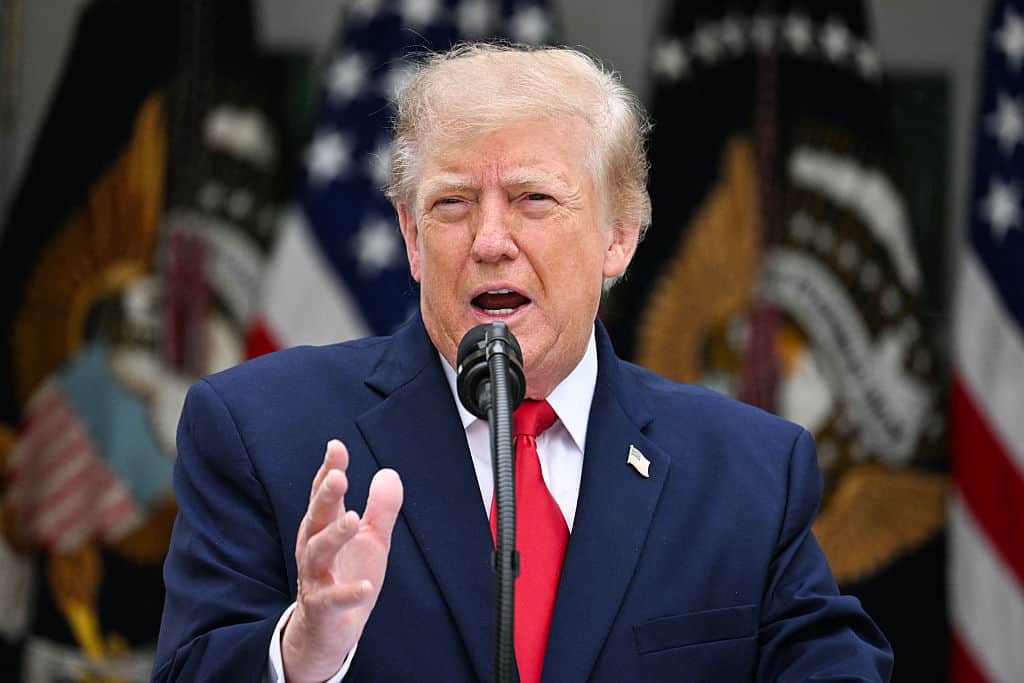
The present case stems from President Trump’s decision in early 2025 to fire two Democrat FTC Commissioners, Rebecca Slaughter and Alvaro Bedoya, telling them their “continued service on the FTC [was] inconsistent with [his] Administration’s priorities.”
However, President Trump did not assert that they were inefficient, negligent or malfeasant in office, which, under the FTC Act, would have allowed him to remove the commissioners “for-cause.”
Rather, the president removed them “pursuant to [his] authority under Article II of the Constitution” which states: “The executive Power shall be vested in a President of the United States of America.”
Presidential Power
The Constitution’s framers “rejected a committee-style Executive Branch in favor of a unitary and accountable President,” the chief justice stated. The president’s power included his ability to remove executive officers at will.
In 1926, the U.S. Supreme Court reaffirmed this precedent after President Wilson fired Portland’s postmaster, Frank Myers, who then sued the president for backpay. In Myers v. United States, the Court rejected Myers’ suit and “reaffirmed the President’s power to fire his subordinates at will.”
Nine years later, the Court issued Humphrey’s Executor v. United States, which “arose out of President Roosevelt’s decision to fire one of President Hoover’s appointees to the Federal Trade Commission, William Humphrey,” two years into his seven-year term.
After Humphrey died, the executor of his estate sued for backpay. The U.S. Supreme Court subsequently ruled unanimously in favor of Humphrey, carving out an exception to Myers, deciding that some executive officers’ jobs – including those of FTC commissioners – were “neither political nor executive,” and were therefore immune from being fired by the president except “for cause.”
In the present case (Trump v. Slaughter), the Court expressly overruled Humphrey’s Executor and greenlighted President Trump’s decision to fire Rebecca Slaughter.
Why It Matters
As Chief Justice Roberts concluded, “Our Constitution creates three branches, but only one President. … Subordinates who exercise the President’s power are subject to removal by him. Then, and only then, can they remain accountable to the President, and the President to the people.”
Down through history, Americans have treasured their ability to shape, change and correct their government at the ballot box in regularly held elections. This practice makes our government one that is “of the people, by the people, [and] for the people.”
However, in recent decades, particularly in the 20th century, Congress repeatedly delegated its legislative powers to “independent agencies” in the executive branch which were insulated from the public, and above accountability. These agencies became known as the “fourth branch” of government or the “Administrative State.”
In Slaughter, the Court restores accountability to these agencies and ensures Americans happy or unhappy with executive branch agencies’ decisions know where to direct their thanks or ire: the democratically elected president of the United States.
As Dr. John Eastman writes in The Federalist, “The executive power … was vested in a single president precisely so the American people would know whom to praise or blame for the execution of federal law.”
“Accountability requires authority,” he adds. “A president who cannot remove those exercising executive power cannot truly be held responsible for how that power is exercised.”
The Court’s Slaughter decision serves as a reminder to all Americans of their responsibility to keep the government honest and accountable. If they’re unhappy with the state of things – now or in the future – it’s up to them to register to vote, get engaged and make their voices heard.
The case is Trump v. Slaughter.
Related articles and resources:
BREAKING – Supreme Court Sides with FDA and President Trump Over Abortion Pill Regulations
House Passes Bill Limiting Federal Judges’ Authority to Block Presidential Policies
Supreme Court Reinstates Trump Admin Requirement That Passports Display Biological Sex
Photo from Getty Images.


ABOUT THE AUTHOR