Protecting Women While Reforming College Sports
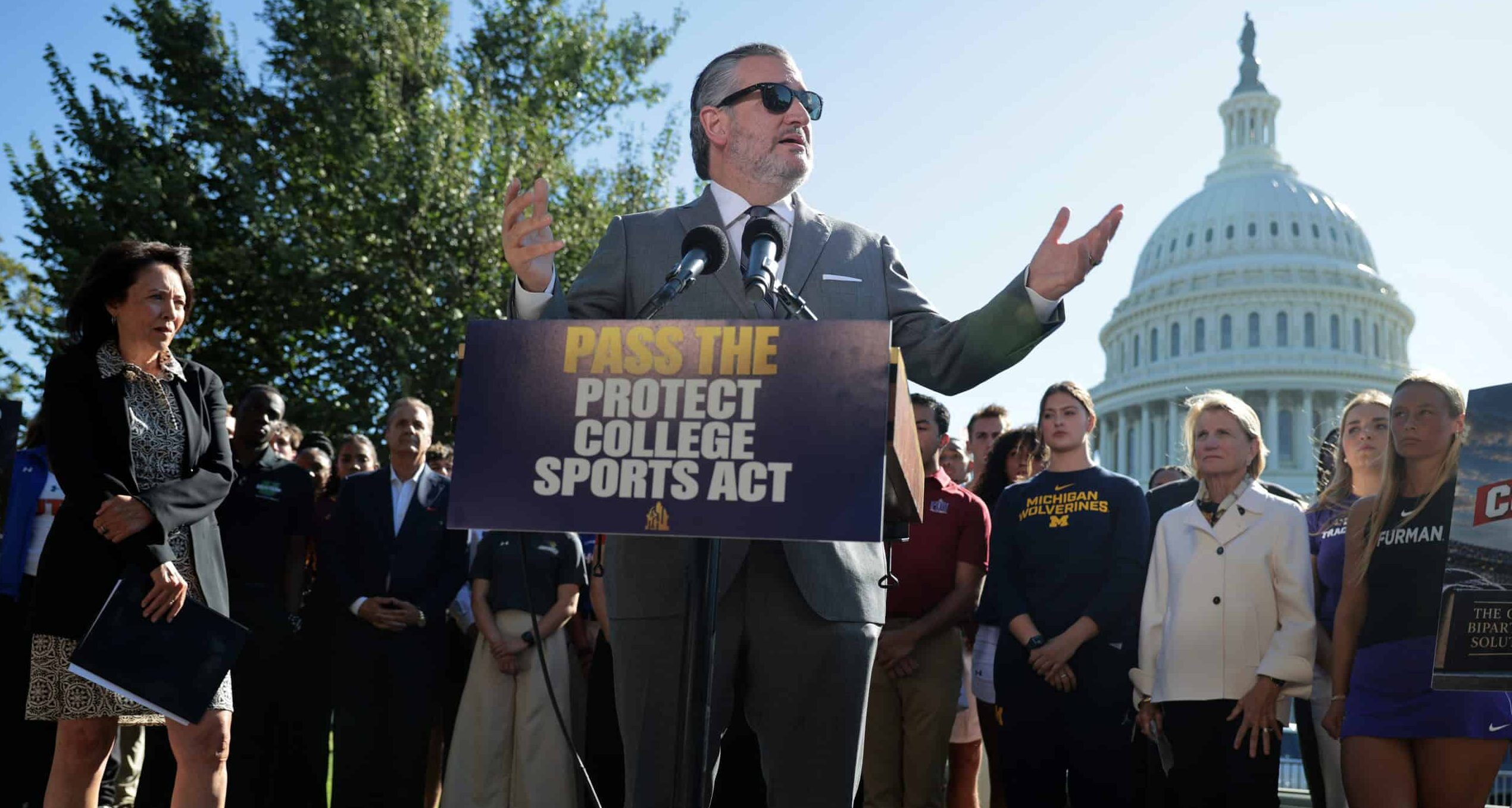
In a rare display of bipartisanship, the United States Senate passed the “Protect College Sports Act” (S. 4668), legislation that both sets and affirms existing rules pertaining to college athletics.
By a vote of 77-22, the sweeping bill now moves to the House, where its fate remains uncertain.
Senator Ted Cruz (R-Tex.), who co-sponsored the legislation along with Sen. Maria Cantwell (D-Wash.), detailed its major provisions.
“It protects NIL opportunities, because student-athletes deserve the opportunity to benefit from their talent without being taken advantage of by unscrupulous agents and backdoor deals,” Sen. Cruz reflected. “It creates clear, enforceable rules for eligibility and transfers. It protects our traditions and rivalries. It prevents the most powerful and wealthy conferences from breaking away to form a super league.”
At the heart of the bill has been a desire to stop the metaphorical bleeding that’s ensued since college athletes have been allowed to be paid to play, a program known as “NIL” or “name, image and likeness.”
Since 2021, college athletes have been permitted to sign endorsement deals, receive compensation for social media activity, make personal appearances, sign autographs and sell merchandise. Beginning around the same time period, changes to the “transfer portal and immediate-eligibility rules” dramatically increased the number of student-athletes changing schools in search of a better deal.
“For the past three years, I have worked to find a way to bring order to the chaos consuming the new era of college sports,” Cruz said.
Under the legislation passed in the Senate, athletes would be required to report any compensation of more than $600. Additionally, student-athletes would be limited to five years of eligibility and only be allowed to transfer once throughout their collegiate playing career without having to sit out a year.
It’s an adage that “the devil is in the details,” and that can certainly apply to cumbersome legislation that often runs hundreds of pages or more. Recently, our friends at Alliance Defending Freedom (ADF) were reviewing a draft of the bill and identified “concerning language” that could have been used to undermine state laws designed to explicitly protect women’s sports.
For example, in Florida, the “Fairness in Women’s Sports Act” requires separate sex-specific athletic teams or sports and provides that women’s teams are only for students who are female. Likewise, in Idaho, women’s and girls’ sports are reserved for biological females. In fact, nearly two dozen states have similar laws on the books.
Thanks to ADF, a change was made to the new legislation that ensures the legality of those hard-fought state laws would not be jeopardized.
Matt Sharp, senior counsel at ADF, applauded the decision.
“With this fix, Congress can still set national rules for athletic compensation and transfers; states can still keep their teams for women,” he said. “Those goals were never in conflict. And with the amended language, the sponsors reaffirmed their commitment to preserve state-level protections for women’s sports.”
Why wouldn’t the bill easily pass in the House?
Some legislators believe any regulation at all constitutes the codification of unfair profiteering on behalf of colleges and universities. Basically, critics are suggesting schools are cashing in on student-athletes’ talents. One hotly debated provision in the new legislation prohibits student-athletes from suing the NCAA, athletic conferences, or schools regarding the revised rules.
Sen. Chris Murphy (D-Conn.) voted against the “Protect College Sports Act,” and explained why, suggesting, “What this bill does, at its core, is to protect a system of exploitation.”
If the bill manages to make it through the House this fall, President Trump is expected to sign it into law.


ABOUT THE AUTHOR