AI Will Never Bear God’s Image
President Donald J. Trump recently tried to transform the world’s perspective on AI, declaring anyone who does not refer to artificial intelligence as “Super Intelligence,” “THE ENEMY!” All future U.S. government documents will also reflect this verbiage.
“The use of the word artificial makes intelligence sound fake,” he said in an address before the United Nations. “It is not fake. It’s actually amazing.”
In the same vein, Anthropic recently announced it would prohibit “sustained, needless cruelty towards its AI models” like Claude. Under the new policy, Claude will stop responding to a user if they are “persistently abusive” towards it.
Anthropic adopted the new policy because it believes “that AI is, or will soon be, conscious.” Many people, however, regardless of any new policy, are already treating AI as if it is conscious.
Consider Jacob Irwin, a 30-year-old IT worker, who developed a toxic “relationship” with ChatGPT after a difficult breakup. Or 16-year-old Adam Raine, who committed suicide after becoming so attached to ChatGPT-4o that he treated it as his “friend and confidante.”
Tragic stories like these are becoming increasingly common. Many people today, starved for deep, human relationships, are highly susceptible to developing a harmful bond to a technology that can often appear to be sentient, thoughtful and caring.
Calls to treat AI as if it has a conscious mind, as if it has a soul, will likely only grow louder as the technology advances, and its use becomes more widespread. With it will come the temptation to let AI’s developers and elected officials determine how it should be “treated.”
Here is where the Christian must step in. While AI technology may be new, it is subject to the same theological realities as every technology that has ever been invented.
Robert Jastrow’s famous quote from God and the Astronomers comes to mind: “The scientist … has scaled the mountains of ignorance, he is about to conquer the highest peak; as he pulls himself over the final rock, he is greeted by a band of theologians who have been sitting there for centuries.”
It is the Christians who are experts on what AI might become, not AI developers. We are, in fact, the ones who are being “guided into all truth” (John 16:13, ESV).
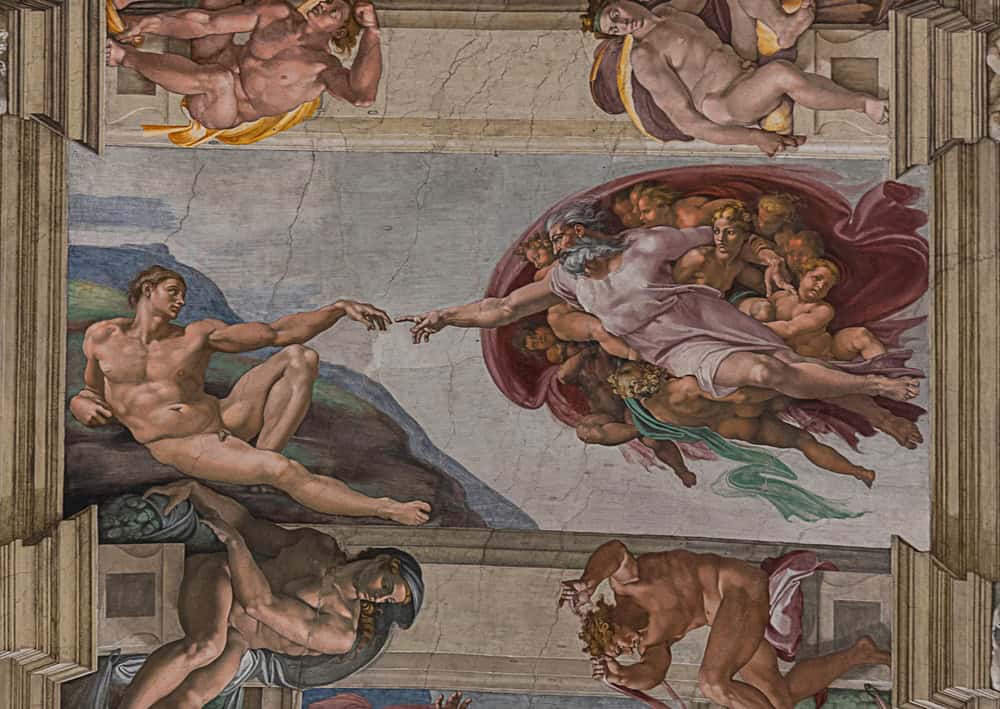
For the good of the world, Christians must state this fact clearly: AI will never bear God’s image. Only human beings are made in the Imago Dei. That truth has been established by God since the very beginning (Gen. 1:27).
What exactly does it mean to bear God’s image? One view is that the Imago Dei, ultimately, is human identity. Dr. Ryan Peterson in his work The Imago Dei as Human Identity: A Theological Interpretation, proposes this.
“[Humanity] is what it is because it is identified by God as God’s image,” Peterson writes. “The various powers and attributes belonging to humanity follow from God’s determination that humanity will be God’s image.”
Because of our identity as God’s image, human beings have various capacities integral to our identity, including our capacity for rationality and ability to make moral choices; our capacity for relationality, to be creatures who love one other; and our capacity to exercise dominion and stewardship over creation.
AI will never have this identity, nor will it have these capacities, because only mankind bears God’s image. Viewed in light of the Christian story, only mankind is, and only mankind ever will be, “super.”
In City of God, Saint Augustine writes about man’s unique identity and position in the universe – and that man, as one who has an immaterial and rational soul, will always be superior to irrational materials (like AI) that are not, and never will, be ensouled.
“But as the sentient nature, even when it feels pain, is superior to the stony, which can feel none, so the rational nature, even when wretched, is more excellent than that which lacks reason or feeling, and can therefore experience no misery,” he writes.
Likewise, Augustine explains in his Literal Commentary on Genesis, “Man’s excellence consists in the fact that God made him to His own image by giving him an intellectual soul, which raises him above the beasts of the field.”
Following Augustine, Saint Thomas Aquinas teaches that mankind alone bears God’s image. “It is clear, therefore, that intellectual creatures alone, properly speaking, are made to God’s image,” he affirms.
Continuing in the Christian intellectual tradition, Pope Leo XIV brought the same principle to bear in his encyclical letter Magnifica Humanitas, released May 25, 2026.
“We must avoid the misconception of equating this type of ‘intelligence’ with that of human beings,” Pope Leo cautioned. “These systems merely imitate certain functions of human intelligence.”
“At the heart of the Christian understanding of the human person lies the great biblical affirmation that men and women are created in the image and likeness of the Triune God,” he stated. In other words, only human beings bear God’s image.
To be human means to bear God’s image as embodied, relational souls who can exercise reason to make moral choices.
This truth should shape what language we use when we discuss AI, our interactions with the technology, how we think about the economics of AI, and how – or whether – it replaces human labor. And it should color our “relationship” with AI, reminding us that our “conversations” with it will never compare to those in real human relationships.
Bruce Marshall, in his book, The World, The Flesh and Father Smith, writes a fictional, yet prescient, homily delivered by Father Scott at the 50th anniversary of his bishop’s ordination to the priesthood. It serves as a good reminder for us today, as we encounter a new technology that far surpasses anything human beings have created before.
The priest denounces “The myth of progress which assumed that men went on becoming automatically and inevitably more and more civilized and that the habits of tomorrow would be as superior as those of today were to those of yesterday. This, too, was a grave error.
“For true progress was moral rather than mechanical: if there were to be more switches, more buttons, more batteries, there must also be more restraints, more austerities, more unselfishness, more humilities, more prayers, more contemplations on the real end of man.”
The real end of man – union with God – is a higher calling than AI could ever obtain, because only mankind bears God’s image.
Related articles and resources:
How to Practice Discernment With Artificial Intelligence
Artificial Intelligence — How Can Christians Respond?
Artificial Intelligence — Here’s What Christians Need to Know
Photo from Shutterstock.