My Visit to Auschwitz This Week
This week, while at a conference in Krakow, Poland, I took a day to visit two of the most notorious Nazi death camps, Auschwitz and Birkenau, both situated in Oświęcim, a small village in southern Poland. It was surreal to visit a place where such intentionally inhumane torture and murder happened on a massively industrial scale.
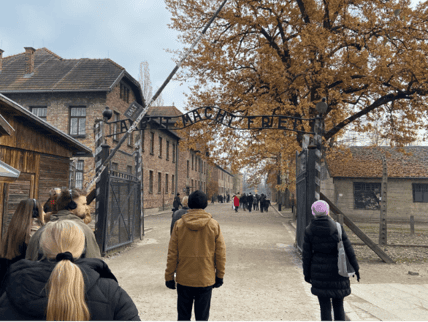
There I learned that Auschwitz, one of the earliest Nazi extermination camps, was housed in a camp of abandoned Polish army barracks. Here is the infamous gate that welcomed all prisoners, promising with the German words Arbeit macht frei: Work would make one free.
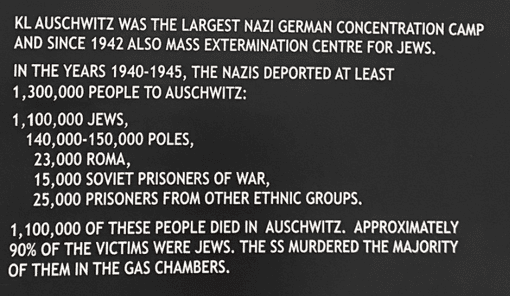
Of course, they would be free only after they worked themselves to death in intentionally subhuman conditions. The SS mission, as posted in the camp for all visitors to see, was accomplished in the following ways:
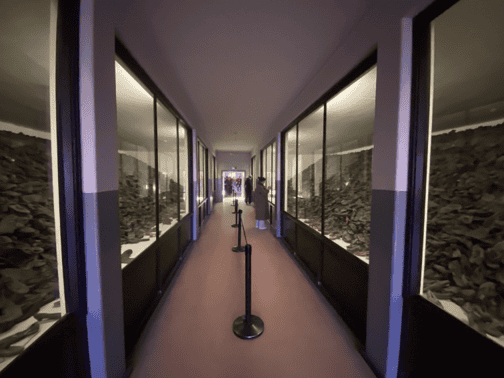
One of the starkest experiences, after seeing the execution wall and gas chamber, was seeing all the discarded shoes of the prisoners who would no longer need them after death. There were enormous piles of them, demonstrated here.
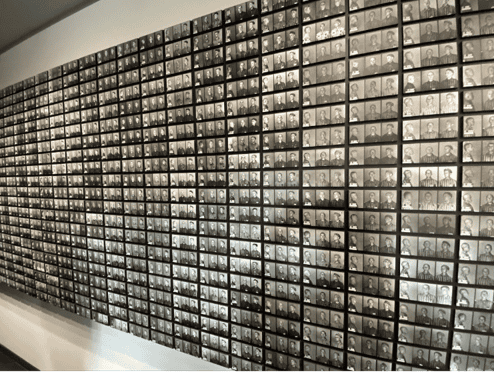
Thousands of prisoner photos were displayed, nearly all of them killed in the gas chambers, never to be heard from again, until now as they gaze at all who pass by, asking not to be forgotten.
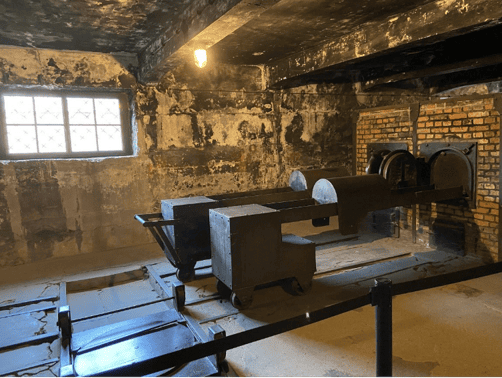
Auschwitz was, initially, a relatively small extermination camp with one full-time gas chamber and crematorium as seen here:
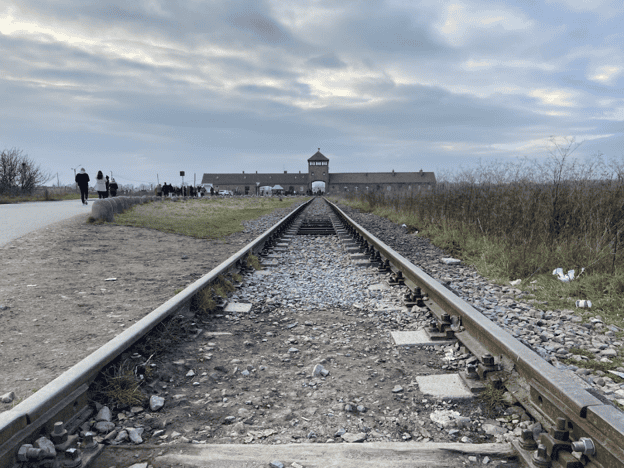
After a few years of trying to exterminate millions of Jews, Poles, Gypsies and Russians, the Nazis realized they needed larger extermination camps. So, they built one on the other side of the village of Oświęcim that our guide explained was 20 times larger than Auschwitz I. Auschwitz II, or Birkenau, once occupied fields as far as the eye could see. This amplified the Nazi killing machine as 90% of the 1.1 million people murdered at Auschwitz died at Birkenau.
While there were more than 44,000 Nazi prisoner camps across Europe between 1933 to 1945, there are six primary extermination camps which practiced industrialized killing. These were Auschwitz-Birkenau, Majdanek, Chełmno, Bełżec, Sobibór, and Treblinka. You can see a map of the Polish camps here.
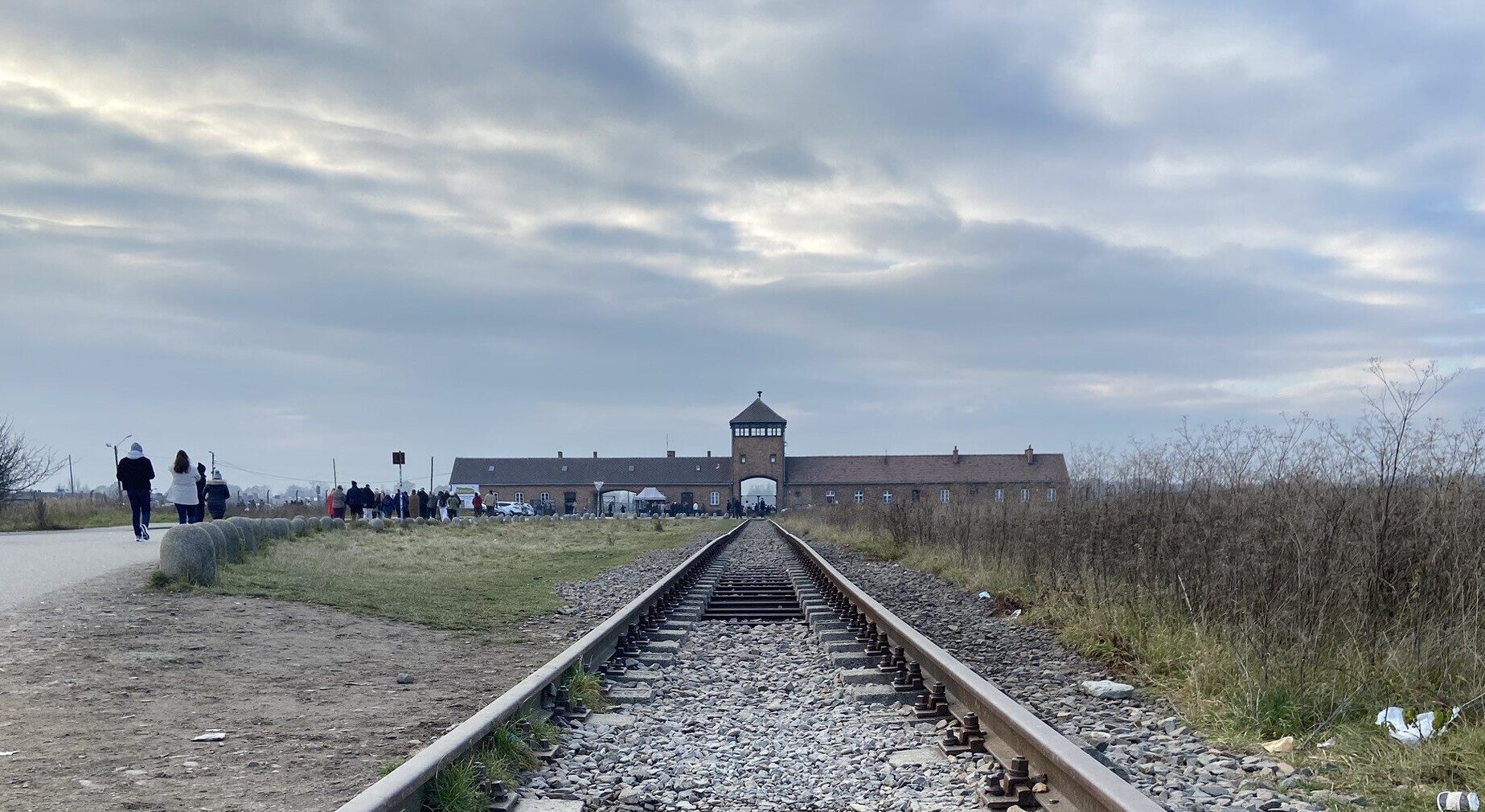
The vastness of Birkenau could not be overstated, stretching as far as the eye can see. It had several large gas chambers which were destroyed by the Nazis at liberation. They knew they were committing crimes against humanity and tried to destroy the evidence.
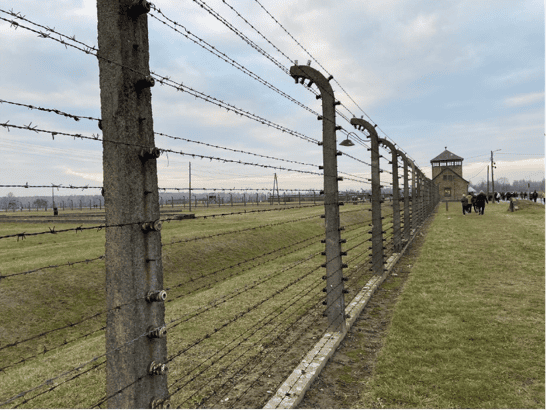
Our tour guide told us that she had met many survivors through her lifetime studying Nazi atrocities. One of the most chilling stories she told was of a prisoner who explained what starvation was. Starvation was not being constantly hungry or not remembering when you had had your last meal. It was when other people looked like food. Starving and humiliating prisoners was sport for extermination and work-camp guards. They had become sadistic masters.
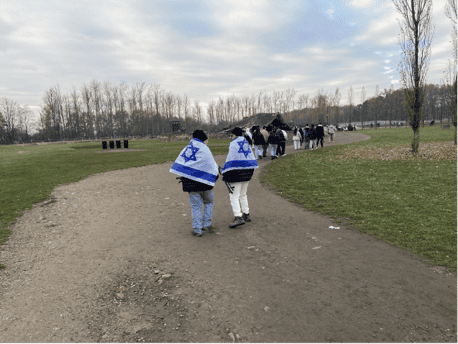
In the last few minutes of my Birkenau tour, I passed these Jewish faithful who were there to witness the horrors their people have experienced.
Could a holocaust this vile ever happen again? Historian Omar Mohammed, a Columbia University graduate, wrote in The Free Press at the end of October how he heard fellow students at one of the most advanced schools in the world chant that Jewish students there should “Go back to Poland.” This historian wanted to know what these privileged students meant, so he went to visit Auschwitz and other extermination camps in Poland to find out. He had never heard of these death camps growing up in Iraq. He vows to make sure everyone knows of the horrors such vile hate toward a people can create.
I know, for I saw it for myself this week at Auschwitz-Birkenau. We must never forget.