Conspiracy Claims and Our Christian Call to Be Discerning
Are conspiratorialists on the rise, or has new media simply provided more platforms and louder microphones to amplify what were historically isolated crazy claims?
Or has modern media been guilty of suppressing truth for so long that what was once deemed fantastical has, at least in certain instances, been revealed as factual?
Popular “conspiracies” have long entertained and occupied the public’s imagination and fascination, sometimes even spawning commercial enterprises. Reports of flying saucers and extra-terrestrials crashing in Roswell, New Mexico’s “Area 51” have resulted in lots of tourists and merchandise. Then there are those who claim the moon landings were faked, the so-called “Illuminati” controls the world, and that the world is actually flat.
For those of a certain age, the assassination of President Kennedy has probably been the most popular and debated “conspiracy theory” that’s been fanned and flamed by movies and all types of media. When President Trump declassified most of the remaining files last year, the new information served to answer some questions but wound up raising new ones.
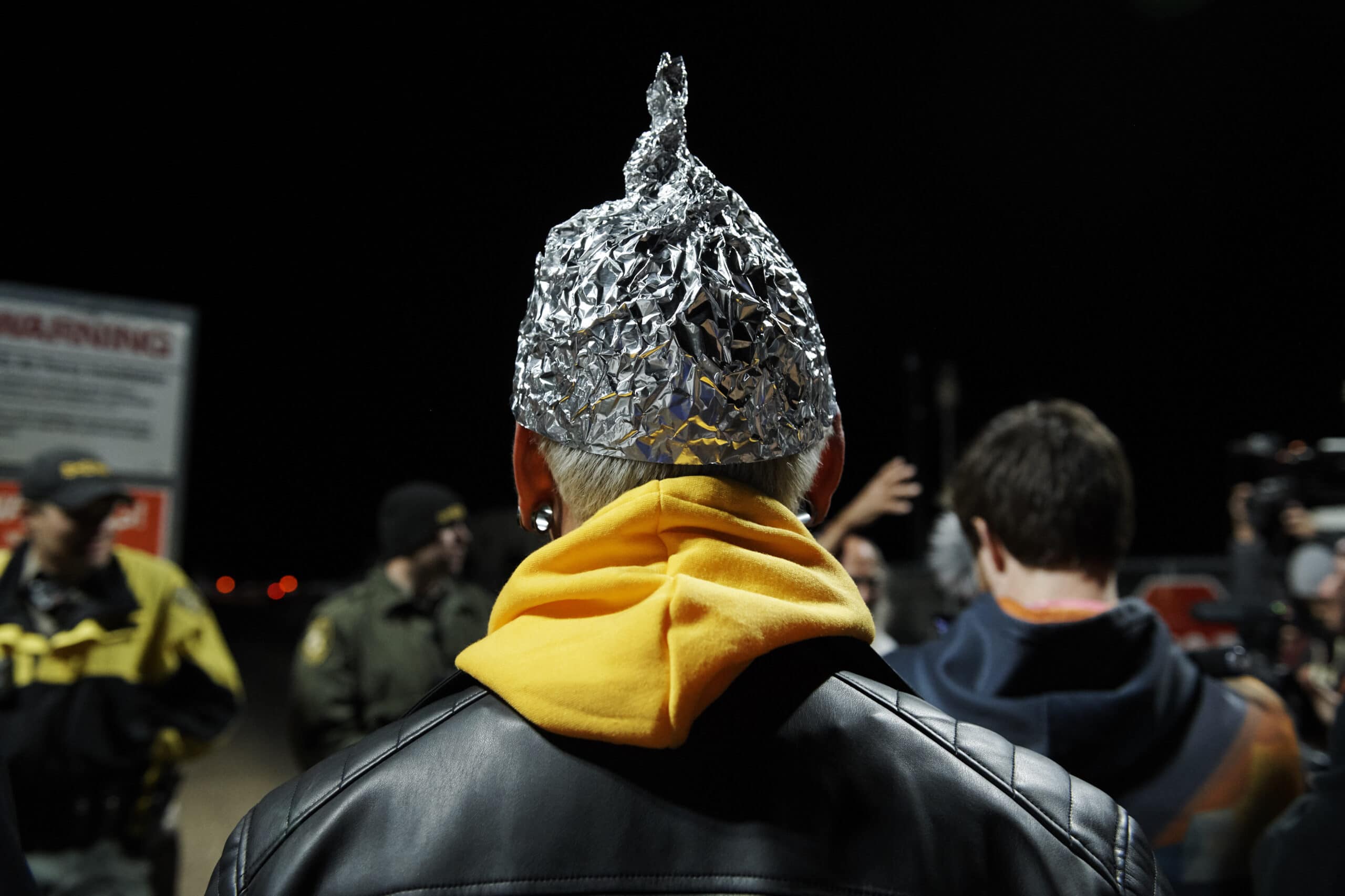
At the outset, it would be helpful to acknowledge there are distinctions between what’s dismissed as pure “conspiracy” rather than policy disagreement or unverified and incomplete or misleading claims. There’s also a difference between healthy and legitimate skepticism and downright or outright tinfoil hat material. There’s also good reason to raise eyebrows from time to time. History confirms we’ve not always been told “the truth, the whole truth, and nothing but the truth.” Matters of national security have sometimes also kept things secret, and for perhaps very good reason.
But of late, some high profile media personalities, some of whom have been previously or even currently friendly to Christians or Christianity, have been garnering headlines with some sensational and downright disturbing claims. When certain people say certain things, you sometimes can’t help but wonder if mental illness might explain some of it. But whether due to a previous affinity for the personality, a wariness of mainstream media, or the persuasiveness of the individual, some people may fall for the claims, hook, line, and sinker.
Not wanting to fan falsehoods or give unhelpful publicity to the either deceptive or the unhinged, we’ll avoid calling out specific instances and individuals and instead focus on the principles by which Christians should filter and process these types of questionable and outlandish claims.
First and most importantly, Christians must be committed to truth, but that doesn’t mean to blindly accept anything and everything. “Test everything,” wrote the Apostle Paul. “Hold fast what is good” (1 Thess. 5:21). The good news is Jesus assures us that His followers “will know the truth, and the truth will set you free” (John 8:32).
Paul warned that “wicked deception” overtakes those who “refused to love the truth” (2 Thess. 2:10). Many of the conspiracy peddlers likely love attention more than they love truth. The classic conspiratorialists tend to be contrarian in nature, not because they want to get to the bottom of everything — but because they want to be in the spotlight on top of news and social media feeds.
Second, Christians are called to be discerning but not automatically suspicious and skeptical. It’s exhausting to be reflexively dismissive. We can trust — but simultaneously verify. Luke writes of the Bereans in Acts, “Now these Jews were more noble than those in Thessalonica; they received the word with all eagerness, examining the Scriptures daily to see if these things were so” (17:11).
As followers of Christ, we should examine news by viewing and first filtering it through a Christian worldview lens.
Third, Christians bear a special responsibility to not knowingly or recklessly spread questionable claims. Social media has turned everyone into a citizen reporter. We’re not expected to be balanced in sharing or not sharing information, but we should be judicious. The ninth commandment is unequivocal: “You shall not give false testimony against your neighbor” (Exodus 20:16).
Here is the good news: In today’s often confused and upside-down world, Christians are best positioned to be countercultural and clarifying, not by trading in conspiracy theories but by proclaiming Christ’s truth.


ABOUT THE AUTHOR