Jennifer Burns’ ‘Excelara’ Helps Parents Reclaim Their Kids’ Education
Every child deserves an excellent education — but many students no longer receive one from American public schools.
According to America’s latest national report card, fewer than two thirds of American eighth graders can do math (26%), read (30%), or do science (31%) at grade level.
Many public school districts compound poor student outcomes by teaching damaging social ideologies, forcing students to violate their faith — even making them change in front of members of the opposite sex.
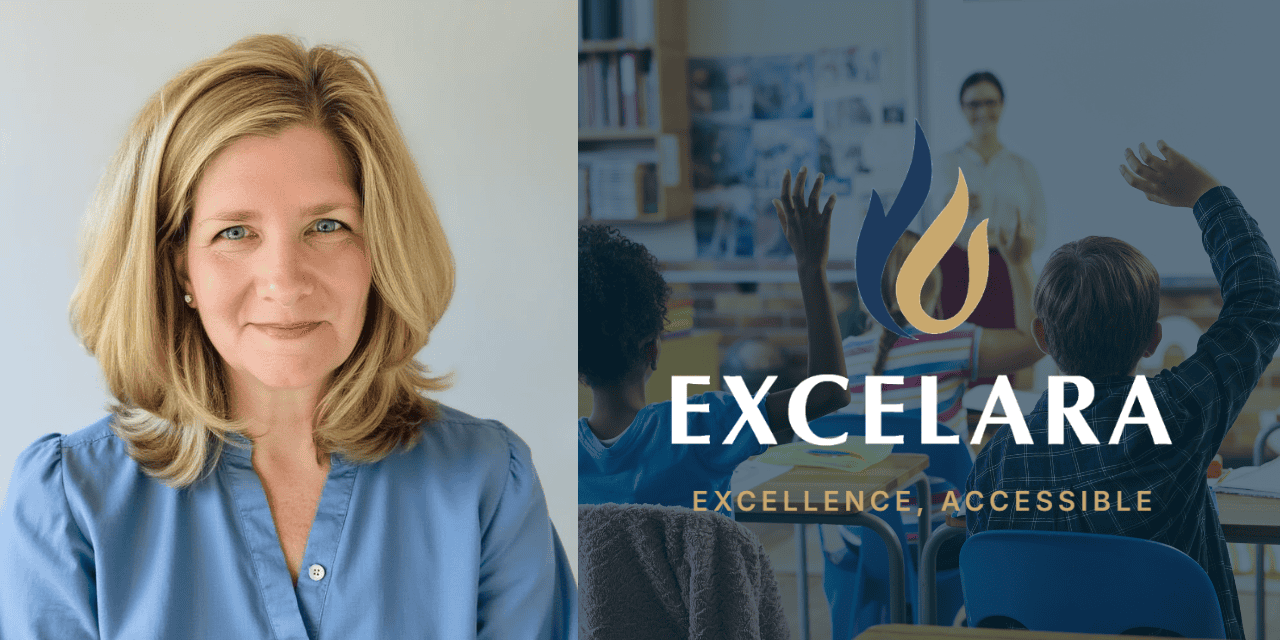
Jennifer Burns, an educator and expert in Christian classical education, offers families an alternative through Excelara, an initiative helping parents start and join Christian, classical hybrid schools.
Excelara offers parents and other “education entrepreneurs” everything they need to create affordable, flexible and excellent schools — from rigorous, biblically-based classical curriculum, to administrative support and teacher training, to help finding financial aid.
“Starting a school is a heavy lift,” Burns told the Daily Citizen. “It’s weighty because you need to get it right — you can’t mess around with a child’s education — but there’s also so many details that go into starting a school.”
“I knew that I needed to give [people] more than just a copy of a handbook or a schedule, but a turnkey solution to start a school,” she explained.
Excelara’s curriculum, model and services stem from Burns’ more than 20 years of experience teaching classical, Christian curriculum — starting with her own children.
She credits God for prompting her to change from a “normal” school schedule, five days a week, eight hours a day, to a university model, where kids spend more time working independently.
Excelara recommends education entrepreneurs adopt hybrid schedules allowing students two days with teachers, two days of independent study and one day of enrichment, though schedules can be adjusted to accommodate parents’ needs.
Burns and the Excelara team encourage academic instruction days be held in churches.
“We believe that the church should be the locus of exceptional education like it was at the founding of our country,” Burns explained, continuing:
The kind of schools Excelara helps parents create differ greatly from traditional ones. I asked Burns how she would defend Excelara’s model to parents who worry about the academic and social implications of such a dramatic shift.
“The fruit of this kind of schooling — Christian at its foundation, classical in its pedagogy and hybrid, meaning a partnership between school, family and church — all of that working together produces amazing little humans,” she assured, noting that, while Excelara students may spend less time in a physical classroom, they are full-time students enrolled in a rigorous curriculum.
Burns found increased independent learning time helps students not only remember the material but engage with it.
“There’s a beautiful rhythm to sitting at the feet of wise teachers a couple of days a week and then having the opportunity to wrestle with information on your own,” she observed, noting:
Further, the university model teaches kids skills they’ll need in college.
“They become good, independent learners,” Burns continued. “They learn how to manage their time well [and] pace themselves; they learn how to learn.”
Excelara’s model allows children to spend more time with their parents, which Burns contends increases maturity.
“We’re trying to train up these students to be young men and young women, and [children] learn that by observing and modeling adults,” she reasoned.
Conversely, Burns has found kids who spend comparatively less time with their peers value their friendships more.
“Let’s face it, when you’re with your friends five, six days a week, eight hours a day, you tend to take them for granted,” she told the Daily Citizen.
“Our students who come to school two days a week are so precious with one another because they value the time spent with each other.”
Excelara supports student outcomes using technology, including a one-on-one AI tutor.
Given the harms AI chatbots and other tech can cause children, I asked Burns why she believed Excelara’s technology positively impacts students.
Burns acknowledges tools like AI can be dangerous to kids. She also believes they can be used correctly to enhance learning.
She used Excelara’s AI as an example. Unlike other chatbots, which prioritize efficiency, Burns says Excelara’s AI engages with students using the Socratic method. Children must articulate ideas in their own words to engage the bot.
Burns believes the tool, which students use on independent learning days, increases their confidence in class.
“We’ve taken students who feel less than, who feel so self-conscious about where they are academically — and helped them get their confidence back,” she relayed.
“They are more apt to raise their hands and engage with their classmates because they’ve already pre-articulated ideas to the AI.”
Importantly, Excelara’s AI tutor does not exempt parents from taking an active role in their children’s education. Burns emphasizes parents must “ continually engage with [their] student, making sure they’re very aware [AI] isn’t a substitute for a peer, for a parent or a teacher.”
Burns fresh, nuanced perspective characterizes Excelara’s materials and approach to making excellent, Christ-based education accessible to all children.
Burns concluded:
Learn more about Excelara here.
Additional Articles and Resources
Resources: Schools & Related Issues
Education Department Celebrates National School Choice Week
3 Reasons to Pay Attention to Your Child’s School
Florida Becomes First State in the Nation to Adopt Education Freedom Declaration
Photo Credit: Jennifer Burns, Excelara