• Skip to main content
Daily Citizen
  • Subscribe
  • Categories
    • Culture
    • Life
    • Religious Freedom
    • Sexuality
  • Parenting Resources
    • LGBT Pride
    • Homosexuality
    • Sexuality/Marriage
    • Transgender
  • About
    • Contributors
    • Contact
  • Donate

parental rights

Jun 11 2025

In Victory for Parental Rights, Iowa Law Permits Students to Receive Religious Instruction

A recently enacted Iowa law now allows public school students to receive optional religious education during the school day, despite opposition from an atheist group.

Effective July 1, the bill authorizes Iowa students to receive up to five hours of “private religious instruction” per school week.  

The law’s stipulations include:

  • Religious instruction must be provided by a private organization and may not be conducted on school property.
  • Religious organizations must keep attendance records and assume liability for their students.
  • School funds may not be used to support religious programs.
  • Parents or guardians must notify the school that their child will be attending a religious program.
  • Parents or guardians must provide transportation to and from students’ religious classes.
  • Students may be excused for religious instruction up to five hours per week.
  • Students must agree to make up any school work they may miss during their absence.

Additionally, the law permits parents to take action against any school that does not allow students to attend religious instruction classes.

On Friday, Iowa Governor Kim Reynolds signed the bill (House File 870) into law. The bill previously earned a vote of 96-2 in the Iowa House of Representatives, followed by a unanimous vote of 47-0 in the Iowa Senate. 

These majority votes prevailed despite previous pushback from the anti-religion group, Freedom From Religion Foundation (FFRF).

When Ohio passed a similar law in 2023, FFRF sent letters to Ohio’s school districts expressing their disapproval: “Public school districts are not legally required to authorize released time bible study classes.”

FFRF specifically targeted LifeWise Academy, a program that seeks to provide “Bible-based character education to public school students”:

LifeWise’s goal is clear: they seek to indoctrinate and convert public school students to evangelical Christianity by convincing public school districts to partner with them in bringing LifeWise released time bible classes to public school communities.

Public school students have the First Amendment right to be free from religious indoctrination in their schools.

However, the Ohio and Iowa laws are consistent with the 1952 Supreme Court decision in the case of Zorach v. Clauson, which permitted New York City students to receive religious education during school hours:

No one is forced to go to the religious classroom, and no religious exercise or instruction is brought to the classrooms of the public schools.

A student need not take religious instruction. He is left to his own desires as to the manner or time of his religious devotions, if any.

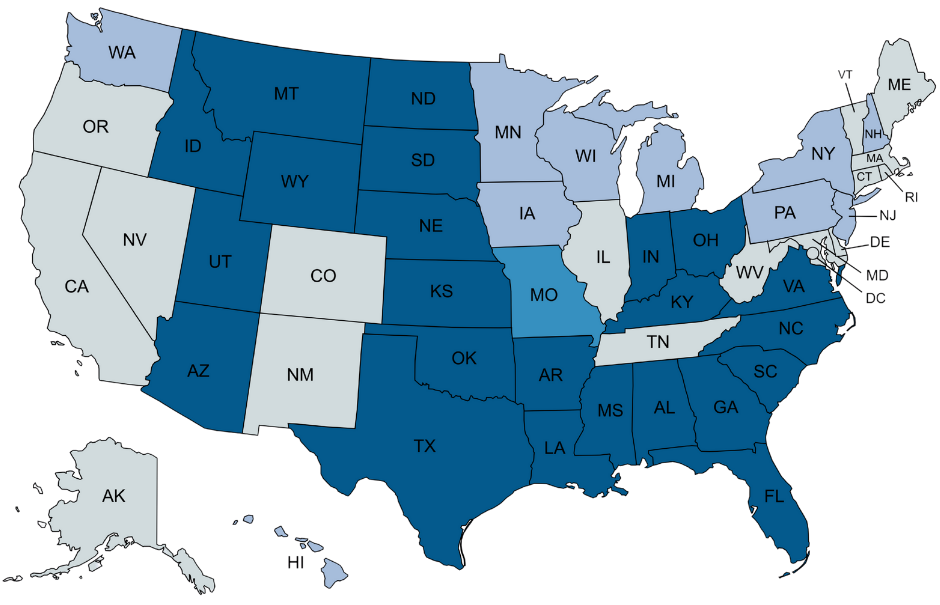
Similar laws authorizing optional religious education have been passed in other states, including Oklahoma and Indiana.

In a recent statement, Alliance Defending Freedom (ADF) Senior Counsel Greg Chafuen said:

Parents have the right and responsibility to guide the upbringing and education of their children.

The government should not stop families from raising their children in their family’s faith.

As the U.S. Supreme Court explained, respecting parents’ decisions for their child to participate in released time programs “follows the best of our traditions.”

Such legislation does not inhibit students’ education, but rather ensures their First Amendment right to freedom of religion – a constitutional right that should never be infringed upon.

Related Articles and Resources

Bring Your Bible Day

Indiana Governor Signs Bill Protecting Students’ ‘Release Time’ for Religious Instruction

Christianity Invented Childhood. It’s Time We Defend it Again

Three Important Cases for Parental Rights, Supreme Court Rulings Expected Soon

California Family Wins Early Legal Victory for Parental Rights, Religious Freedom

Tennessee Governor Signs Bill Protecting Free Speech in Schools

Religious Liberty is the Preserver to Keep America Afloat

Written by Meredith Godwin · Categorized: Education · Tagged: parental rights, religious freedom

Jun 03 2025

Three Important Cases for Parental Rights, Supreme Court Rulings Expected Soon

With about one month left in the United States Supreme Court’s term, three critically important cases for parents still await a ruling. The three cases involve protecting children from pornography, permitting an opt-out from LGBT materials in classrooms and a ban on “transgender” mutilation of minors. Here’s what you need to know.

Opting Out of LGBT Classroom Material

In Mahmoud v. Taylor,  a group of Muslim, Jewish and Christian parents in Maryland are asking to opt their children out of public school mandated LGBT materials. The parents argue that the curriculum is in conflict with their religious teachings on gender and sexuality, and therefore, without an opt-out provision, it infringes on their First Amendment rights to free exercise of religion.

The question presented to the Court is whether the public schools violate the religious freedom of parents by requiring LGBT materials in the curriculum without providing an opt-out.

Both lower courts ruled against the parents holding that exposure to differing viewpoints in public education is not a violation of religious freedom.

As reported by the Daily Citizen, the Supreme Court heard oral arguments on the case in April and appeared to be leaning towards requiring opt-outs which would set precedent for broader religious exemptions and expand parental rights in public schools. 

You can read the court transcript here.  

Banning Transgender Mutilation of Minors

United States v. Skrmetti, involves a  Tennessee law protecting minors from experimental, damaging trans medical interventions like opposite-sex hormones and surgery.

The ACLU and LGBT activist groups filed a lawsuit against the law claiming it violates the Equal Protection Clause of the Fourteenth Amendment of the Constitution because it discriminates on the basis of sex.

The state of Tennessee contended that it was trying to protect children from transgender experimentation on kids.

After an initial injunction, the district court and the U.S. Court of Appeals for the Sixth Circuit upheld the state law.

Oral arguments were held in December, and at the time, court watchers predicted oral arguments suggested the Court “appeared ready to uphold” the ban.

You can read the oral arguments transcript here.  

Prohibiting Access of Minors to Pornography

Finally, in Free Speech Coalition v. Paxton a Texas state law requiring pornographic websites to use an age-verification system to protect kids from accessing porn is being challenged.

The porn industry filed a lawsuit against the state arguing the added requirements violate the First Amendment rights of adults by creating undue burdens on lawful adult speech and infringing on the privacy of users.

The state argued that it was trying to protect minors from harmful, explicit material and could do so in a way that still protects the privacy of adult users.

The lower courts issued contrasting rulings in this case. The district court ruled against the state law and granted a preliminary injunction. The Fifth Circuit Court of Appeals issued a mixed ruling – upholding the age verification requirement but struck down a health warning provision as compelled speech.

The Supreme Court heard oral arguments on January 15 and appeared divided on the constitutional question.

You can read the court transcript here.  

Expected Rulings

The Court is slated to meet through the end of June and could possibly go into July. The next date on which the Court will release opinions is this Thursday, June 5. Generally speaking, the Supreme Court releases it’s more controversial opinions at the end of the term, so it’s likely we won’t get an opinion on these three cases until the end of the month.

Daily Citizen will keep you informed as the Supreme Court issues rulings in these cases.

Image from Getty.

Written by Nicole Hunt · Categorized: Family · Tagged: parental rights, SCOTUS

May 19 2025

California Family Wins Early Legal Victory for Parental Rights, Religious Freedom

JUMP TO…
  • Background
  • The Case
  • The Ruling
  • Mahmoud v. Taylor
  • Why It Matters

A California school district must allow parents to opt their children out of some activities pushing gender ideology, the Southern District Court of California ordered in a preliminary injunction issued last week.  

The decision is an encouraging early win for Carlos and Jenny Encinas. The parents of three young kids made the difficult decision to sue Encinitas Union School District last year after their 11-year-old son, a Christian, was forced to teach his kindergarten buddy about gender identity.

“[The preliminary injunction] prevents the school district from teaching [students] about gender ideology in the [kindergarten] buddy class program unless they provide advanced notice and opt out [opportunities],” the Encinas’ lawyer, First Liberty Attorney Kayla Toney, told First Liberty Live.

“That’s exactly what our clients were asking for all along.”

Background

The Daily Citizen interviewed Toney and Carlos shortly before the district court’s ruling. Carlos confirmed he and his wife weren’t itching for a grueling legal battle. They just wanted to opt their sons out of activities teaching gender ideology — or forcing their sons to teach gender ideology to others.

When La Costa Heights Elementary and Encinitas Union School District denied both of the Encinas’ opt-out requests, the couple had nowhere else to turn.

“We are seeking resolution from the court system because we have no other choice,” Carlos told us.

The Encinas family experienced ruthless bullying for trying to exercise their parental rights. Carlos and Jenny received threats and harassment online for being “hateful.” The couple’s two sons became targets of other children — and even adults — at school.

Eventually, the Encinas boys moved schools altogether. But the family remains determined to see their case through.

“I feel like God’s got a plan in this and chose my son and our family for a reason,” Carlos reflected. “I have absolute faith that we are part of a spiritual battle that is going to be part of an ultimate renewal.”

To read more of the Daily Citizen’s interview with Carlos, click here.

The Case

The Encinas’ case alleges Encinitas Union School District infringed on their family’s:

  • Parental rights
  • Right to freely exercise their religion
  • Free speech rights

The district violated Carlos and Jenny’s parental rights by denying their request to opt out of activities teaching gender ideology.

California law requires schools to allow parents to opt out of sex ed lessons. Encinitas Union claims this law only applies to material taught in traditional sex ed units, rather than sexual material in general. The Encinases argue parental opt-out requirements apply to all sexual content, regardless of the curricula it’s rolled into.

Toney sums up:

[The district] is claiming that they don’t have to provide [parental] opt-outs when the exact same material about sexuality and gender identity is taught in other classes, in younger grades, outside the sexual education unit.

The district also violated the Encinas family’s right to freely exercise their religion by denying their request to opt out. A school cannot constitutionally deny religious exemptions while granting other, non-religious exemptions. Toney expands:

The school is able to provide opt-outs, and is required in certain circumstances. It’s very common in a school environment.
[But] the free exercise clause says that, if there’s a system of exemptions for any reason, then religious exemptions have to be provided too. Religion can’t be treated less favorably than other interests.

Encinitas Union School District violated the Encinas’ eldest son’s free speech rights by forcing him to teach gender ideology to his kindergarten buddy. Toney explains:

Our position is that what happened to Carlos’ son was compelled speech, because the government — the school district — was using the children to teach its own message about gender that directly conflicted with [his] religious beliefs.

The Supreme Court has considered “compelled speech” a violation of the free speech clause for nearly a century.

The Ruling

The Southern District Court of California granted the Encinas family’s request for preliminary injunction against the district. The injunction will not only prevent the district from violating parents’ rights while the case is adjudicated, but also require schools like La Costa Heights to notify parents about sexualized lessons.

Until now, Carlos tells the Daily Citizen, these lessons have been shrouded in secrecy.

“In talking to other parents, we discovered a pattern in the way the school and the district suppressed objections to [inappropriate sexual material],” he explained. “It was like they wanted to hide how they were promoting some of this stuff in the classroom.”

The judge largely affirmed the Encinas’ arguments, according to Toney — an encouraging sign for future rulings. He expressed particular concern over the district’s alleged free speech violations.

“The judge here was very focused on the children, and how children have a right to believe in God,” Toney recounted to First Liberty Live. “They have a right to express their faith and they have a right to not be forced to express a message that they disagree with.”

Mahmoud v. Taylor

The U.S. Supreme Court heard arguments in a case similar to the Encinas family’s just last month.

In Mahmoud v. Taylor, families of diverse faith backgrounds argue a Maryland school district violated their right to freely exercise their religion after the district taught LGBT children’s books in elementary school classes — without notice or the chance to opt out.

Like Encinitas Union School District, Montgomery County Public Schools tried to get around parental opt-out requirements by rolling inappropriate sexual material into other subjects. Outside of sex ed, Montgomery County tried to argue, the school district isn’t required to allow parents to opt out.

As the Daily Citizen previously reported, the six conservative justices seemed sympathetic to parents during oral arguments, expressing concern that Montgomery County could be burdening families’ religious exercise.

Carlos felt profound relief after listening to the case.

“It was amazing to hear some of the highest legal authorities in the land ask some of the questions we, ourselves, asked early on.” he told the Daily Citizen.

Like, “Wait a second, why can’t you guys opt us out of this? We just don’t want to participate.” To have a Supreme Court justice ask that same question over and over again, and get the same unclear explanation, and then have that justice come back and say, “Wait hold on, I’m still not understanding the answers” — that’s another kind of inspiration.

To learn more about Mahmoud v. Taylor, click here.

Why It Matters

The Daily Citizen is grateful to the Encinas family for putting themselves on the line to protect the right of all parents to raise their children according to their faith.

We will continue to cover this important case.

To read more about the Encinas’ story, click here.

Additional Articles and Resources

California Family harassed After Trying to Opt-Out of Activities Teaching Gender Ideology

Supreme Court Sympathetic to Opt-Outs for LGBT Curriculum

Common Spirit Denied Teen Body Medical Care After Parents Objected to Doctor’s Bizarre Questions

Three Ways the Media Supports Sexually Explicit, Inappropriate Books for Children

Liberal Father Seeks to Disprove Concerns Over Sexually Explicit Books in Schools, Becomes Convinced These Books Are Not for Children

Sexualizing Schoolchildren: Classroom and Library Books

Written by Emily Washburn · Categorized: Education, Family · Tagged: encinas, free speech, parental rights, religious freedom

Apr 09 2025

Common Spirit Denied Teen Boy Medical Care After Parents Objected to Doctor’s Bizarre Questions

Multi-state health conglomerate Common Spirit refused to serve a Colorado Springs family after parents objected to a doctor’s inappropriate and ideologically driven questions.

Melissa and her husband, Carlos, are no strangers to the medical system’s disregard for parent’s rights. The devout Christian couple shuttled their four children to doctor’s appointments in several different states during Carlos’ more than 20-year military career.

So, when thirteen-year-old Ricardo needed a physical to play football, the couple gave him a heads up.

“I just asked, ‘Hey, if they ask you if they want us to leave the room, are you comfortable with that?’” Melissa explained.

Years earlier, in Virginia, doctors had asked one of their daughters if she was sexually active or used drugs — after asking Melissa to leave the room.

“She didn’t really know what to say,” she recalled her daughter’s hesitance to answer questions alone. “[But] our children [are used] to respecting their elders, so she just said, ‘Okay.’”

When Ricardo said he would be uncomfortable talking to the doctor alone, Carlos and Melissa helped him prepare to say so. Forewarned and forearmed, they hoped their respectful, shy son would feel free to be honest in a way their daughter had not.  

Melissa and Carlos’ forethought paid off; the doctor, a Common Spirit employee, asked them to leave the room before she’d finished Ricardo’s physical. According to Melissa, it wasn’t much of a question:

She said, “Okay, at this point, I’m going to ask your parents to leave.” She didn’t even give him a choice, give us a choice. She made it sound like, “I’m telling you what to do.”

Ricardo’s parents say they were proud and thankful when he politely declined to speak to the doctor alone, despite her obvious disapproval. 

“You could tell she was annoyed by that,” Melissa remembered. “But she said, ‘Okay, I’m going to proceed with my questions.’”

The doctor asked Ricardo, “What gender do you identify as?”

Melissa says she and her husband locked eyes, baffled:

We just kind of looked at each other like, “Wow, that was not a question we heard a few years ago with our daughter.” Things had clearly evolved.

Ricardo was similarly confused. How did his doctor, who had already begun his exam, not know his sex.

“I’m a boy,” he answered, half giggling.

So far, Melissa told the Daily Citizen, she had kept her cool. But then the doctor asked, “What gender are you attracted to?”

“I felt like this was the proper time to speak up. It’s totally inappropriate,” Melissa said. She asked the doctor what her questions had to do with Ricardo’s appointment.

I said, “I’m his mother and I’ve never even asked him these questions — why do you get to ask them?”

Carlos pressed the issue.

I just asked, “Okay, where is this going? [What’s the point?]”
She said, “Well, we want to know if there is sexual and physical abuse.”
Well, then wouldn’t that be the first question out of your mouth?

He believes the conversation could have proceeded much differently under different circumstances.

“If we weren’t in the room, and [Ricardo] were to say he was a member of the opposite sex, then what?” he argued. “What’s the next line of questioning? Are you going to offer [opposite-sex] hormone therapy?”

Common Spirit’s website does not clearly offer “gender-affirming” care. It does, however, financially support organizations that serve the “LGBTQIA+ community.” The website boasts several other phrases commonly associated with gender ideology, including “Diversity, Equity and Inclusion” and “social justice.”

After Melissa and Carlos’ vociferous objections, the doctor left the room, claiming a nurse would return to finish Ricardo’s physical. She soon reappeared, absent a nurse, and said,

I’m no longer comfortable with this appointment, and I don’t think we [Common Spirit] are the right fit for you.

She didn’t even finish Ricardo’s exam.

Melissa called the appointment violating.

“I just felt so violated as mother,” she said. “She violated my values. It was just so wrong in so many ways.”

She continued, heartfelt,

I didn’t have the luxury of a mom and dad. It’s so disheartening to me that, here I am, able to give that to my children, and it’s frowned upon. It’s really sad.

A Common Spirit patient advocate later told the family that the doctor’s line of questioning was unusual, particularly for a routine exam. After promising to bring their case to the higher-ups, she never contacted Melissa or Carlos again.

As far as Melissa knows, the doctor, a bilingual Spanish speaker, is still practicing. She worries about the power the doctor can exercise over Spanish-speaking Christians and their families.

“We’re Latino. In our culture, we have a high respect for doctors almost immediately,” she explained. “If a non-English speaker were to bring her son to a well check, like me, she would more then likely step out of the room if the doctor asked.”

The couple advises parents to prepare themselves, and their kids, to establish firm boundaries in the doctor’s office — because they may be pushed.

We don’t want parents to walk out of an appointment feeling violated, like we did. I’ve started letting a lot of parents know that if you have a son and are going in for a 12-year-old well check or physical, these are the kinds of questions you are going to be asked.

They suggest parents ask kids whether they feel comfortable talking to a doctor alone before heading to the appointment. Given time to prepare themselves, they are more likely to be honest about wanting parents in the room.

If a child says they don’t mind talking to a doctor alone, Melissa says parents should be ready to begin intentional conversations about sex and gender.

You want to be the one to have those conversations with them, instead of a school or a doctor telling them before you’ve even had the opportunity. It’s unfortunate that we have to have these conversations so young. But I think if you don’t tell them, someone will rob you of that and do it themselves.

Melissa and Carlos’ experience should inspire parents to proactively protect their kids from gender ideology. Focus on the Family and its allies have resources to help you do just that. Click on the links below to learn more.

Additional Articles and Resources

Equipping Parents for Back to School

Enfoque a la Familia

FOTF: Transgender Resources

Parent Resource Guide: Responding to the Transgender Issue

Protect Your Kids from ‘Trans’ Activism — Look for These Red Flags

Child’s Online Medical Records Hidden from Virginia Mom

‘Art Club’ Documentary — One Family’s Escape from Gender Ideology, and the Bigger Trend Sweeping the Nation

Exclusive Interview: Colorado Parents Expose ‘Gender Cult’ at Public School in New Documentary

Written by Emily Washburn · Categorized: Family, Sexuality · Tagged: interview, LGBT, parental rights, transgender

Oct 31 2024

Child’s Online Medical Records Hidden from Virginia Mom

All Patches Johnson Inge wanted was to look up the date of her 12-year-old’s check-up. When Carilion Clinic’s online patient portal no longer showed her son’s information, she assumed it was a glitch.

“I thought I would check it out in a few days, and they’d have it fixed,” she told the Daily Citizen.

But Johnson Inge’s problem wasn’t a glitch. Carilion Clinic blocks parents’ access to their children’s MyChart account when they turn 12. The policy is spelled out in a colorful pamphlet addressed to children, which the Daily Citizen found buried deep in Carilion’s website. Johnson Inge never saw it.

“Carilion [doesn’t] send you a notification about it,” she explained. “They don’t tell you when you sign up that it’s only good until [your child] turns 12.”

The devoted mother didn’t know anything was wrong until she phoned a friend.

I called one of my girlfriends who takes her daughter to the same pediatrician. I asked, “Are you able to see her records now that she’s turned 12?” I wondered whether you had to renew it or something. She called back and said, “Oh, you’re not going to believe this.”

It was all too real. Carilion had terminated Johnson Inge’s online access to her son’s information. If she wanted it back, they said, her son would have to sign-off in a private meeting with a doctor.

“I told [the employee I was talking to], ‘Over my dead body,’” Johnson Inge recalls. “She was not happy with me when we finished our phone call. But if I allowed that to happen, I don’t know what they would have talked about without me.”

Further communication with a Carilion privacy analyst revealed Johnson Inge and her son would have to visit the doctor in person to restore even limited access to his MyChart account. Carilion’s legal department declined to comment.

Johnson Inge says the bizarre policy violates her parental rights and impedes her ability to care for her son.

Legally, a 12-year-old’s signature means what? Absolutely nothing. They’re not adults. They can’t vote, they can’t drink, they can’t serve in the military. I had to practically sign my life away [at the bank] to let him have his own little kid savings account. Why should he have to give me permission for anything?

She continues,

I pay for him. I drive him everywhere. I mean, he’s my child — my dependent. I feed him. I pay for his school. [My son, my husband and I], we’re a family, and this is just wrong from a pro-family standpoint.

Founding Freedoms Law Center (FFLC), the legal arm of Virginia’s Family Policy Council, tells the Daily Citizen Johnson Inge isn’t alone. Several parents have also reported struggling to access their children’s online medical records at University of Virginia-affiliated clinics.

An FFLC legal fact-sheet for parents like Johnson Inge affirms, “In Virginia, as a general rule, healthcare providers are required to make minors’ medical records available to parents if requested.”

The only exception to this rule is “if the healthcare provider believes that parental review of a minor’s records would be reasonably likely to cause the minor or another person substantial harm.”

So, is Carilion’s treatment of Johnson Inge illegal?

Technically, no. While Virginians have a general right to access their children’s medical records, they don’t have a right to access them online. FFLC is working on a bill that would clarify Virginia parents’ right to access their child’s medical records online and in-person.

Until then, medical groups like Carilion and UVA can continue giving parents the run-around.

But skating by on a legal technicality doesn’t mean hospitals are acting ethically. FFLC’s fact sheet warns that hospitals may not inform parents of all their rights, especially when it comes to online health portals:

Occasionally, parents are told by healthcare providers that they may only have limited access — or perhaps no access at all — to their minor child’s medical records. … Sometimes, parents are even told, inaccurately, that they may not access some or all of their child’s medical records without their teenager’s express authorization.

Carillion’s privacy analyst told Johnson Inge she could still access her son’s information through the hospital’s Medical Records Office. But this right isn’t spelled out anywhere in the PDF laying out Carilion’s MyChart policy.

In fact, the document perpetuates the lie FFLC warns parents against — that kids must consent for parents to see even basic medical information about allergies and vaccinations.

For Johnson Inge, the issue is bigger than medical records or misleading one-pagers. It’s about power.

It’s dangerous [for doctors] to have this level of control over my child and my family. I just think it’s very concerning that they think they can tell me how to run my household or what I have access to for my own child.

Let Johnson Inge’s experience inform the way you interact with the medical system. Consider carefully whether you are okay allowing a physician to talk to your child privately. You can also ask your child if they would feel comfortable talking to a doctor privately, and if not, encourage them to speak up in the doctor’s office. 

Don’t forget to contact your state’s Focus on the Family-allied Family Policy Council to learn about your right to read your child’s medical records online.

Additional Articles and Resources

Selecting a Physician

Doctor Visits and Exam Room Expectations for Parents of Teens

How to Get the Best Care From Your Child’s Doctor

Written by Emily Washburn · Categorized: Culture, Family · Tagged: parental rights, parenting

  • « Go to Previous Page
  • Page 1
  • Page 2

Privacy Policy and Terms of Use | Privacy Policy and Terms of Use | © 2026 Focus on the Family. All rights reserved.

  • Cookie Policy