UPDATED: Pornography Age Verification Laws — What They Are and Which States Have Them

Help and resources to achieve freedom from pornography.
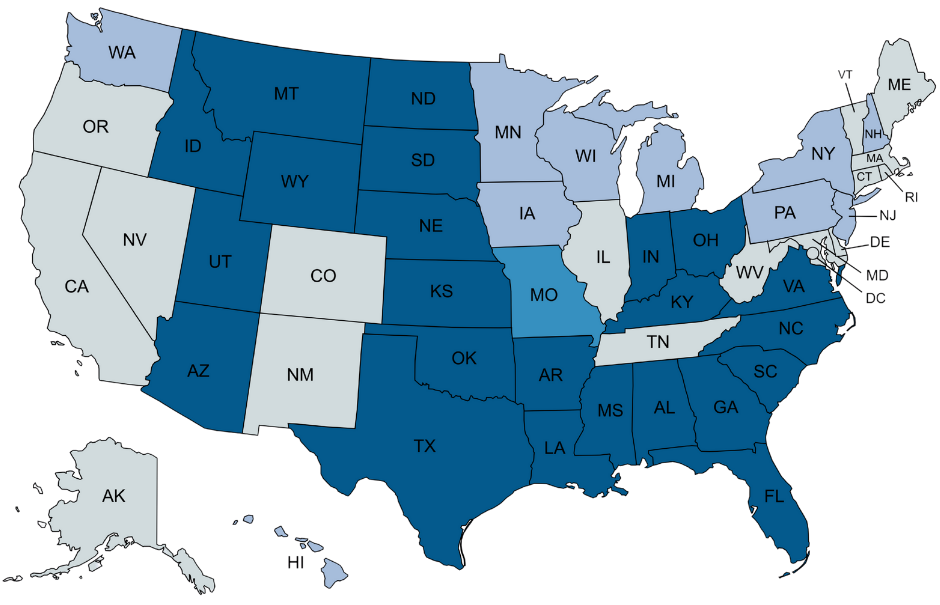
Half of all states — Louisiana, Arkansas, Virginia, Utah, Montana, Texas, North Carolina, Indiana, Idaho, Florida, Kentucky, Nebraska, Georgia, Alabama, Kansas, Oklahoma, Mississippi, South Carolina, South Dakota, Wyoming, North Dakota, Missouri, Arizona and Ohio — require pornography companies to verify the ages of their online consumers.
Ten more states hope to pass age verification legislation in 2026.
Described by Politico as “perhaps the most bipartisan laws in the country,” age verification laws help parents protect their kids by making it harder for minors to access adult content online.
Most age verification bills:
- Require companies who publish a “substantial” amount of adult content — usually 1/3 or more of their total production — to check the age of every person accessing their website.
- Create a way for parents to sue pornography companies if their kids access content they shouldn’t.
The Supreme Court found age verification requirements like these constitutional in June 2025, silencing critics who argue they infringe on free speech and privacy rights.
While most age verification laws contain the same basic components, few are identical.
Some states add age-verification requirements for social media companies. Minnesota’s House Filing 1875 would require social media companies to exclude children younger than 14 from their platforms.
Michigan’s Senate Bill 284 would require manufacturers like Apple to verify device users’ ages and communicate that information to other apps and websites.
Wyoming’s HB 43, now law, requires all online websites which publish or host adult content — no matter how little — to verify consumers’ ages.
States also employ different strategies to pass age verification bills.
Ohio rolled its age verification law into the bill establishing the state’s 2026-2027 budget. Missouri legislators introduced five bills this month to build on the state’s existing age verification regulations.
Hawaii separated its legislation into two bills — one establishing age verification requirements and another creating penalties for violators — so representatives could approve the requirements even if they disagreed with proposed penalties.
While not perfect, age verification laws greatly restrict the amount of porn young people can access. After Louisiana became the first state to pass such legislation in 2022, traffic to Pornhub.com from that state dropped by 80%, one spokesperson told the Institute for Family Studies.
Scroll down to see the status of age verification bills in different states. To find out more about age verification and parents’ rights legislation in your state, contact your local Focus on the Family-allied Family Policy Council.
Louisiana
HB 142 became law on June 15, 2022.
Date effective: January 1, 2023
Arkansas
SB 66 became law on April 11, 2023.
Date effective: July 31, 2023
Virginia
SB 1515 became law on May 12, 2023.
Date effective: July 1, 2023
Utah
SB 0287 became law on May 4, 2023.
Date effective: May 3, 2023
Montana
SB 544 became law on May 19, 2023.
Date effective: January 1, 2024
Texas
HB 1181 became law on June 12, 2023.
Date effective: September 19, 2023
North Carolina
HB 8 became law on September 29, 2023.
Date effective: January 1, 2024
Indiana
SB 17 became law on March 13, 2024.
Date effective: August 16, 2024
Idaho
HB 498 became law on March 21, 2024.
Date effective: July 1, 2024
Florida
HB 3 became law on March 25, 2024.
Date effective: January 1, 2025
Kentucky
HB 278 became law on April 5, 2024.
Date effective: July 15, 2024
Nebraska
Online Age Verification Liability Act became law on April 16, 2024.
Date effective: July 18, 2024
Georgia
SB 351 became law on April 23, 2024.
Date effective: July 1, 2025
Alabama
HB 164 became law on April 24, 2024.
Date effective: October 1, 2024
Kansas
SB 394 became law without the Governor’s signature on April 25, 2024.
Date effective: July 1, 2024
Oklahoma
SB 1959 became law on April 26, 2024.
Date effective: November 1, 2024
Mississippi
HB 1126 became law without the Governor’s signature on April 30, 2024.
Date effective: July 1, 2024
South Carolina
HB 3424 became law on May 29, 2024.
Date effective: January 1, 2025
Tennessee
HB 1642/SB 1792 became law on June 3, 2024.
Date effective: January 13, 2025
South Dakota
HB 1053 became law on February 27, 2025.
Date effective: July 1, 2025
Wyoming
HB 43 became law on March 13, 2025.
Date effective: July 1, 2025
North Dakota
HB 1561 became law on April 11, 2025.
Date effective: August 1, 2025
Missouri
Rule 15 CSR 60-17.010 published on May 7, 2025.
Date effective: November 30, 2025
Arizona
HB 2112 became law on May 13, 2025.
Date effective: September 26, 2025
Ohio
HB 96 became law on June 30, 2025.
Date effective: September 30, 2025
Hawaii
HB 1212: carried over to the 2026 session on December 8, 2025.
HB 1198: carried over to the 2026 session on December 8, 2025.
Iowa
HF 864 (formerly HF 62): placed on subcommittee calendar for the Senate Committee on Technology on January 13.
SF 443 (formerly SF 236): referred to Senate Committee on Technology on June 16, 2025.
Michigan
SB 901: referred to Senate General Laws Committee on January 8.
SB 284 (HB 4429): referred to the Senate Committee on Finance, Insurance and Consumer Protection on May 6, 2025.
HB 4429 (SB 284) : referred to House Committee on Regulatory Reform on September 18, 2025.
Minnesota
HF 1875: referred to House Committee on Commerce, Finance and Policy on March 5, 2025.
SF 2105 (HF 1434): referred to Senate Committee on Commerce and Consumer Protection on March 3, 2025.
HF 1434 (SF 2105): referred to House Committee on Commerce, Finance and Policy on February 24, 2025.
Missouri
HB 1878: referred to House Committee on General Laws on January 8.
HB 1839: referred to House Committee on Children and Families on January 15.
SB 901: referred to Senate General Laws Committee on January 8.
SB 1346: read in the senate on January 7.
SB 1412: read in the senate on January 7.
New Hampshire
SB 648: heard by Senate Judiciary Committee on January 8.
New Jersey
S 1826: referred to Senate Judiciary Committee on January 13.
New York
S 3591 (A 03946): referred to Senate Committee on Internet and Technology on January 7.
A 03946 (S 3591): referred to Assembly Consumer Affairs and Protection Committee on January 7.
Pennsylvania
HB 1513: referred to House Communications and Technology Committee on May 29, 2025.
SB 603: referred to Senate Judiciary Committee on April 9, 2025.
Washington
HB 2112: heard in the House Committee on Consumer Protection and Business on January 16.
Wisconsin
AB 105: second amendment proposed in the senate on January 7.


ABOUT THE AUTHOR