Idaho Governor Signs Bill Protecting Students’ Freedom of Speech on Campus
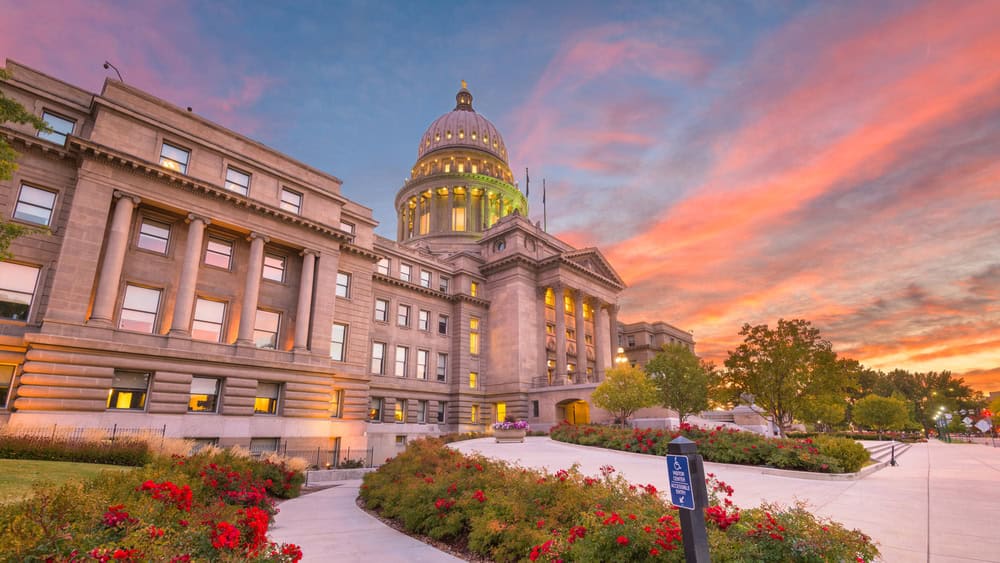
Idaho Governor Brad Little signed a bill on Friday protecting free speech on college campuses in the Potato State.
The Protecting Campus Free Speech in Higher Education Act (HB 240) prohibits higher education institutions from establishing “free speech zones” on campus, restricting speech outside of those zones.
“No public institution of higher education shall abridge the protected expressive activity of any member of the campus community to speak on campus,” the bill stipulates.
It also prohibits education institutions from charging student organizations security fees based on the content of the student’s or group’s expression, or anticipated reaction to it.
HB 240 was approved by the state House on March 4 in a 55-15 vote. The state Senate passed the bill on March 19 in a 26-6 vote.
“College students do not lose their constitutional rights to the freedom of speech and expression when they step foot onto a university campus,” said Alliance Defending Freedom Senior Counsel Zack Pruitt in a statement after the bill was enacted, adding,
Pruitt noted that more than 20 other states have passed similar laws protecting free speech on college campuses.
The College Free Speech Rankings, released last year by the Foundation for Individual Rights and Expression (FIRE), found concerning results regarding the state of free speech on college campuses.
The survey, which drew from over 58,000 student responses representing more than 250 colleges and university nationwide, found:
- 52% of students reported that blocking other students from attending a campus speech is at least “rarely” acceptable, up from 45% last year and 37% two years ago. Even more concerning is that 32% reported that using violence to stop a campus speech is at least “rarely” acceptable, up from 27% last year and 20% two years ago.
- 42% of students believe that it is only “somewhat” clear that their administration protects free speech, while 24% believe it is “not at all” or “not very” clear.
- This year, 17% of students said they feel like they cannot express their opinion on a subject because of how students, a professor, or the administration would respond. This is a bit of positive news, since last year this percentage was 20%, and in 2022 it was 22%.
- Very conservative students reported self-censoring most often, with 34% saying they do so “very” or “fairly” often. 24% percent of somewhat conservative students reported self-censoring “very” or “fairly” often, as did 22% of slightly conservative students. In contrast, only 15% of very liberal students reported self-censoring “very” or “fairly” often. 12% of somewhat liberal students, 13% of slightly liberal students, and 17% of moderate students said the same.
“While it’s encouraging to see some progress in reducing student self-censorship,” said FIRE Chief Research Advisor Sean Stevens, “the persistence of deplatformings and challenges posed by the Middle East conflict underscore the need for continued vigilance in protecting free expression on campus.”
Clearly, there is much work to be done to restore a culture of free speech to college campuses nationwide.
Idaho’s bill ending free speech zones and prohibiting institutions for charging student organizations exorbitant security fees is a great step in the right direction. Hopefully more states will soon follow suit.
To speak with a family help specialist or request resources, please call us at 1-800-A-FAMILY (232-6459).
Related articles and resources:
Helping Your Teen Choose a College
Focus on the Family Supports Bill Restoring Churches and Non-Profits’ Free Speech Rights
Corey DeAngelis Sues School Board for Violating His Free Speech
Teacher Wrongly Fired for Refusing to Use ‘Preferred Pronouns’ Wins $575,000
Poll: 44% of Millennials Think ‘Misgendering’ Should be a Crime
Photo from Shutterstock.