Emily’s Story: Pro-Life Supporters are More than ‘Pro-Birth’
“Pro-life.”
When you read this, what do you see? It might be the image of an ultrasound or pro-life events like the March for Life in Washington, D.C. Others may see a newborn wrapped in a cozy blanket.
But what happens to this baby after his or her birth?
Although the church does incredible work to care for children who have been granted their right to life, it feels as though the stereotypical pro-life movement is not often associated with advocacy measures for what comes after birth: the rest of a child’s life.
As a pro-life supporter, it frustrates me that these two discussions – the protection of preborn human life, and proper care for children after birth – do not always go hand-in-hand. While pro-life activists rightfully encourage healthy pregnancies and safe births, we must remember that the term “pro-life” also includes services such as safe foster homes and adoptions. In fact, a well-functioning foster care system could significantly reduce women’s felt “need” for abortions.
Tragically, many children who receive their right to life are born into horrible circumstances – abusive or neglectful homes, abandonment, families battling addiction, parents who lack resources to care for their child, the death or incarceration of a parent – the list goes on.
Terrible situations such as these have forced the removal of countless children from their families and warranted their placement in the foster care system. Unfortunately, the term “pro-life” does not typically prompt images of such scenarios.
In 2023, the Adoption and Foster Care Analysis and Reporting System (AFCARS) estimated a total of 343,077 children in the United States foster care system. In 2023 alone, 175,283 children entered foster care, with 82% of these placement cases involving abuse and neglect.
While foster care has been a blessing to many children and families, the system is not perfect. As of 2023, 20% of children in the foster care system had spent at least 3 years waiting for either adoption or reunification with their families. Additionally, some choose to foster simply for the extra cash it provides, rather than because they genuinely care about the children in the system.
It is both devastating and difficult to imagine the individual children these statistics represent – boys and girls who were rightfully granted the chance to live, but removed from their biological families and thrown into circumstances beyond their control.
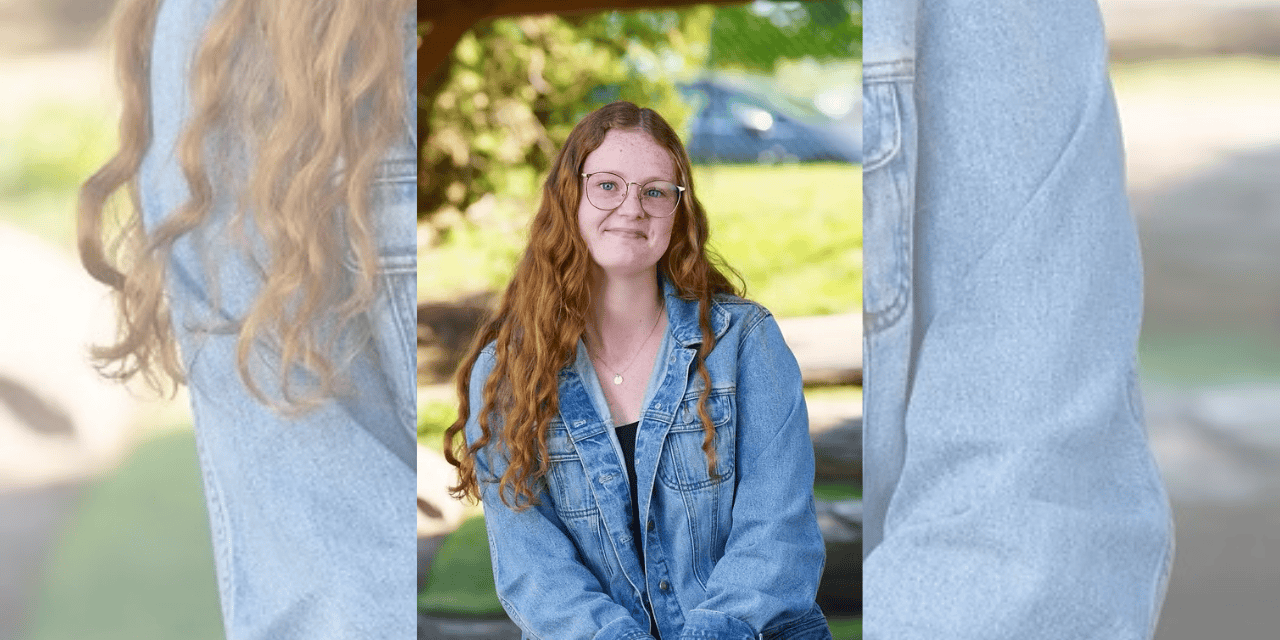
A very close friend of mine, Emily, represents just one of the thousands of children impacted by the foster care system. I recently had the honor of listening to Emily describe her moving experiences with foster care and adoption.
Her story demonstrates exactly why pro-life advocacy does not stop at birth.
Emily was born in 2003, the fifth out of nine children. Her parents did not have the resources to properly care for their family, and their house was crowded and dirty. Emily recalls her youngest sister “crawling around eating cat food and toilet paper” off the ground.
In 2010, Emily’s home was investigated after police found her disabled brother wandering their neighborhood unattended on two separate occasions. As a result, Emily and several of her siblings entered the foster care system due to neglect.
Emily was only six years old when she was removed from her family.
While her two-year-old sister was placed in a stable, loving foster home, Emily and her three-year-old sister lived a very different story – one that no child should ever have to tell.
The two girls remained in their first foster home for one year. During these twelve months, Emily remembers being locked in her bedroom or out of the house for hours at a time, forcing her to use the bathroom outside.
She also recalls her foster mother taking away a book the girls had received from their biological mom. It was never returned.
During this time, Emily and her sister were often taken back home to visit their parents.
“I didn’t understand why I could see them, but not live with them,” she said.
One day, after waiting until her foster mother had left for the grocery store, Emily called 911 for help. She remembers feeling “scared, confused and wanting to leave.”
When the police arrived at her foster home, they told seven-year-old Emily there was nothing they could do to help her.
A year after their initial placement, Emily and her sister were “dropped off at a friend’s house” so their foster mother could go on vacation. These people were not foster care certified, and when Emily’s social worker found out, the two girls were immediately removed from their first foster care placement.
The sisters were then relocated to a temporary placement, where they stayed for four months before transitioning to a more permanent foster home.
Around this time, Emily was given the option of returning to her biological parents’ home or pursuing adoption. Ultimately, Emily chose adoption.
When describing her third foster care placement, Emily noted she had “nothing bad to say about that place.” It was in this home that Emily and her sister were first introduced to Christianity and ultimately to their adoptive parents.
Little did Emily know that her Sunday school teacher at church would soon provide a permanent, loving home for three girls in need of a family.
After spending 27 months in foster care, Emily and her two sisters moved into their new and final home on October 18, 2012.
Initially, nine-year-old Emily didn’t believe this arrangement was truly permanent, but the girls soon integrated with their new family. They began calling their parents “mom and dad” early on, and were lovingly embraced by their three older siblings.
Today, Emily works as an Early Childhood Educator, teaching a preschool class at a daycare. She explained how her background has allowed her to resonate and sympathize with children in her class who have difficult home lives or struggle with certain issues.
“I had it pretty good overall,” Emily said. “Some kids have it way worse.”
Emily’s story demonstrates that the battle for children’s rights doesn’t stop at birth. As Christians, we are obligated to advocate for children who are alive as a result of the births we have fought for – especially children who have spent years in the foster care system, waiting for either adoption or reunification with their biological families.
Contrary to the stereotype, pro-life supporters are more than just “pro-birth.” We care for a child’s entire life – from conception until the very end.
When I read the words “pro-life,” I still picture the ultrasounds, marches and newborns. But now, I also see faces of children who were given the chance to live, yet are trapped in situations beyond their control.
I see faces like Emily’s – the freckled redhead who has not only become one of my closest friends, but has also deeply influenced my own life with her powerful story.
Ultimately, I see countless lives we can change by providing safe foster homes and adoptions for children in need of Christ’s love.
So, I ask you to read these two words again: “Pro-life.”
What do you see now?
Related Articles and Resources:
Resources: Fostering or Adopting Children From Difficult Backgrounds