Voters in 5 States Can Protect Girls’ Rights in Sports
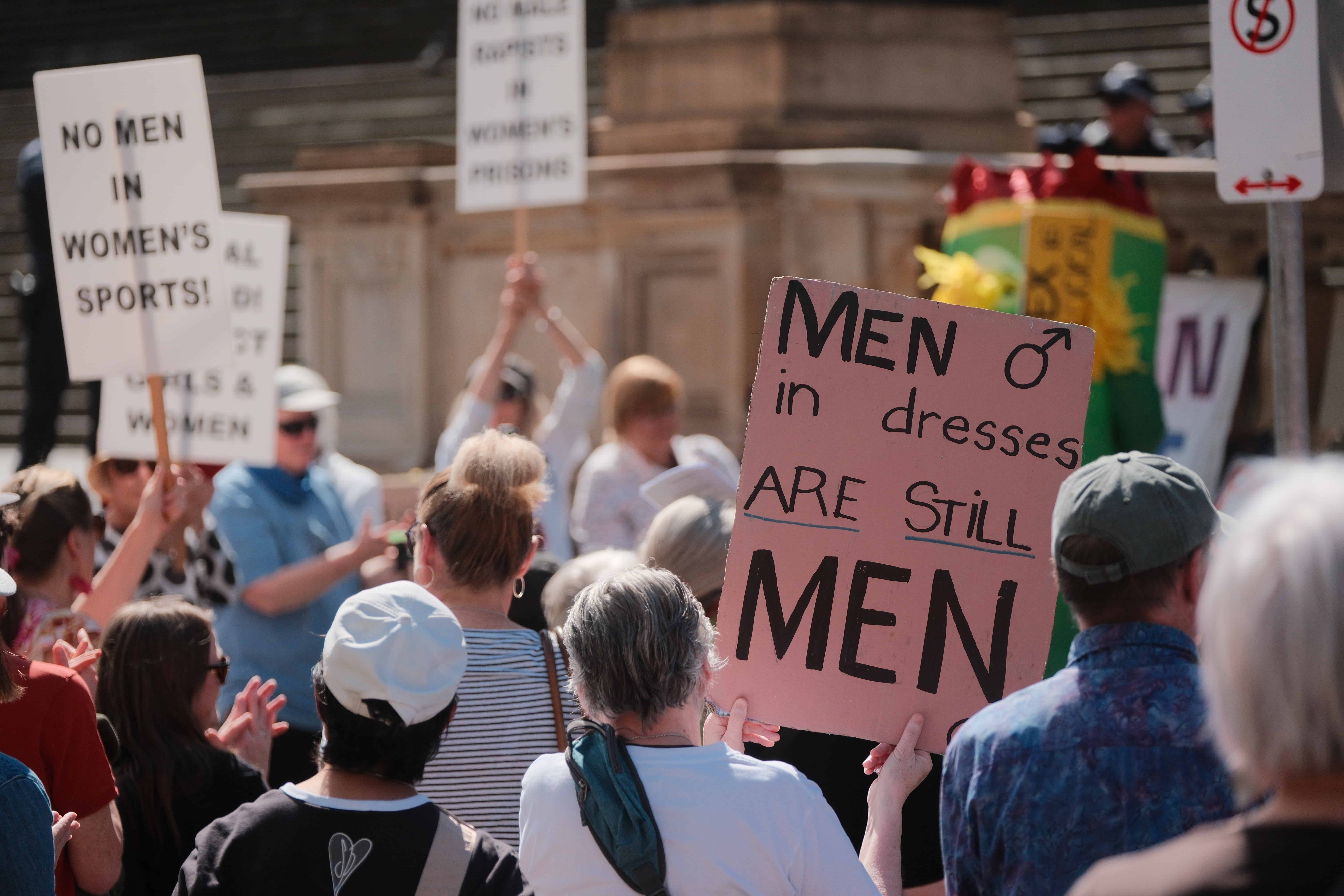
This November 3rd, voters in five states will have the chance to protect girls who want to join their school’s sports programs. Several ballot initiatives provide that girls will not be forced to compete against or share locker rooms with biological boys. If these initiatives succeed, they will not only promote basic fairness, safety, and dignity, they will also provide important provisions for respecting the convictions of families of faith.
The law supports these common-sense measures. In June, the U.S. Supreme Court confirmed that states may constitutionally separate girls’ and boys’ teams on the basis of biological sex. In its 6-3 decision in West Virginia v. B.P.J. (2026), the Court made clear that keeping girls’ teams for girls is consistent with the Constitution’s guarantee of equal protection and with Title IX protections.
Title IX is a landmark civil rights law that protects students against discrimination on the basis of sex. Over the years, it has been key to providing equal opportunities for girls to participate in team sports. The B.P.J. decision stopped an effort by activists to twist the meaning of Title IX to require schools to allow biological males to participate in girls’ sports. The Court concluded that it is reasonable for states to divide sports teams by biology because of legitimate safety and fairness concerns: “With respect to safety, allowing biological males to play on women’s and girls sports teams can put women and girls at significant risk of injuries. The safety risks are particularly severe in contact sports. And as to competitive fairness, allowing biological males to play on women’s and girls’ sports teams can put female athletes at a serious disadvantage.”
For the girls who have already lost their place, the stakes could not be more personal. One Colorado mother told us her story. She is not alone, and her family’s experience shows what is at stake for girls across the country.
For Tanna Donalson’s daughter, being a part of the Dakota Ridge High School’s volleyball team “meant everything to her.” Despite playing volleyball during her freshman and sophomore years, she lost her spot on the volleyball team to a biological male student who played in the same position. Her daughter was crushed. As she told Fox News, “As her mother, I feel her opportunity was taken from her. This is why Title IX protections in sports are so important for our girls.”
Earlier this year, the Department of Justice’s Office of Civil Rights investigated this school district, Jefferson County Public Schools, and concluded that it violated Title IX by allowing male students to access girls’ locker rooms, sleep in girls’ overnight accommodations, and compete in girls sports. Despite this finding, the problem has not yet been resolved, as parents are reporting that their daughters are still not given their own female-only locker-room and are being forced to compete with biological boys.
For many families, this is also a religious liberty issue. Policies that require girls and boys to share changing rooms violate their religious convictions about modesty, as well as their religious beliefs about the immutability of one’s sex.
The Supreme Court has recently upheld the rights of parents to direct the religious upbringing of their children. In Mahmoud v. Taylor (2025), the Supreme Court held that parents have a right to opt their children out of lessons promoting gender ideology, explaining that “[t]he practice of educating one’s children in one’s religious beliefs … receives a generous measure of protection from our Constitution.” As a coalition of different faith groups told the Court in a friend-of-the-court brief, “Many Americans … believe that biological sex reflects divine creation, that sex and gender are inseparable, and that children should be encouraged to accept their sex and to live accordingly.”
Too many girls have been asked to sacrifice their privacy, their religious convictions about modesty, and a fair playing field. They deserve a fair chance to compete, and families of faith deserve the freedom to live by their convictions.
On November 3rd, voters in Colorado, Nebraska, Arizona, Missouri, and Washington will decide whether to protect these girls’ rights in their locker rooms and on the field.
Stephanie Taub is Senior Counsel for First Liberty Institute, a nonprofit law firm dedicated to defending religious freedom for all. Learn more at FirstLiberty.org.