Has Climate Cataclysm’s Needed Wake-Up Call Finally Come?
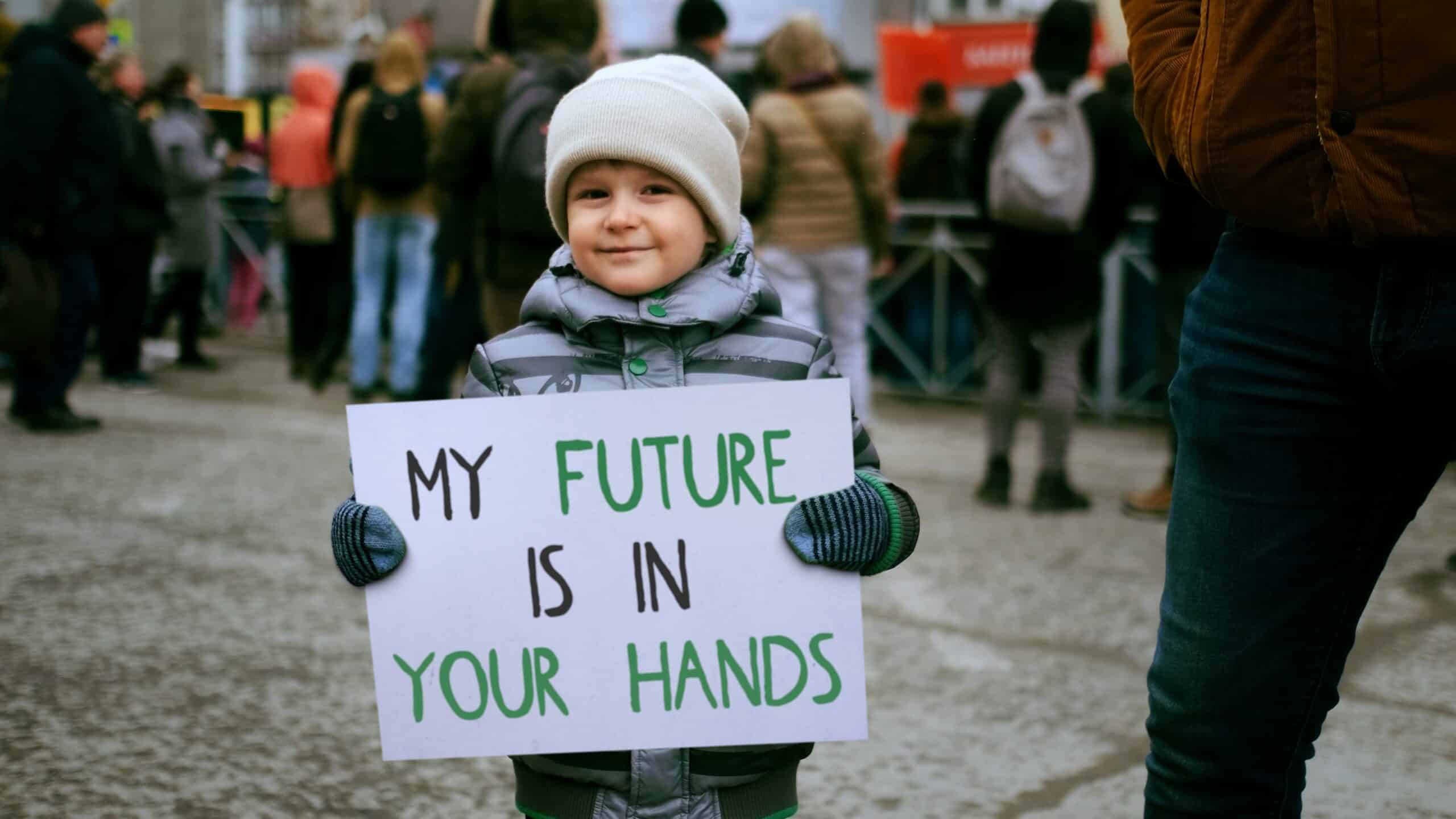
Humans are destroying the earth, which only has a few years of healthy living left, so starting families is a brazen act of vast global environmental vandalism.
That has been the popular narrative of the global environmental movement, and it has sparked such wide-spread climate hysteria among young people that the medical journal The Lancet issued a special “call to action” in 2020 to highlight the problem.
Another Lancet report tells us 4 in 10 young people (ages 16-25) across the globe confess being hesitant to have children due to fear of what human existence is doing to the earth. Nearly 5 in 10 believe “humanity is doomed” and more than 75 percent believe “the future is frightening” due to these concerns. More than 80 percent of young people fear their elders “have failed to take care of the planet.”
As Bob Dylan said of the world leaders of his youth in 1963,
You’ve thrown the worst fear
That can ever be hurled
Fear to bring children
Into the world.
This is the poison fruit of the contemporary environmental movement.
But the “settled science” of the coming climate catastrophe is now, thankfully, taking a serious new hit.
This week, Politico has highlighted “Davos’ climate resignation” where at the “World Economic Forum (WEF), climate mitigation will play a far smaller role than in previous years.” And some European leaders offered angry expletive-ridden responses to this new Davos resignation.
Axios last week in an article entitled “The World’s Great Climate Collapse” boldly states in its very first sentence, “The climate agenda’s fall from grace over the past year has been stunning — in speed, scale and scope.”
And professor Roger Pielke, Jr., of the University of Colorado Boulder’s Center for Science & Technology Policy Research, noted in his popular substack, “The Honest Broker,” “The recent change in climate conversation has been stunning … Catastrophism is out, pragmatism is in.”
Axios highlights Bill Gates’ world-shaking memo this past October where he announced,“ Although climate change will have serious consequences — particularly for people in the poorest countries — it will not lead to humanity’s demise.”
Gates added this corrective to environmentalists, “People will be able to live and thrive in most places on Earth for the foreseeable future.” He explained “the doomsday outlook” of too many environmentalists is counterproductive to human well-being.
This, of course, is a very different tone from former Vice President Al Gore’s scary 2019 warning that climate change “is our generation’s life or death battle.”
Axios also mentioned former U.K. Tony Blair’s April 2025 online memo calling for a “reset” of action on climate change away from “net zero” expectations. The opening line of this Tony Blair Institute for Global Change statement declares, “People know that the current state of debate over climate change is riven with irrationality” and that present proposals “are not founded on good policy.”
Axios noted new Canadian Prime Minister Mark Carney — who served a five-year stint as a United Nations special envoy for climate change — scrapped some, but not all, of the central environmental policies of Justin Trudeau. He explained in a recent podcast, “What we need to do is to be as effective as possible, in terms of addressing climate change while growing our economy.”
Axios recognized the Ford Motor Company for dropping its all-electric F-150 in favor of hybrids. It also recognized the International Energy Agency’s new “long-term outlook will include a more conservative model of the transition from fossil fuels.”
Axios stated that “Even Hollywood is moving on — swapping climate angst as shown in 2021’s “Don’t Look Up and 2023’s “Extrapolations” miniseries for oil swagger, as seen in the current hit TV show “Landman.”
In the face of these positive and reasonable changes, Pielke states, “We should expect that these committed [environmental] advocates — many whose careers and identities depend upon the issue — are not going to accept quietly the changing tenor of the climate discussion.” This is because “this community has worked hard for many years to create a bubble within which heterodox voices are excluded.”
Professor Pielke adds, “That echo chamber will make it difficult for climate advocates to now reach those outside the bubble — should they even want to — who are now leading the climate discussion.”
It is indeed good news that the fear-based, anxiety-inducing doom-and-gloom hegemony in the environmental movement seems to be slipping some. It is certainly good that people inside and outside the movement are noticing this important shift.
Let us hope that it continues and is replaced by a more common-sense perspective that celebrates human life, fertility and family thriving as we seek to become ever-better stewards of the world and its plentiful resources that God has given us.
Additional Resources
‘60 Minutes’ Platforms New Environmental Alarmism from Man Who’s Been Famously Wrong for 50+ Years
Why Americans Over and Under 50 Say They Don’t Have Kids
Death of the West? U.S. Fertility Rate Falls to Record Low.
Why Women Are Not Having the Babies They Say They Want
Discarding Genesis 1, U.S. Population Set to Decline This Century Amid World Population Collapse
China Launches Largest Fertility Initiative in Human History
No, The World Does Not Have Too Many People. It Has Too Few.


ABOUT THE AUTHOR