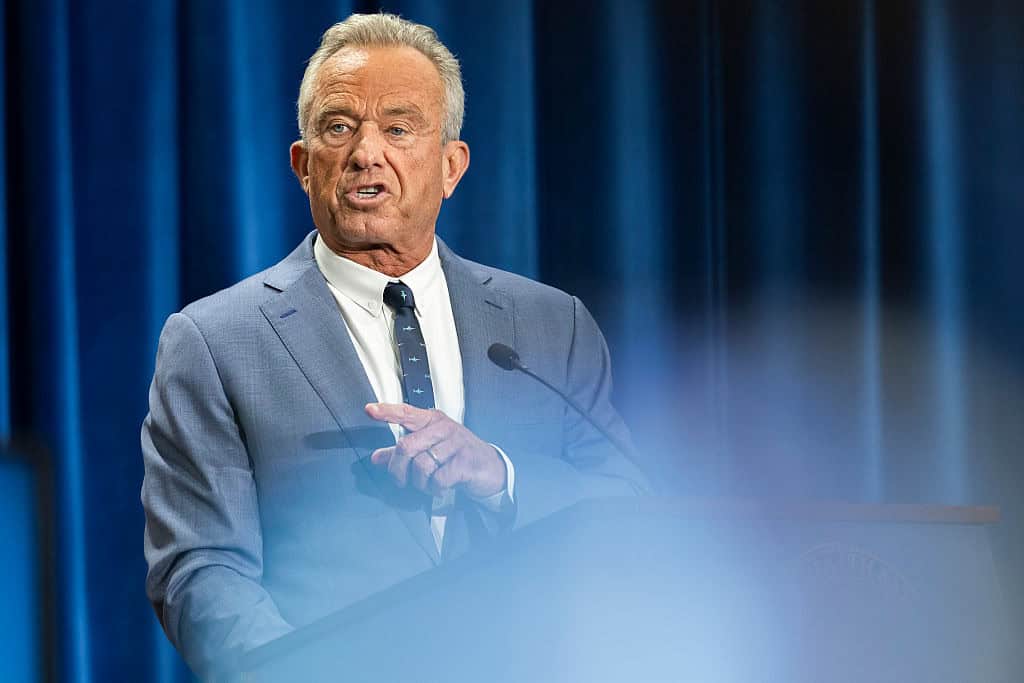
Kevin Warsh: Fed Has ‘No Tolerance’ for High Inflation
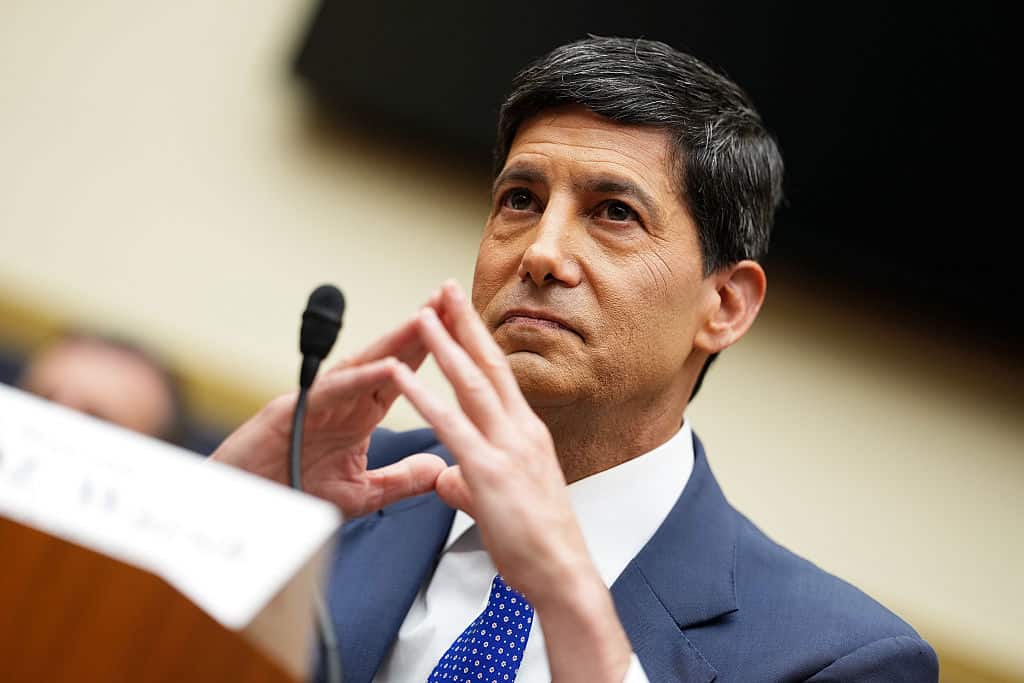
Newly minted Chairman of the Federal Reserve Kevin Warsh testified before lawmakers on Tuesday, promising to bring inflation down and pledging officials have “no tolerance for persistently elevated inflation.”
Warsh succeeded Jerome Powell to head the Fed, our nation’s central bank, on May 22, 2026. The Fed is tasked with steering the economy towards maximum employment and stable prices.
Under Powell’s tenure as Fed chairman from 2018 to 2026, the U.S. experienced an inflation crisis with the U.S. Consumer Price Index (CPI), the measure of the average change consumers pay for goods and services, hitting a four-decade high of 9.1% annually.
“If we get policy right—and we will—the inflation surge of the last five years will be a thing of the past,” Warsh affirmed Tuesday. “Inflation’s a choice, meaning monetary policymakers need to choose lower prices.”
Warsh’s testimony comes on the same day the U.S. Bureau of Labor Statistics (BLS) reported inflation fell to 3.5% in June from 3.9% in May, the largest 1-month decrease since April 2020.
The CPI decreased 0.4 percent as gasoline prices fell substantially due to a temporary ceasefire in the Iran War, after rising 0.5 percent in May.
Several items saw substantial year-over-year increases, including:
- Energy, rising 15.7%.
- Apparel, increasing 3.9%.
- Shelter, increasing 3.3%.
- Food, rising 3.0%.
“June finally brought some relief on inflation,” Heather Long, chief economist at Navy Federal Credit Union, told CNBC. “The concern is that this relief will be short-lived as the war in Iran re-starts. It’s too uncertain to know how the inflation story ends.”
Ryan Young, a senior economist at the Competitive Enterprise Institute, said June’s inflation relief is “likely temporary,” the Washington Times reports.
“The latest Iran flare-up will likely push July’s inflation numbers back up,” he said. “Uncertainty about the president’s strategy and goals in Iran makes it unlikely that energy prices will come back down to pre-war levels until at least next year.”
June’s inflation decrease is certainly welcome news for many families feeling a financial pinch today. According to new research, millions of Americans are relying on debt to buy groceries and are unable to pay their credit card balance in full or missed their minimum payment.
Additionally, a record number of Americans – 9.16 million – are in default on their student loan payments, meaning they’re more than one year behind.
All told, millions of Americans – for a variety of reasons – are struggling financially today. Yet, even if inflation falls back to the Federal Reserve’s 2% target, Americans won’t see a decrease in the high prices they’re experiencing.
According to the BLS’ CPI Inflation Calculator, $100 U.S. dollars in June 2016 has the same buying power as $138.56 today. Unless families have seen at least a 38% wage increase over the last decade, they can afford less now than they could 10 years ago.
For prices to fall, the U.S. economy would have to experience a negative inflation rate, which generally only happens during recessions or depressions. This means Americans can expect high prices to stay – even if the rate of increase moderates to 2%.
For American families, financial struggles can increase the importance of intentional communication and planning. A 2017 study by Ramsey Solutions found money fights are the second leading cause of divorce, behind infidelity.
Nearly half of couples with at least $50,000 or more in consumer debt cite money as a top reason for arguments, while those who say they have a “great” marriage are almost twice as likely to frequently discuss money compared to those who say their marriage is “okay” or “in crisis.”
“Both high levels of debt and a lack of communication are major causes for the stress and anxiety surrounding household finances,” the study found.
Craig Constantinos, MA, LPCC, a counselor in Focus on the Family’s Counseling Services Department, said couples can use financial stressors as an opportunity for growth in their relationship.
“Stress and anxiety about the economy can often lead to frustration and conflict in marriages, as finances is one of the areas where different perspectives are most obvious,” Constantinos told us.
“Having a grace-filled conversation about budgets and spiritual and financial goals can lead to deeper understanding in a marriage, which can turn the challenge of financial uncertainty into an opportunity to build one’s relationship with God and their spouse.”
To learn more about how you can successfully handle finances in your life or marriage, check out our free resources below.
To speak with a family help specialist or request resources, please call us at 1-800-A-FAMILY (232-6459).
Related articles and resources:
Counseling Consultation & Referrals
Unlock the Secrets to a Financially Secure Marriage
Being Wise With Your Money During a Crisis
Healthy Budgeting Habits for Your Marriage
When Your Money and Marriage Clash
Getting on the Same Page Financially in Marriage
Getting a Reluctant Spouse Onboard with Budgeting
Money Talk: The ‘You’ in ‘Unity’ is Silent
The Total Money Makeover Updated and Expanded: A Proven Plan for Financial Peace
Inflation Rises to 3.8% Making Life More Unaffordable for Families
Photo from Getty Images.


ABOUT THE AUTHOR