New Law Increases Penalties for Manufacturing, Distributing Fentanyl
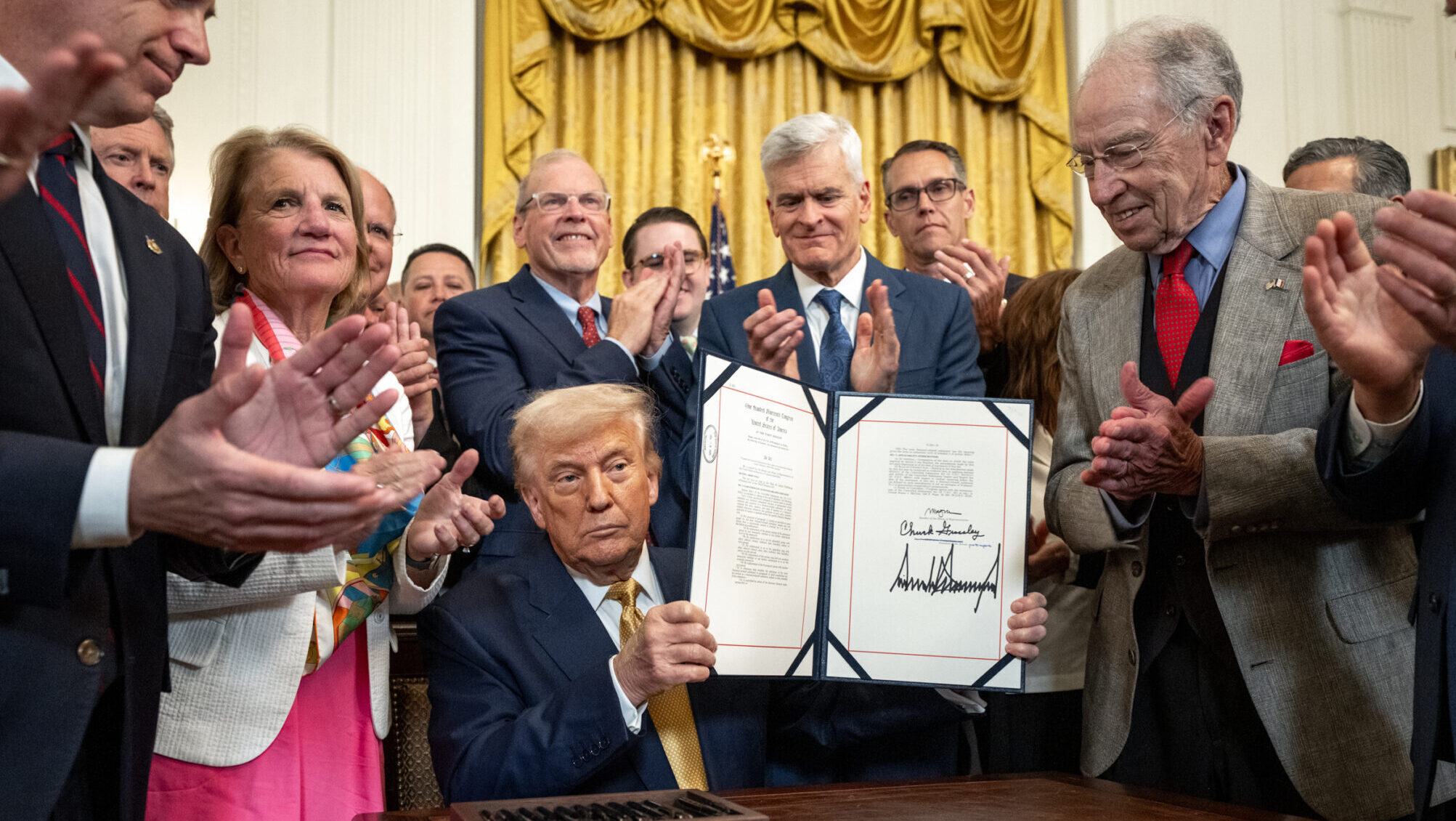
President Trump signed a law yesterday increasing penalties for manufacturing and distributing fentanyl, a synthetic opiate responsible for the deaths of tens of thousands of Americans every year.
The HALT Fentanyl Act (H.R. 331) reclassifies fentanyl and fentanyl-related substances (FRS) from a Schedule 2 to Schedule 1 drugs. The U.S. Drug Enforcement Administration (DEA) reserves this category for chemicals with:
- A high potential for abuse.
- Not currently accepted medical use in the U.S.
- A lack of accepted safety, even if taken under medical direction.
Congress initially classified fentanyl as Schedule 2 because doctors use it for pain relief and management. The law carves out exceptions for these compounds by exempting specific fentanyl derivatives named in other, less restrictive, categories.
The vast majority of fentanyl and FRS, however, will now be subject to the DEA’s stringent penalties for manufacturing and distributing Schedule 1 drugs.
“It’s a big deal,” the president remarked yesterday at press conference celebrating H.R. 331’s ratification.
“It means anyone caught trafficking these illicit poisons will be punished with a ten-year minimum sentence in prison.”
He continued:
The DEA temporarily bumped FRS to Schedule 1 in 2018. When Louisiana Senator Bill Cassidy, a medical doctor, introduced the HALT Fentanyl Act in January, he argued the DEA could not effectively enforce Schedule 1 penalties on fentanyl manufacturers and distributors until Congress made the change permanent.
The Senate passed H.R. 331 in March with an 84-16 vote. The House of Representatives passed it 321 to 104 in June.
“President Trump and I are committed to stopping fentanyl overdoses and overdose-related deaths,” Cassidy commented in a press release.
“My HALT Fentanyl Act, which he signed today, gives law enforcement one more tool to attack this problem.”
Fentanyl’s potency makes it both “highly addictive” and extremely easy to overdose on. Just two milligrams of fentanyl powder, a dusting that can fit on the tip of a pencil, can kill you. Of the more than 108,000 Americans who died of drug overdoses last year, 48,422 (45%) overdosed on synthetic opiates — primarily fentanyl.
Tragically, many who lose their lives to fentanyl don’t intentionally ingest it.
Fake pills made to look like Percocet, Xanax, OxyContin and other common medications can contain fentanyl. The DEA seized 60 million fentanyl-laced pills last year alone. DEA lab testing conducted in 2022 found 60% of contaminated pills contain a lethal dose of fentanyl
Fatal fentanyl overdoses among children and teens surged in 2021, according to data collected by the Journal of the American Medical Association (JAMA).
“With older teens, ages fifteen to 19, the way the poisonings occur is similar to what happens with adults,” Julie Gaither, an assistant professor of pediatrics at Yale School of Medicine, told CNN. “It’s recreational drug use, and they’re either intentionally taking fentanyl or it’s being cut into the drugs they’re using.”
But teenagers aren’t the only ones losing life. Of the 1,550 pediatric fentanyl deaths recorded in 2021, 40 were infants and 93 were children between the ages of one and four. Most simply grab fentanyl or fentanyl-laced drugs left in reaching distance.
Fentanyl consumption is an American problem, but most of the drug is created abroad. The Sinaloa and Jalisco New Generation cartels manufacture most fentanyl consumed in America in Mexico using raw materials from China.
Cartels sneak the drug into the U.S. through the southern border. Between 2021 and 2024, Customs and Border Protection (CBP) officers seized more than 9,000 pounds of fentanyl trafficked through illegal border crossings. That’s more than five times as much as CBP seized between 2017 and 2020.
HALT Fentanyl makes it significantly riskier for cartels to traffic fentanyl into America — particularly in large amounts. The penalty for manufacturing or distributing just 40 grams is at least ten years in jail, or twenty years if prosecutors can prove the sale led to someone’s death or injury.
The jail time is higher for those with previous drug or violent felony convictions.
The Daily Citizen supports any law that helps parents protect their kids from dangerous substances. To learn more about fentanyl, and what you can do to keep your child safe, click on the links below.
Additional Articles and Resources
Resources for Confronting Substance Abuse and Addiction
Fentanyl Overdoses Rise, Connection to Illegal Immigration
National Fentanyl Awareness Day Highlights Rates of Unintentional Overdoses in Young People
Philadelphia Legislators Tackle Drug Crisis, Face Opposition from Harm Reduction Groups
Oregon Lawmakers Vote to Recriminalize Hard Drugs
Trump Executive Orders Target Illegal Immigration, Troops Sent to Border


ABOUT THE AUTHOR