President Trump Paves Way for Fewer Restrictions on Psychedelics
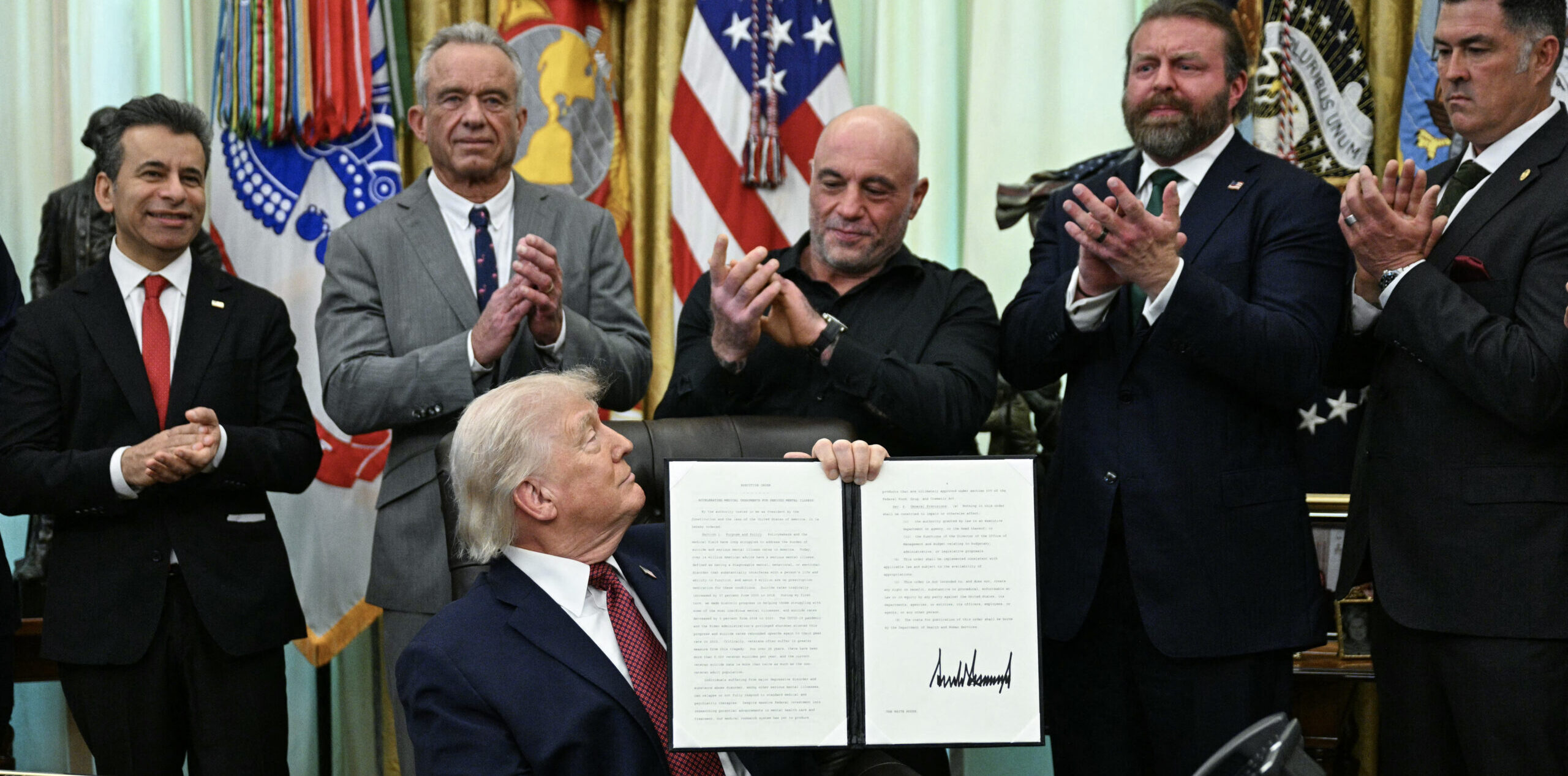
President Trump signed an executive order Saturday to expedite FDA reviews of psychedelic drugs to treat mental health disorders.
The order, titled “Accelerating Medical Treatments for Serious Mental Illness,” purports to make experimental treatments for disorders like PTSD and depression more accessible to suffering citizens.
Critics note the president’s directive doesn’t just facilitate research — it also creates a pathway for Schedule I psychedelics like LSD and MDMA to be reclassified as less dangerous substances.
The order directs the FDA to enroll drugs it has designated “breakthrough therapies” for PTSD, depression and other mental illnesses in the organization’s National Priority Voucher program.
Drugs in the voucher program, which launched in June 2025, can achieve FDA approval in as little as one month, per the FDA’s website, without compromising “safety, scientific rigor or regulatory compliance requirements.”
The FDA has designated psychedelics including LSD, MDMA and psilocybin — the hallucinogen in “magic mushrooms,” as breakthrough treatments for mental health issues. Under the president’s order, the FDA must put them through the voucher program’s expedited review process.
In addition to accelerated reviews, the executive order:
- Directs the FDA and Drug Enforcement Administration to create ways for Americans with serious or life-threatening illnesses to access experimental psychedelic drug treatments, provided they’ve passed the first stage of clinical trials.
- Frees up $50 million in Health and Human Services (HHS) funding to research the effect of psychedelic drugs on mental health disorders.
- Orders the FDA, HHS, and Department of Veterans Affairs to collaborate with drug companies to increase veterans’ participation in clinical trials studying psychedelics’ effect on PTSD, depression and other combat-related mental health disorders.
- Directs the U.S. attorney general to order the review of any psychedelic approved by the FDA so it can be downgraded from a Schedule I drug, a classification reserved for drugs with no accepted medical uses and a high potential of abuse.
Proponents of the president’s order highlighted the importance of researching the effect of psychedelics on mental health disorders — particularly for veterans with treatment-resistant PTSD.
“It’s disturbing to me and to the president that hundreds, in fact, thousands of veterans are having to travel to Mexico or other countries to experiment with interventions that hold great promise,” HHS Secretary Robert F. Kennedy Jr. told reporters Saturday.
Kevin A. Sabet, Ph.D., the president and CEO of Smart Approaches to Marijuana and the Foundation for Drug Policy Solutions, also supports more robust research into potential medical applications of psychedelics. But President Trump’s order, he argued in a statement for the foundation, goes much too far.
“This order elevates politics and hype over sound science,” he wrote. “It implies that risky, unapproved hallucinogens can function as legitimate medical therapies.”
Dr. Sabet called the existing evidence for the benefits of psychedelics “beyond weak” and “rife with conflict and industry connections.”
“When the federal government lends its endorsement to any substance, that signal carries enormous weight,” he continued. “That power cannot and must not be used to legitimize unproven and potentially dangerous substances, particularly under the banner of helping those who have served our country.”
The statement concludes:
If “Accelerating Medical Treatments for Serious Mental Illness” loosens legal restrictions on psychedelics, illegal, recreation consumption will almost certainly increase. In that case, it will become the second executive order in six months to compromise the Trump administration’s Great American Recovery Initiative — a coordinated government effort focused on preventing drug addiction, prioritizing treatment and celebrating recovery.
In December, the president signed an executive order opening the door for marijuana to be reclassified to a Schedule III drug, which is reserved for drugs which have “a moderate to low potential for physical and psychological dependence.”
The order expanded access to cannabis, despite decades of evidence showing it effectively treats only three medical conditions — none of which include insomnia, anxiety and pain, increases risk of physical and psychological harm and, perhaps most importantly, causes addiction.
The high-THC content in modern marijuana products make them habit forming. A 2019 study published in The Lancet found people who smoke high-THC marijuana daily are five times as likely to develop a psychotic disorder than those who don’t smoke.
Focus on the Family President Jim Daly wrote to President Trump in December, urging him not to make marijuana easier to obtain.
“It is imperative for our federal government and leaders to continue sending a strong message about the negative impact of marijuana use and addiction,” Daly wrote.
The federal government must take the same stance on psychedelics to carry out the objectives of the Great American Recovery Initiatives.
Expanding access to dangerous, addictive drugs makes preventing addiction and prioritizing treatment a much more difficult task.
Additional Articles and Resources
Help With Substance Abuse and Addiction
Talking With Your Teens About Drugs and Alcohol
President Trump Unveils Plan to Combat Drug and Alcohol Addiction
Focus’ Jim Daly to Pres. Trump: Strongly and Unequivocally Oppose Reclassification of Marijuana
President Trump Loosens Restrictions on Marijuana — But the Grass Isn’t Greener on the Other Side
THC-Laced Snacks Marketed to Kids, Hemp to Blame
Marijuana Causing Psychosis in Young People, Legacy Media Late to Party
JD Vance Celebrates Mother’s 10-Year Sobriety at White House: ‘You Made It’
New Law Increases Penalties for Manufacturing, Distributing Fentanyl


ABOUT THE AUTHOR