Supreme Court Packing: We’ve Seen This Movie Before
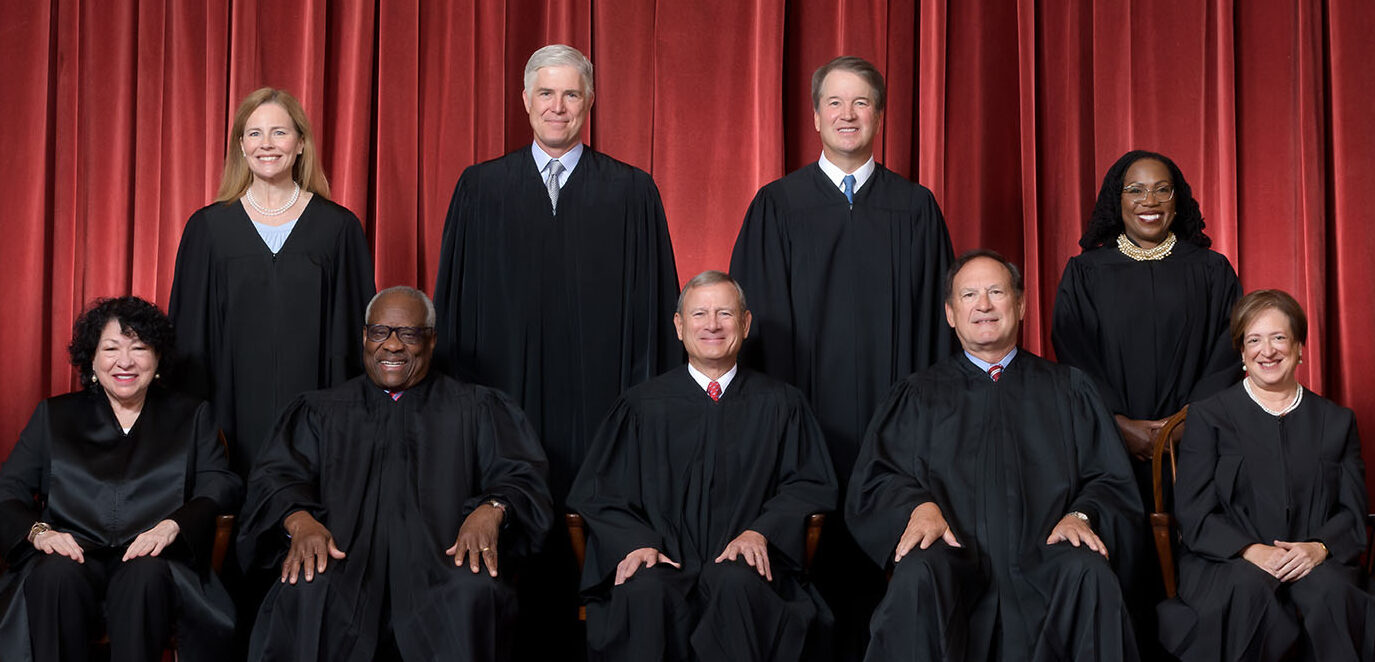
When it comes to recent calls to expand the number of justices on the United States Supreme Court, an adaptation of President Reagan’s famous retort seems in order:
“Here we go again.”
On Wednesday, a constitutional amendment introduced by Rep. Andy Biggs (R-Ariz.) to lock the total number of justices on the United States Supreme Court at nine was defeated 212-206, well short of the two-thirds majority needed to pass the House. The amendment would have needed to also pass the U.S. Senate and then be ratified by 38 states.
Speaker Mike Johnson (R-LA), who voted for the amendment, said, “Defending the integrity of the Supreme Court shouldn’t be a controversial vote.”
Speaking in Nashville at the National Urban League’s annual conference earlier this summer, former Vice President Kamala Harris was blunt regarding her support of adding more justices.
“We need to revisit the point of expanding the court to 13 justices like we have 13 district courts,” she said.
Representative James Clyburn (D-SC) wholeheartedly agreed, noting, “A baker’s dozen would be a good number to have on the court.”
Advocating for expanding the High Court in order to dilute its ideologically conservative leanings might sound familiar to students of history.
Speaking to the American people during one of his fireside chats in 1937, President Franklin Roosevelt explained why he wanted to do likewise.
“We cannot yield our constitutional destiny to the personal judgment of a few men who, being fearful of the future, would deny us the necessary means of dealing with the present,” the 32nd president contended. He went on to claim the proposal to “pack the court” was not politically motivated but rather in the best interest of the country.
“This plan of mine is no attack on the Court,” FDR proffered. “It seeks to restore the Court to its rightful and historic place in our system of Constitutional Government and to have it resume its high task of building anew on the Constitution ‘a system of living law.’ The Court itself can best undo what the Court has done.”
For context, President Roosevelt was frustrated that a majority of justices were striking down as unconstitutional some of his signature policies that were part of the suite of “New Deal” government expansion programs. More than a dozen of his initiatives were blocked, including “The National Industrial Recovery Act,” “The Agricultural Adjustment Act,” and the “Bituminous Coal Conservation Act.” The High Court repeatedly found that FDR was overstepping his executive authority.
Rather than waiting for openings and appointing justices more aligned with his judicial philosophy, FDR decided it would be quicker to simply expand the court. Although the High Court has had 9 justices since 1869, it has previously possessed as few as 5 and as many as 10. The Constitution is silent regarding how many should be on the Supreme Court.
Interestingly enough, it was FDR’s fellow Democrats who ultimately killed his court-packing proposal. The Senate Judiciary Committee dismissed the proposal and forcefully stated:
Conventional wisdom suggests the fate of the current proposals to expand the Supreme Court rests with the outcome of the November elections.
As Christians, we pray that the nine justices who currently sit on the Court “shall judge the people with righteous judgment” and who won’t “pervert justice” or “show partiality” (Deut. 16:18-19).
Photo Credit: U.S. Supreme Court


ABOUT THE AUTHOR