• Skip to main content
Daily Citizen
  • Subscribe
  • Categories
    • Culture
    • Life
    • Religious Freedom
    • Sexuality
  • Parenting Resources
    • LGBT Pride
    • Homosexuality
    • Sexuality/Marriage
    • Transgender
  • About
    • Contributors
    • Contact
  • Donate

drugs

Feb 02 2026

Kathryn Burgum on Recovering from Addiction: ‘If not for the grace of God, I would not be alive today.’

Kathryn Burgum, the White House’s new Senior Advisor for Addiction Recovery, credits God for her sobriety.

“If not for the grace of God, I would not be alive today, over 23 years in recovery [from alcohol addiction],” Burgum, the wife of Interior Secretary Doug Burgum, shared at President Trump’s press conference announcing the Great American Recovery Initiative.

“My message is simple: Never give up hope for recovery.”

The president established the Great American Recovery Initiative with an executive order on January 29. The interdisciplinary group of officials will ensure federal efforts to combat drug and alcohol addiction effectively serve three goals:

  • Preventing addiction
  • Prioritizing treatment
  • Celebrating recovery

The Trump administration tapped Burgum to lead the initiative alongside Health and Human Services Secretary Robert F. Kennedy Jr., who is also in long-term recovery from substance addiction.

In her Oval Office address, Burgum emphasized the importance of honesty, vulnerability and empathy in encouraging others to seek treatment for addiction. But human intervention alone did not change her life.

Burgum’s disordered relationship with alcohol began in high school. After 20 years of attempting and failing to remain sober, she “reached a point where [she] truly did not believe there was one reason for [her] to keep living.”

She recalled the day she cried out to God:

I was out walking alone. I didn’t have faith. I wasn’t religious, but something in me said I should ask for help. And, out loud — to no one, because it was just me — I said, “I don’t know if anyone is there, but I need help.” And that was the day I became sober.

Burgum’s interaction with God parallels the story of Hagar — Abram’s concubine and the mother of Ishmael.

Hagar departed from Abram’s (later Abraham) camp twice in Genesis. Both times, she found herself distressed, homeless and vulnerable in the harsh wilderness. Both times, God saw her, addressed her by name and guided her to safety.

For this reason, in Genesis 16:13 (ESV), Hagar calls God “a God of seeing.”

“Truly here I have seen Him who looks after me,” she says.

Like Hagar, God saw and rescued Burgum in her most hopeless moment.

No one escapes God’s watchful eye, but those who accept Jesus Christ as their savior receive the Holy Spirit. Believers will experience earthy suffering (John 16:33), but the Holy Spirit — God’s indwelling presence — ensures we are never separated from His presence, power and comfort.

Though God offered Burgum miraculous help in her time of need, her story also illustrates the slow, healing work God accomplishes over time. He didn’t just enable Burgum to stay sober — He laid the groundwork for her long-term recovery. He connected her with co-workers who showed her unexpected empathy when she sought treatment. Later, He put her in a position to join a supportive community of other people in recovery.

Burgum says both help her maintain her sobriety.

Burgum’s emphasis on vulnerability as a prerequisite to recovery is consistent with the Bible’s teaching on sin.

Sin thrives in darkness and isolation. When Adam and Eve committed the first sin against God, they hid from His presence. God, the antithesis of sin, exposes evil by shining light on it

Luke 8:17 promises, “For nothing is hidden that will not be made manifest, nor is anything secret that will not be known and come to light.”

The sacrifice of Jesus Christ means believers need not fear judgement when their sin comes to light. Instead, they can seek forgiveness. James 5:15-16 encourages believers to confess sins to one another that they might be healed.

The Daily Citizen thanks Special Advisor Kathryn Burgum for sharing such a poignant example of the healing God can accomplish in and through our lives.

Additional Articles and Resources

Counseling Services

Request A Consult

Help With Substance Abuse and Addiction

Talking With Your Teens About Drugs and Alcohol

President Trump Unveils Plan to Combat Drug and Alcohol Addiction

JD Vance Celebrates Mother’s 10-Year Sobriety at White House: ‘You Made It’
Written by Emily Washburn · Categorized: Culture · Tagged: drugs, Evangelism

Jan 30 2026

President Trump Unveils Plan to Combat Drug and Alcohol Addiction

President Donald Trump signed an executive order yesterday to establish the Great American Recovery Initiative — an interdisciplinary group of officials which will coordinate the federal push against drug and alcohol addiction

“The Great American Recovery Initiative will bring together federal, state, local and private sector resources to support addiction recovery, treatment and prevention,” President Trump explained in a press conference announcing the order.

“It will help mobilize the full resources and authority of the federal government to help stop this tremendous plague.”

The initiative prioritizes three goals:

  • Preventing addiction
  • Prioritizing treatment
  • Celebrating recovery

The president’s executive order empowers the initiative to ensure federal financial resources, recovery programs and messaging about drugs and alcohol effectively support these three priorities.

The initiative will also connect the federal government with local groups, including faith-based groups, fighting drug and alcohol addiction in their communities.

The Great American Recovery Initiative reflects the Trump administration’s position that drug and alcohol addiction negatively affects all Americans.

“Addiction contributes to declining workforce participation, increased healthcare costs, homelessness, family instability and lost productivity that together cost the United States hundreds of billions of dollars each year,” a fact sheet on the initiative emphasizes.

“Recovery is not a side issue,” Health and Human Services Secretary Robert F. Kennedy Jr. reiterated at the press conference. “It’s an economic issue, a workforce issue, a family issue and a national security issue.”

Secretary Kennedy will co-chair the initiative with Kathryn Burgum, the White House’s new Senior Advisor for Addiction Recovery. Both achieved long-term recovery from addiction.

Kennedy and Burgum are just two of several prominent members of the Trump administration affected by drug and alcohol addiction. Steve Witkoff’s, the president’s special envoy to the Middle East, son tragically died of a drug overdose. White House Chief of Staff Susie Wiles’ father, Pat Summerall, battled addiction on a national stage. Vice President J.D. Vance’s mom, Beverly Aikins, celebrated 10 years of sobriety in April 2025. President Trump’s brother, Fred Trump, died of a heart attack related to alcohol addiction at just 42 years old.

“These stories matter because they are not isolated,” Burgum explained. “They reflect the reality of over 190 million Americans — that’s half our nation who are impacted in some way by the disease of addiction.”

The Daily Citizen supports federal efforts to prevent addiction and heal families and communities from the lingering consequences.

Additional Articles and Resources

Counseling Services

Request A Consult

Help With Substance Abuse and Addiction

Talking With Your Teens About Drugs and Alcohol

JD Vance Celebrates Mother’s 10-Year Sobriety at White House: ‘You Made It’
New Law Increases Penalties for Manufacturing, Distributing Fentanyl

Written by Emily Washburn · Categorized: Culture · Tagged: drugs, marijuana

Jan 06 2026

America’s Ongoing Battle With Cocaine Addiction

The Department of Justice (DOJ) indicted Venezuelan strongman Nicolas Maduro for helping traffic “thousands of tons” of cocaine into America over the past 25 years.

The case marks the federal government’s latest effort to disrupt cocaine trafficking to the U.S. Despite nearly four decades of public policy beating back the deadly drug, cocaine continues to kill tens of thousands of Americans every month.

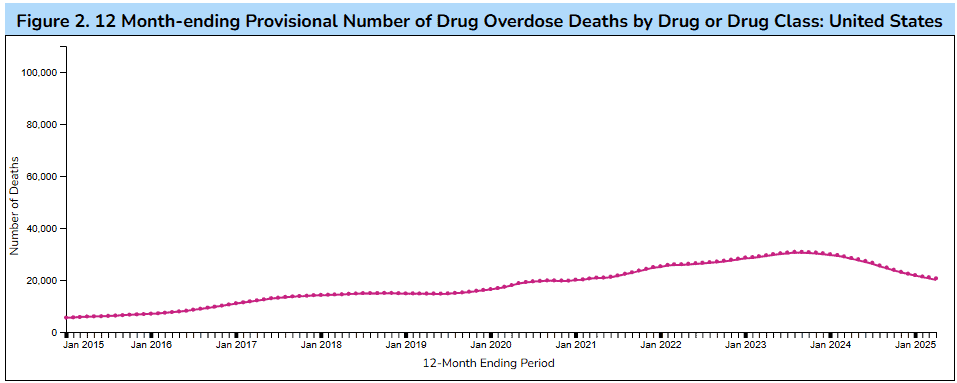
At least 1.5 million people died of cocaine-related overdoses from 2020 through 2024, according to the Centers for Disease Control (CDC). The true number is likely much higher.

Cocaine overdose deaths from Jan. 2015 through April 2025

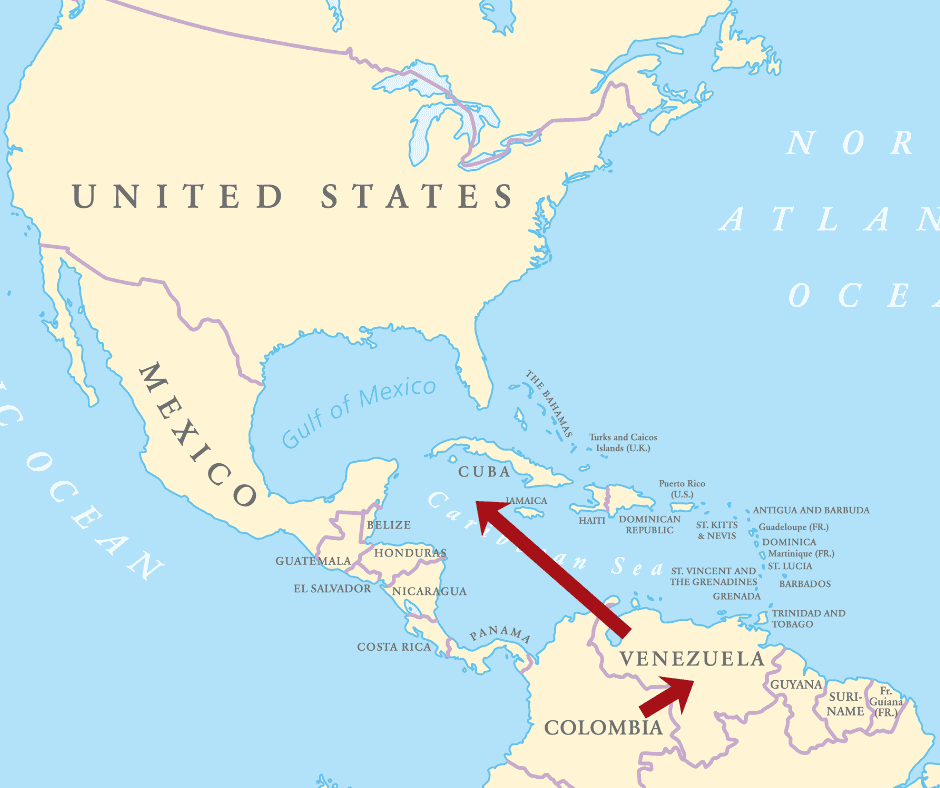
Though Maduro pled “not guilty” to all charges in federal court yesterday, the DOJ maintains the deposed dictator and his co-defendants profited from connecting Columbian cocaine manufacturers with the Mexican drug cartels who smuggle the drug into the U.S.

“Venezuela sits in a geographically valuable location for drug traffickers,” the indictment against Maduro reads, “with northern access to the Caribbean Sea … and western access to the mountainous regions of Columbia, where coca is grown and turned into the vast majority of the world’s cocaine supply.”

The DOJ claims Maduro and his associates got rich from offering drug cartels and manufacturers sanctuary in Venezuela.

Maduro’s alleged narcotrafficking is largely an open secret. The DOJ charged him with the same offense in 2020, claiming he and 14 other Venezuelan officials knowingly facilitated the annual trafficking of between 200 and 250 metric tons of cocaine north to the U.S.

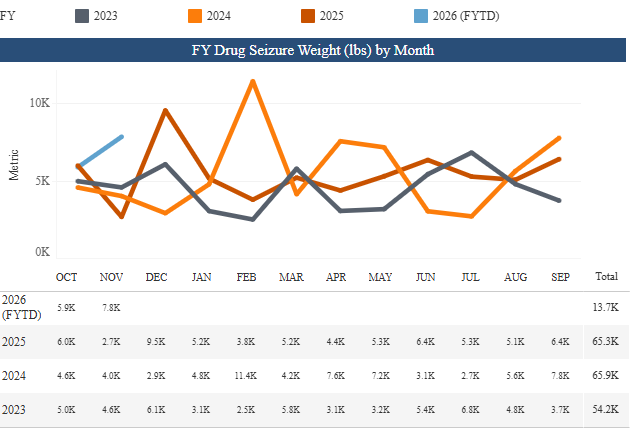
These quantities, if correct, could account for much of the cocaine smuggled into America every year. Law enforcement seized an average of 230 tons of cocaine each year from 2020 through 2024, according to the Drug Enforcement Administration’s 2024 cocaine report.

Customs and Border Protection confiscates approximately 30 tons each year at America’s southern land border and coastal borders.

Cocaine seized by CBP at southwestern land border and coastal borders, measured in thousands of pounds.

The capture and prosecution of Maduro may seem inconsequential to families. Don’t be fooled! Parents play a crucial role in America’s ongoing battle against cocaine addiction.

No parent ever believes their child could ever face debilitating addiction. But drugs do not discriminate.

Of the nearly five million Americans who reported using cocaine in the past year on the 2024 National Survey on Drug Use and Health, more than 800,000 were young adults ages 18 through 25.

A whopping 72,000 were minors ages 12 through 17.

Children of every age, from every family, faith background and neighborhood can be vulnerable to addiction. Parents and caregivers should keep an eye out for signs their child or loved one may need help, including:

  • Premature use or overindulgence in mind-altering substances, including alcohol.
  • Worsened performance in school.
  • Decreased social interaction or participation in extracurricular activities.
  • Unexplained absences.
  • Disappearance of money or valuables.

Protecting children from drug addiction also requires proactive, honest conversations. Educate your children about the physical, mental and spiritual consequences of drug addiction. Remind them you are a safe place where they can seek help and advice.

These conversations should not address addiction to drugs alone. Though substance abuse often leads to worse physical outcomes for those who are addicted, reliance on anything other than Jesus Christ causes instability and trouble (Psalm 118:8; Proverbs 29:25, ESV).

Total reliance on God, in contrast, leads to everlasting life and peace.

“Blessed is the man who trusts in the Lord, whose trust is in the Lord,” Jeremiah 17:7-8 (ESV) reads.

“He is like a tree planted by water, that sends out its roots by the stream, and does not fear when heat comes, for its leaves remain green, and is not anxious in the year of drought, for it does not cease to bear fruit.”

America cannot successfully fight cocaine addiction and death unless the federal government and parents work together in their respective spheres of influence. Intentional, proactive teaching about drugs and addiction can change your child’s life for the better.

Additional Articles and Resources

The Vicious Truth About Drug Addiction and Alcoholism

Talking With Your Teens About Drugs and Alcohol

President Trump Loosens Restrictions on Marijuana — But the Grass Isn’t Greener on the Other Side

Focus’ Jim Daly to Pres. Trump: Strongly and Unequivocally Oppose Reclassification of Marijuana

Taxpayer-Funded ‘Harm Reduction’ Nonprofit Hands Out Drug Paraphernalia

New Law Increases Penalties for Manufacturing, Distributing Fentanyl

British Columbia Walks Back Harm Reduction Law

Fentanyl Overdoses Rise, Connection to Illegal Immigration

Written by Emily Washburn · Categorized: Culture · Tagged: cocaine, drugs

Privacy Policy and Terms of Use | Privacy Policy and Terms of Use | © 2026 Focus on the Family. All rights reserved.

  • Cookie Policy