
• Skip to main content
Daily Citizen
  • Subscribe
  • Categories
    • Culture
    • Life
    • Religious Freedom
    • Sexuality
  • Parenting Resources
    • LGBT Pride
    • Homosexuality
    • Sexuality/Marriage
    • Transgender
  • About
    • Contributors
    • Contact
  • Donate

nudity

Sep 15 2025

Young Women View OnlyFans as Cash Cow, Documentaries Suggest

Young women increasingly view “adult content creation” as a good way to make extra cash, two new documentaries on OnlyFans suggest.

OnlyFans is an online platform that allows adults to sell content — including pornographic photos and videos of themselves — directly to subscribers. Users flocked to the service during the pandemic. Today, it’s a cultural mainstay boasting more than 4 million content creators and 300 million subscribers.

Director Rock Jacobs examines the normalization of OnlyFans on college campuses in his upcoming documentary, Lonely Fans. While filming, Jacobs encountered teenagers proudly planning to join OnlyFans when they turned 18.

“There were girls that were coming out of high school that said, ‘Oh, what’s wrong with OnlyFans? We’re going to do that as soon as we turn 18,’” Jacobs told Fox Digital.

“[OnlyFans] has turned itself into something people want to do right out of school instead of picking a real career.”

OnlyFans lures young women with the promise of easy money; the platform’s highest earners (usually celebrities) can make millions a month. Mainstream, post-feminist narratives fuel the fantasy by characterizing “adult content creation” on OnlyFans as an entrepreneurial expression of women’s autonomy.

This perception of OnlyFans is pure fantasy. It doesn’t exist.

The vast majority of OnlyFans creators make between $24 and $200 a month. Celebrity and former OnlyFans creator Angela White says most women will show more skin to make more money.

White, who previously went as Blac Chyna, reportedly made $240 million on OnlyFans in 2021. TMZ interviewed her for its documentary The War Over Only Fans, which came out last month.

“[White] swears she knows the drill,” the outlet summarized her remarks.

“Plenty of women join the platform thinking sporting bikinis will do it, but before they know it, the [financial ambition] messes with their head, and they’re peeling off more and more.”

Proponents of OnlyFans as “empowering” argue the platform allows women to make money with their own bodies, on their own terms. But what power do women on OnlyFans exert, really?

“Adult content creation” requires women to hitch their livelihood to a rapidly depreciating asset—their physical beauty. They must turn their bodies into a product for mass consumption. Their livelihood hinges on the approval of faceless subscribers.

This daily continuum reinforces the insidious lie that women are only as valuable as they are attractive to men.

The truth is that women are inherently valuable because they are created in the image of God. They are His precious creations — not objects to be consumed. Accordingly, “adult content creation” on OnlyFans will never be a safe or empowering way for women to make money.

Parents must intentionally disciple their children against the influence of cultural phenomena like OnlyFans. Focus on the Family offers resources to help.

Additional Articles and Resources

Pornography

Sex Education

‘Only Fans’ is a Social Toxin Destroying Lives

Cannes Film Festival Says ‘No’ to Naked Dresses

San Francisco Erects Giant Statue of Naked Lady — for Female Empowerment
‘Naked-Dress’ Trend Doesn’t Empower Women

Public Nudity Isn’t Empowering

Written by Emily Washburn · Categorized: Culture · Tagged: nudity, OnlyFans

May 15 2025

Cannes Film Festival Says ‘No’ to Naked Dresses

Naked dress no more! Nudity will not be allowed at this year’s Cannes Film Festival “for decency reasons,” new event rules say. Violators will not be allowed to walk the red carpet.

The restrictions must come as quite a shock to attendees, many of whom have donned risqué outfits for festivals past. But reporting from the Daily Mail suggests the festival team are no fans of the nudity plaguing red carpets in 2025.

“According to organizers, the austere move is an attempt to stifle the celebrity trend for ‘naked dresses’ … on the red carpet,” the outlet writes.

You remember the naked dress? Believe me, you’ll know it when you see it.

It’s clothing designed to emphasize nudity, rather than cover it. A growing trend amongst female celebrities, The Hollywood Reporter once described naked dressing as, “The style aesthetic of ‘How naked can I look?’”

I’ve been covering the proliferation of naked dresses as a manifestation of a deeper problem — the widespread belief that public nudity empowers women.

It doesn’t.

The sinful distortion of male and female relationships makes nudity outside the protective, intimate bonds of marriage dangerous. Public nudity is frequently used to objectify, shame and subjugate women — both historically and today.

I’d like to think the Cannes Film Festival’s recommitment to “decency” reflects an acknowledgement that humans’ desire for modesty is protective, not stifling. But I think it more likely organizers simply want to keep media attention on the films, rather than naked guests.

Most news outlets agree that naked dressing is a publicity stunt. The Mail calls the dresses “headline grabbing ensembles.” The Reporter writes point-blank:

Naked dressing can reap publicity that simply can’t be purchased.

This year, press coverage of events like the Grammys and Oscars have been swamped with gawping reactions to attendees’ lack of clothing. While the women involved get a boost of attention, the events themselves get lost in the noise.

Self-objectification is arguably the saddest part of the naked dressing phenomenon. Though women have more social and legal freedoms than ever before, an endless parade of celebrities and influencers regularly bare themselves for profit and attention.

In doing so, they effectively reduce themselves from an image-bearer of God to a mere physical body —an object for public consumption.

Some of these women believe public nudity is empowering, so long as they choose to be nude. This is a lie. In our sinful world, public nudity is inherently dangerous and objectifying; that doesn’t change if a woman chooses to inflict that damage upon herself.

Regardless of its motives, Cannes Film Festival’s decision to ban public nudity protects women, at least for a little while.

It’s also a refreshing change from the “affirming” narrative parroted at other gatherings. Showing up naked isn’t empowering or feminine, it’s just sad.

Perhaps celebrity events are finally starting to agree.

Additional Articles and Resources

San Francisco Erects Giant Statue of Naked Lady — for Female Empowerment

‘Naked-Dress’ Trend Doesn’t Empower Women

Public Nudity Isn’t Empowering

‘Only Fans’ is a Social Toxin Destroying Lives

Horrifying Instagram Investigation Indicts Modern Parenting

First Lady Celebrates Passage of Bill Targeting Deepfakes, Sextortion and Revenge Porn

Written by Emily Washburn · Categorized: Culture · Tagged: nudity

Apr 11 2025

San Francisco Erects Giant Statue of Naked Lady — for Female Empowerment

San Francisco took a stand for women’s empowerment yesterday by plopping a 45-foot tall, glowing statue of a naked lady in front of a popular tourist spot.

The giant woman, which was initially created for the 2015 Burning Man festival, sits in front of the storied Ferry Building. It ostensibly symbolizes “feminine strength and empowerment.”

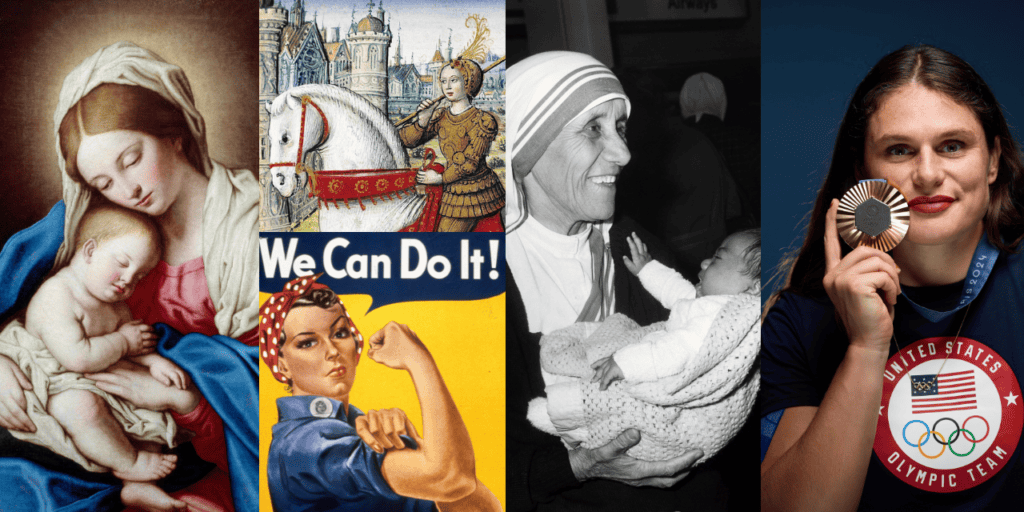
Let me get this straight: of all the depictions of feminine strength, in all of history, from Mary, to Joan of Arc, to Rosie the Riveter, to Mother Teresa, to Ilhona Maher…

…the city of San Francisco though the best representation of an empowered woman is a — naked one?

Let’s be clear — the female body is nothing to be ashamed of. Our created, sexed bodies are how humans participate in the creation of new humans.

But human sexuality changed when sin entered the world. Nudity outside the intimate, protective bonds of marriage became dangerous. Historically, it exposed women to unwanted physical advances and reduced their social leverage. It could be used to humiliate, control and subjugate.

The legacy of public nudity is not an empowering one. Why would women ever want that history memorialized in 45-feet of metal?

Some would say our society has evolved. Women, they argue, are out from under men’s thumb. They can make decisions about their own bodies. These same people encourage women to forgo clothes as an act of bodily autonomy.

Women have more freedom and legal protections than ever before, it’s true. But the sinful conditions that made nudity outside marriage so dangerous, back then, are still around today.

Lack of clothing still increases women’s likelihood of experiencing unwanted physical advances.

People post explicit photos and videos of women on the internet to humiliate them.

Apps like OnlyFans leave women and their bodies financially beholden to faceless subscribers.

On social media, morally bankrupt parents leverage their daughters’ bodies to amass a following, exposing them to the dehumanization and exploitation of millions.

Public nudity has never been — and still isn’t — empowering for women. As far as I’m concerned, San Francisco’s naked lady statue is a monument to female victimization.  

I’ll stick with Mother Teresa.

Additional Articles and Resources

‘Naked-Dress’ Trend Doesn’t Empower Women

Public Nudity Isn’t Empowering

‘Only Fans’ is a Social Toxin Destroying Lives

Horrifying Instagram Investigation Indicts Modern Parenting

Rugby Sensation Ilona Maher’s Stance on Femininity is Biblical

Written by Emily Washburn · Categorized: Culture · Tagged: nudity

Mar 10 2025

‘Naked-Dress’ Trend Doesn’t Empower Women

Last month, Bianca Censori posed nude at the Grammy awards — an exceedingly horrifying event I had planned on relegating to the deepest, darkest recesses of my memory.

But unfortunately, the model’s stunt seems to be part of a larger trend.

So-called “naked-dressing” was on full display (pun intended) at an Oscar awards afterparty earlier this month. So many women attended the event in so little clothing that The Hollywood Reporter called “naked dresses” a “major dressing trend.”

Those who didn’t partake in near total nudity chose clothing with “lingerie inspirations, black lace and provocative details that included plunging necklines and open lacing,” the fashion outlet wrote, describing frequently obscene shows of skin as “daring,” “high-wattage” and “sultry.”

The mainstream media’s coverage of the afterparty reflects Western culture’s celebration of voluntary public nudity as female empowerment. By rejecting “arbitrary” standards of modesty, the argument goes, women demonstrate ultimate control over their bodies.

This claim has more holes than a “naked dress.”

Even the strongest supporters of this trend recognize nudity doesn’t empower women all the time. That’s why we don’t teach our daughters to walk around naked. But if nudity is objectifying and dangerous in some situations, how does a woman’s agency — her choice to expose herself — somehow make her nudity empowering?

It doesn’t, because public nudity isn’t empowering. Wearing clothes is a protective instinct humans have embraced since the Garden of Eden, when sin entered the world.

This instinct is humans’ sense of modesty and privacy.

People who believe public nudity empowers women typically argue perceptions of modesty and obscenity are relative. At the end of the Reporter’s story on the Oscars afterparty, it muses, “Why do we get so hung up on the idea of bare skin in public? Why is baring the nipple considered such a scandal?”

But, while manifestations of modesty may shift by culture, sociologists say virtually every society on the planet maintains strict boundaries between the public and private.

Sociologist Helen Merrell Lynd argues universal perceptions of what should be private have to do with bodily vulnerability:

Experiences of shame appear to embody the root meaning of the word — to uncover, to expose, to wound. They are experiences of exposure, exposure of particularly sensitive, intimate and vulnerable aspects of the self.

The “shame” Lynd references here is the same shame Adam and Eve experienced in Gensis. Eating the fruit of the tree of the knowledge of good and evil made them aware of their vulnerability and caused them to cover it up.

God established a post-Fall example of modesty by clothing Adam and Eve before they left the Garden. This standard is expanded upon and codified later in the Bible.

In her book, Repeal of Reticence, social historian and essayist Rochelle Gurstein connects humans’ sense of modesty to our recognition of the sacred. By maligning modesty as prudish, Gerstein argues, modern culture betrays a “scorn for the very idea of the sacred.”

God designed marriage as the place for sharing unclothed human bodies. Violating that guidance neither empower nor frees women — it only separates them from God and his protection.

Additional Articles and Resources

Public Nudity Isn’t Empowering

Written by Emily Washburn · Categorized: Culture · Tagged: award show, nudity

Privacy Policy and Terms of Use | Privacy Policy and Terms of Use | © 2026 Focus on the Family. All rights reserved.

  • Cookie Policy