Yes, Pastors Should Be Discussing ‘Political’ Issues
In the aftermath of this month’s reinterpretation of the Johnson Amendment by the Internal Revenue Service, questions remain about what pastors will and won’t say from the pulpit.
Yet one thing remains clear.
Given the trajectory of culture and their responsibility as shepherds to their flock, pastors have an obligation to help their congregants better understand what God’s Word has to say about the times in which we’re living.
In short, responsible pastors cannot stay silent while talking inside their church about what’s happening outside its doors.
Especially when it comes to thorny and uncomfortable “political” issues like the sanctity of human life, the preservation of one-man, one-woman marriage, the distinctiveness of the two sexes and the constitutionally protected religious freedom that all Americans enjoy.
Incidentally, it might interest readers to know the Johnson Amendment, named after then Senator Lyndon Johnson, was a politically motivated effort to silence the legislator’s opponents who were supporting his primary rival.
Inserted into the U.S. tax code in 1954, the legislation prohibited non-profit organizations from endorsing or opposing candidates for office. Over the years, the declaration has had a chilling effect on what pastors and other non-profit leaders have felt comfortable talking about.
This month’s IRS ruling provided welcome clarity as well as leveled the playing field regarding the historic uneven application of the politically charged amendment.
Professor Lloyd Hitoshi Mayer of Notre Dame Law School told The New York Times that the IRS declaration “basically tells churches of all denominations and sects that you’re free to support candidates from the pulpit.”
Whether a pastor wants to announce support for any candidate is something only the pastor can decide, but the ruling does far more than simply allow endorsements from a pulpit. As issued, the decision from the IRS takes away any excuse pastors might have previously cited about remaining above the political fray.
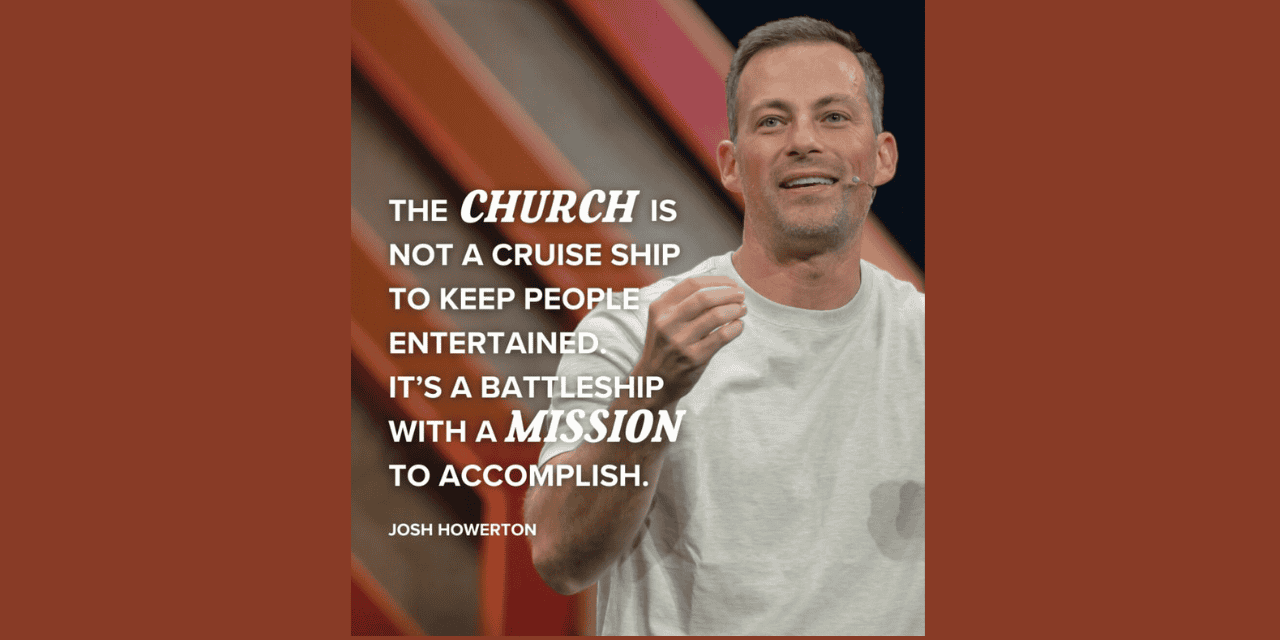
Josh Howerton, who serves as senior pastor of Lakepointe Church in Dallas, has long believed that pastors and the Church must respond to the cultural issues confronting the world. A third-generation pastor, he also recognizes that the world is different than it was when his father and grandfather were teaching and preaching. Here is how Pastor Howerton sees and understands the intersection between faith and politics – and why church leaders can’t bury their heads in the sand:
What’s happening right now is that the Church has not gotten more political. Politics are getting more theological, and politics are getting more spiritual. When the government moved past things like building roads, issuing driver’s licenses, and teaching math, to things like redefining marriage, erasing gender, reframing abortion as reproductive rights, and then using the government school system to indoctrinate everybody’s kids into believing those things, hey guys, the Church didn’t move. Politics did.
You cannot read the Bible about Moses, Daniel, Esther, Nathan, Nehemiah, John the Baptist, and think that the Church and pastors should avoid addressing government and governmental leaders. You just can’t do it. If the Church won’t disciple people, the world will.
So what’s going to happen is if godly leaders and godly pastors and godly voices all go silent or refuse to be clear on issues related to politics and government, then the only voices that are left are the godless ones. Politics can’t save anybody from hell, but the book of James says that our everyday decisions either pull heaven down into our lives or pull hell up into our lives. So, politics can’t save anybody from hell, but [politics] can save us from pulling hell up into our cities, states, and nations.
Pastor Howerton gets it. He gets it loud and clear. It’s reckless, irresponsible, and a dereliction of their duty for a pastor to ignore the cultural revolution that is consuming families, destroying marriages, killing innocent children, and encouraging the mutilation of sexually confused children.
If a pastor is entrusted with a pulpit, the pastor better be using it to teach God’s Word and helping their people to understand the times and know what to do about it (1 Chron. 12:32).
If your pastor never mentions abortion, the assault on marriage, the corruption and abuse of sexually confused children or the erosion of religious freedom, the question to ask is, “Why not? Why are you remaining silent when the enemy is roaring loudly outside the door?”
We’re grateful for inspired, bold, and fearless leaders like Pastor Howerton who are leading their people and bringing God’s truth to light in practical and applicable ways.
Image credit: Lakepointe Church.


ABOUT THE AUTHOR