U.S. Supreme Court Will Hear Case of Evangelist Banned From Sharing His Faith
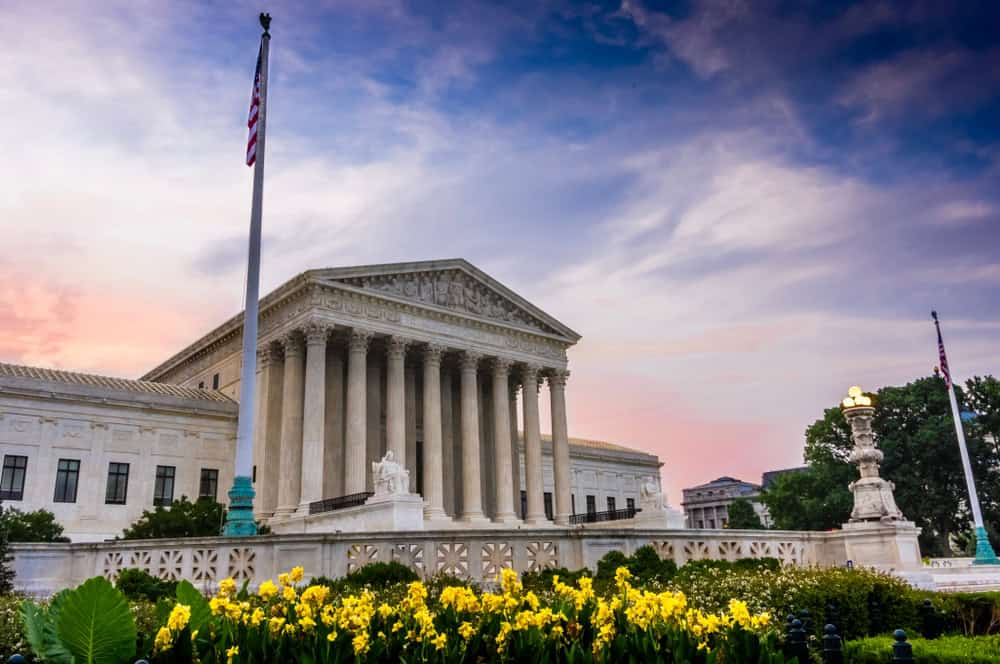
The U.S. Supreme Court will hear the case of an evangelist banned by a local ordinance from sharing his faith in public.
On Thursday, July 3, the Supreme Court took up the case Gabriel Olivier v. City of Brandon.
Gabriel Olivier is a Christian who feels called to share his faith with others. Indeed, all Christians have this duty – given to us by our Lord, recounted in the Gospel of Matthew – which is often referred to as the Great Commission:
“And Jesus came and said to them, ‘All authority in heaven and on earth has been given to me. Go therefore and make disciples of all nations, baptizing them in the name of the Father and of the Son and of the Holy Spirit, teaching them to observe all that I have commanded you. And behold, I am with you always, to the end of the age’” (Matthew 28:18-20, ESV).
Oliver takes this duty to heart and evangelizes outside well-attended events, sharing the gospel of Jesus Christ with as many people as possible.
However, the City of Brandon, Mississippi attempted to silence Olivier by adopting an “unconstitutional” city ordinance, prohibiting him from sharing his religious beliefs with others in a city park, outside the city’s public amphitheater.
Olivier, however, decided he couldn’t obey the ordinance and only preach in the city’s designated “protest” area, which was so removed from crowds that no one could receive his message. So, he moved closer to the people and was arrested and fined for doing so.
After paying the fine, Olivier sued the city in federal court and challenged the constitutionality of the ordinance.
However, the district court dismissed Olivier’s case without even considering the merits of the case, and upon appeal, the U.S. Court of Appeals for the Fifth Circuit also ruled against him.
The Fifth Circuit held that Olivier couldn’t challenge the constitutionality of the ordinance because he paid a fine for violating it, rendering him “permanently and peculiarly unable to vindicate his constitutional rights,” Olivier’s lawyers wrote in their petition for writ of certiorari (request the Supreme Court hear his case).
Now, the Supreme Court has agreed to take up Olivier’s case.
Olivier is being represented by First Liberty Institute and the law firm Gibson Dunn.
You can watch a brief video from Hiram Sasser, Executive General Counsel for First Liberty, explaining more about the case below:
“Every American has First Amendment rights to free speech; and every American has a right to their day in court,” said Kelly Shackelford, President, CEO, and Chief Counsel for First Liberty Institute in a statement. “Both of these rights were violated for Gabe Olivier. The Supreme Court will now decide whether those rights will be protected for all Americans.”
Allyson Ho, a partner at Gibson Dunn, said in a statement,
It’s certainly good news the U.S. Supreme Court will take up another important case in its next term. This one is especially crucial for religious freedom and for Christians’ ability to share their faith with others.
According to a poll by Barna, over half (51%) of U.S. churchgoers say they have not heard of the Great Commission. Another 25% have heard of the term but can’t remember what it is.
Just 17% of U.S. churchgoers can articulate the Great Commission, though even fewer actively share their faith with others.
That’s why it’s imperative for those Christians who know the Great Commission, and want to carry it out, that the government does not stand in the way of their good news.
The case will be heard in the fall after the start of the Supreme Court’s new term in October. A decision is expected by June 2026.
The case is Gabriel Olivier v. City of Brandon.
Related articles and resources:
Three Ways to Introduce Your Friends to Jesus
Mark Matlock: Making Meaningful Connections with the Spiritually Curious
Winsome Apologetics Through Questions and Logic
U.S. Supreme Court Takes Up Cases on Boys in Girls Sports
Photo from Shutterstock.


ABOUT THE AUTHOR