Top 5 Moments From Supreme Court Arguments Over Girls Sports
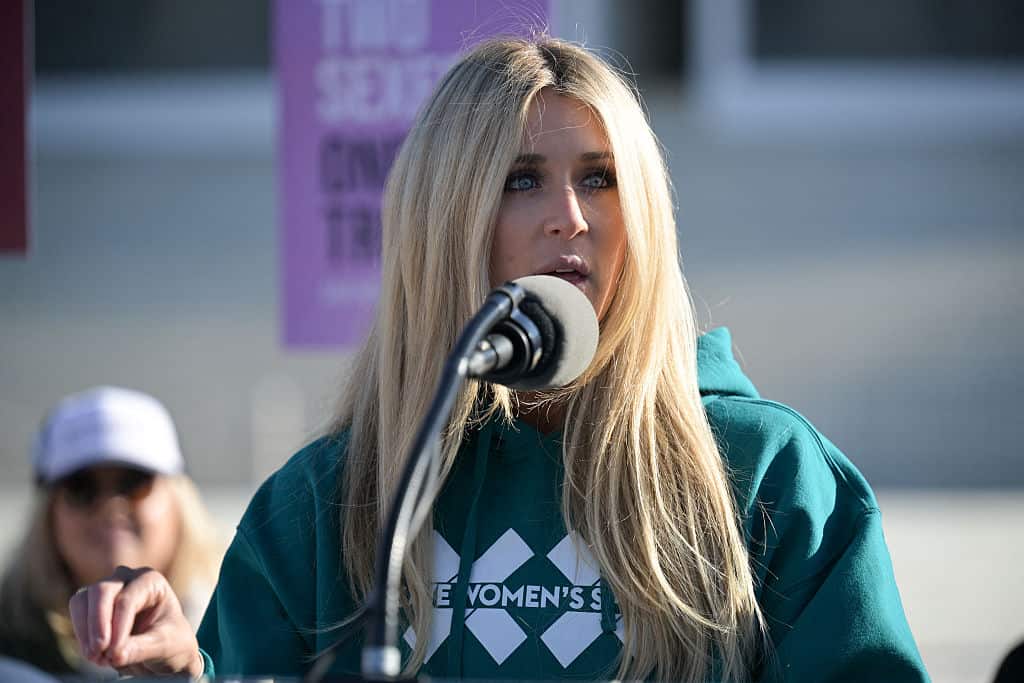
On January 13, the U.S. Supreme Court heard oral arguments in two cases concerning Idaho and West Virginia laws prohibiting male athletes from competing in girls sports.
This morning, the Daily Citizen listened to the Court’s oral arguments – so you don’t have to.
The two cases, Little v. Hecox and State of West Virginia v. BPJ, could have massive implications for the future of girls sports and determine whether states can recognize biological reality and reserve girls and women’s sports for females. You can read the Daily Citizen’s summary of the cases.
Following oral arguments, it seemed likely a majority of the Court would uphold Idaho’s and West Virginia’s laws protecting female athletes.
Here are the top five moments you might have missed.
1. Justice Samuel Alito Defends Reality of Biological Sex
Justice Samuel Alito asked Kathleen R. Hartnett, attorney for the male Idaho student who filed the lawsuit over the state’s Fairness in Women’s Sports Act, for a definition of what it means to be a “boy or a girl or a man or a woman.”
“We do not have a definition for the Court,” Hartnett replied, admitting she would not define what “sex” means.
“How can a court determine whether there’s discrimination on the basis of sex without knowing what sex means?” Alito replied.
2. Alito Defends Female Athletes
In a back-and-forth with Hartnett, Justice Alito also defended female athletes who don’t want to be forced to compete against males.
“There are an awful lot of female athletes who are strongly opposed to participation by ‘trans’ athletes in competitions with them,” Alito said, asking, “What do you say about them? Are they bigots? Are they deluded in thinking that they’re subjected to unfair competition?”
“No, your honor,” Hartnett replied. “I would never call anyone that.”
3. Justice Kavanaugh Calls Growth of Girls Sports “Inspiring”
Posing a question to Hartnett about how permitting males into women’s and girls sports could harm female athletics, Justice Brett Kavanaugh pointed to the great growth in female sports in the last five decades.
“One of the great successes in America over the last 50 years has been the growth of women and girls’ sports, and it’s inspiring,” Kavanaugh said.
There “are a variety of groups who study this issue, think that allowing transgender women and girls to participate will undermine or reverse that amazing success and will, you know, create unfairness,” he added.
“For the individual girl who does not make the team or doesn’t get on the stand for the medal or doesn’t make all league [due to a male athlete], there’s a – there’s a harm there, and I think we can’t sweep that aside.”
He asked,
4. Alito Reiterates Reality of Biological Sex
In another back-and-forth, Justice Alito questioned Hartnett about what a woman is, and how “sex” must have a biological basis.
“Suppose … a student who has the genes and the reproductive system of a male and had those at birth and has never taken puberty blockers, never taken female hormones, never had any gender-altering or affirming surgery, says, nevertheless, I am a woman. That’s who I am. Can the school say, ‘No, you cannot participate on the girls’ team?’” Alito asked.
“Yes, they can,” Hartnett replied.
“But that person – is that person not a woman in your understanding? If the person says, I sincerely believe I am woman, I am, in fact, a woman – is that person not a woman?” Alito pressed.
“I – I would respect their self-identity,” Hartnett replied. “But in terms of the statute, I think the question is, does that person have a sex-based biological advantage.”
5. Alito Finally Gets a Definition of What “Sex” Means
Justice Alito asked Hashim M. Mooppan, Principal Deputy Solicitor General at the U.S. Department of Justice, who argued in favor of Idaho’s law, what “sex” means under Title IX.
“We think it’s properly interpreted pursuant to its ordinary traditional definition of biological sex, and I think probably given the time it was enacted, reproductive biology is probably the best way of understanding that,” Mooppan replied.
“All right,” Justice Alito replied. “Thank you.”
Decisions in the cases are expected by the end of June.
The Daily Citizen will keep you updated about Little v. Hecox and State of West Virginia v. BPJ.
Related articles and resources:
Supreme Court to Hear Title IX Girls Sports Case
U.S. Supreme Court Takes Up Cases on Boys in Girls Sports
Photo from Getty Images.


ABOUT THE AUTHOR