Court Rules Louisiana Schools Can Post Ten Commandments in Classrooms
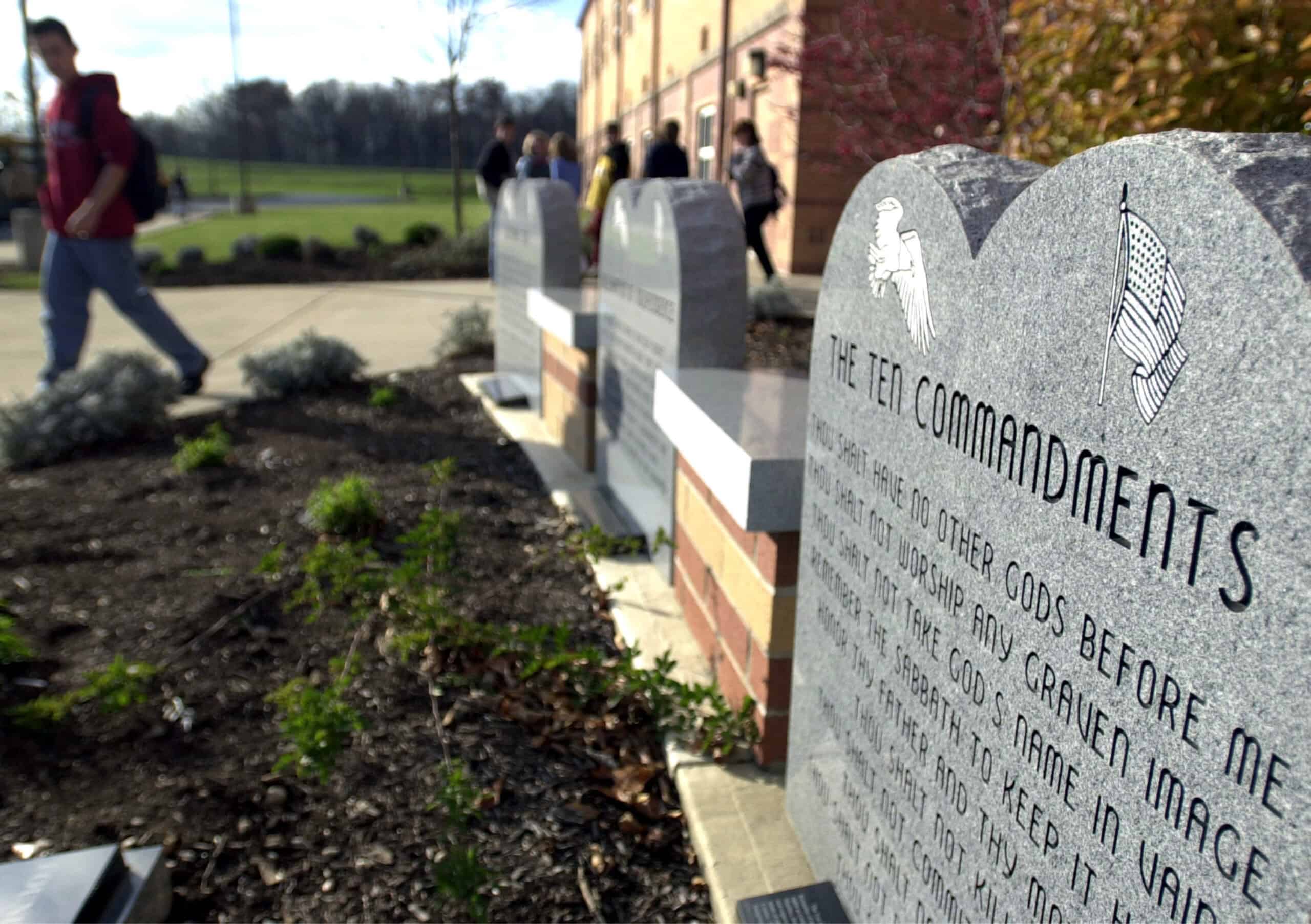
Louisiana’s law requiring the Ten Commandments be posted in classrooms statewide can take effect, a federal appeals court decided on Friday.
The U.S. Court of Appeals for the Fifth Circuit ruled 12-6 to overturn a lower court decision that put Louisiana House Bill 71 (H.B. 71) on ice.
In June 2024, the Louisiana Legislature enacted H.B. 71 requiring public schools to “display the Ten Commandments in each building it uses and classroom in each school.” Displays may be paid for by public donations.
Shortly thereafter, a group of parents filed a lawsuit to block enforcement of the law, arguing H.B. 71 violated the First Amendment’s establishment and free exercise clauses. The ACLU, ACLU of Louisiana, Americans United for Separation of Church and State, and the Freedom From Religion Foundation represented the parents in court.
A district court judge sided with the parents and granted a preliminary injunction, which was affirmed by a three-judge panel of the Fifth Circuit.
The entire Fifth Circuit then reheard the case and now has overturned the preliminary injunction, deciding the case wasn’t ripe for judicial review, because it didn’t know how the displays would appear or how teachers would use them.
Deciding whether H.B. 71 violates the Constitution “would oblige us to hypothesize an open-ended range of possible classroom displays,” the court said. “[That] is not judging; it is guessing.”
Judge James Ho, a nominee of President Donald J. Trump, concurred with the court’s decision, but went further and argued that the law “is constitutional and consistent with our Founding traditions.”
“Our Nation’s Founders didn’t just permit religion in education – they presumed that there would be religion in education,” Judge Ho contended. “Indeed, our Founders firmly believed that our Constitution wouldn’t work without a religious people.”
“The Louisiana Ten Commandments law is not just constitutional – it affirms our Nation’s highest and most noble traditions,” Ho explained.
The ACLU called the decision “extremely disappointing,” saying it would “unnecessarily force Louisiana’s public school families into a game of constitutional whack-a-mole in every school district.”
First Liberty, a nonprofit legal aid group, applauded the court’s decision. Kelly Shackelford, First Liberty’s president and CEO, said in a statement, “We are pleased that the Fifth Circuit is allowing Louisiana’s statute that requires the posting of the Ten Commandments in schools to take effect.”
Shackelford added,
The Fifth Circuit’s decision could have an effect on two other states’ laws – in Texas and Arkansas – which also require schools to post the Ten Commandments in classrooms.
After a lawsuit was filed against Texas’ law, the Fifth Circuit consolidated that case, Nathan v. Alamo Heights Independent School District, with the case challenging Louisiana’s law. The Texas case remains under consideration by the full slate of Fifth Circuit judges.
Texas Values, a Focus on the Family-allied state family policy counsel, praised the Fifth Circuit’s ruling, highlighting the impact it could have on Texas’ law. Jonathan Saenz, president of Texas Values, said in a statement:
In 1980, the U.S. Supreme Court ruled 5-4 in Stone v. Graham that a Kentucky law requiring the Ten Commandments be posted in classrooms was unconstitutional under the establishment clause.
So, you ask, why are lower courts now reconsidering the constitutionality of such laws? Good question.
The Stone decision relied on the Lemon test (created in the 1971 case Lemon v. Kurtsman) which said a law violates the establishment clause if it fails to have “a secular legislative purpose.”
But in 2022, the U.S. Supreme Court overruled the Lemon test in Kennedy v. Bremerton School District, instead holding that “the Establishment Clause must be interpreted by ‘reference to historical practices and understandings.’”
In the wake of the opinion, multiple states – Texas, Louisiana and Arkansas – realized the Court’s Stone decision was left in tatters. So, they enacted laws requiring the Ten Commandments in classrooms, leading to the present legal battles.
As Judge Ho’s well-reasoned concurring opinion points out, “Stone relies on precedent that the Supreme Court has overturned. … Lemon is gone, so Stone is gone. We’re not bound by Stone any more.”
Louisiana’s law “is fully consistent with the Constitution,” Judge Ho continued, “and what’s more, it reinforces our Founders’ firm belief that the children of America should be educated about the religious foundations and traditions of our country.”
It’s possible the lawsuits challenging the Ten Commandments in classrooms end up in the U.S. Supreme Court since they give the Court an opportunity to formally overturn Stone. If they do, the Daily Citizen will keep you updated.
The case is Roake vs. Brumley.
Related articles and resources:
Appeals Court Favors Louisiana Ten Commandments Law for Now
Judge Temporarily Blocks Ten Commandments in Classrooms, Louisiana Will Appeal
Louisiana’s Ten Commandments Bill is Good for Kids, Communities, and the Nation
Photo from Getty Images.