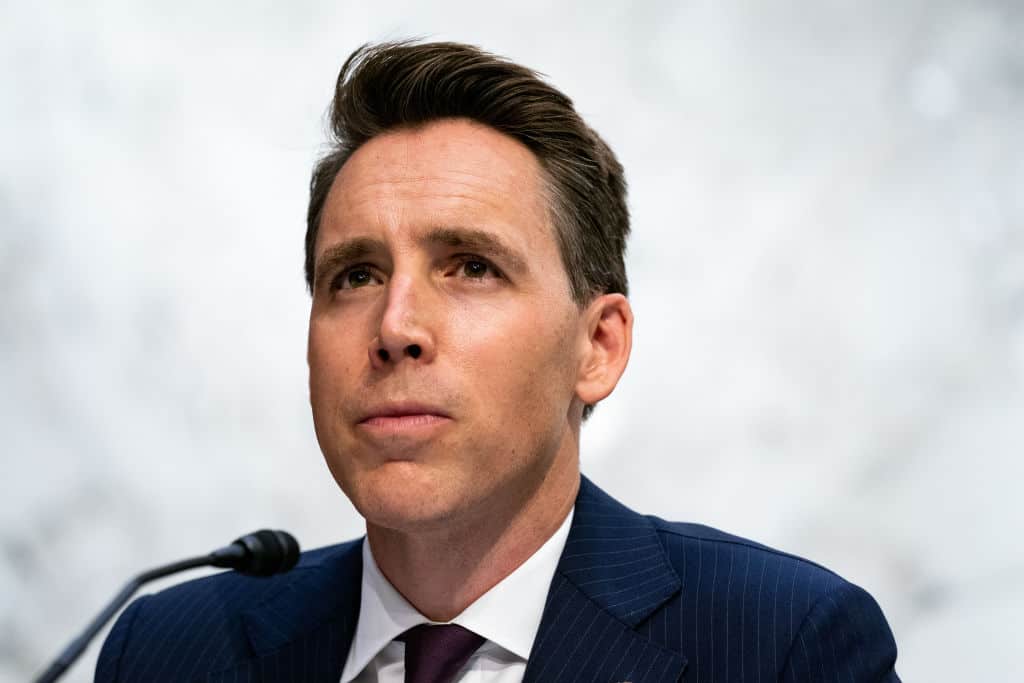
Pope Leo’s Pro-Life and Pro-Family Journey to France
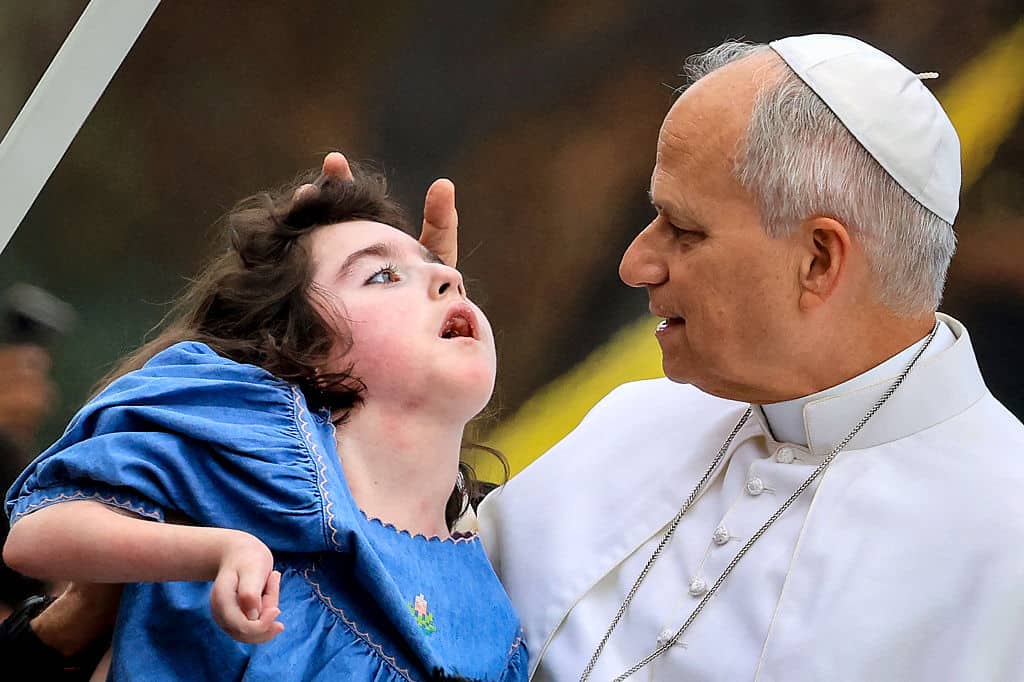
Pope Leo XIV recently concluded a historic four-day visit to France, the first papal visit to the country, often called “the eldest daughter of the Church,” since Pope Benedict XVI’s visit in 2008.
The theme for Pope Leo’s trip was based on Jesus’ words in John 10:10: “So that the world may have life.”
Throughout the trip, the pope repeatedly emphasized the importance of protecting the sanctity of human life and providing real care for the most vulnerable – including those with disabilities and the elderly.
The pope’s trip comes at a dire time in the life of France as it – like many other European nations – is becoming increasingly secular and liberal. Only five percent of French people say they attend church regularly.
Earlier this year, France became the most recent Western nation to legalize euthanasia, permitting doctors to kill the nation’s elderly and infirm.
In 2024, France became the first nation in the world to enshrine abortion as a “right” in its constitution, an action celebrated by French President Emmanuel Macron, and cheered by abortion activists who celebrated as the Eiffel Tower displayed the message “MyBodyMyChoice.”
And who can forget that Jesus’ Last Supper was mocked during the opening ceremonies of the 2024 Paris Olympics, where anti-Christian contempt was present and proudly displayed.
In contrast to all this, and in courageous fashion, Pope Leo came to France with a message of faith, hope and a firm rebuke to the nation’s governing elite and declining morals.
In an address on September 25 before President Macron at Elysée Palace in Paris, Pope Leo reminded the nation that “France is a land with deep Christian roots.”
In the past, France’s Christian identity fostered a “constant focus on the dignity inherent in every person” which is “echoed in your national motto,” Pope Leo said. But France has recently failed to live up to this identity and its ideal of “Liberty, Equality, Fraternity.”
“I ‘firmly reiterate that the protection of the right to life constitutes the indispensable foundation of every other human right,’” the pope insisted.
“Nowadays there is a temptation to expect science to eliminate or alleviate every form of suffering,” he added, denouncing “genetic manipulation, surrogacy, the trade in human organs or the possibility of arranging one’s own death” as medical practices that depart from the “greater good to which [science and technology] aspire.”
“Let us not forget that mutual respect and the protection of every human life is a duty incumbent upon each and every one of us,” he pressed.
At the conclusion of his speech, Pope Leo looked directly at the French president and urged him to remember that “a President of the Republic who claims to be uninterested in the Church and in Catholics would be failing in his duty.”
The same day, Pope Leo visited the United Nations Educational, Scientific and Cultural Organization (UNESCO) headquarters and again defended the sanctity of human life.
“[Too often] life is no longer understood as a gift, but as a commodity. It is no longer viewed as a summons to care and responsibility, but as a product to be exploited,” the pope said.
“[Human dignity] remains undiminished even in the most vulnerable circumstances, even to death itself,” Pope Leo taught, denouncing euthanasia. “Our dignity is not destroyed by illness or suffering, nor is it dependent upon our abilities. Rather, it calls for loving care at every stage of life.”
On September 26, as Pope Leo rode down the Champs-Elysees Avenue on his way to the Place de la Concorde, central Paris, the pope blessed Marie-Garance Noël, a child with multiple disabilities.
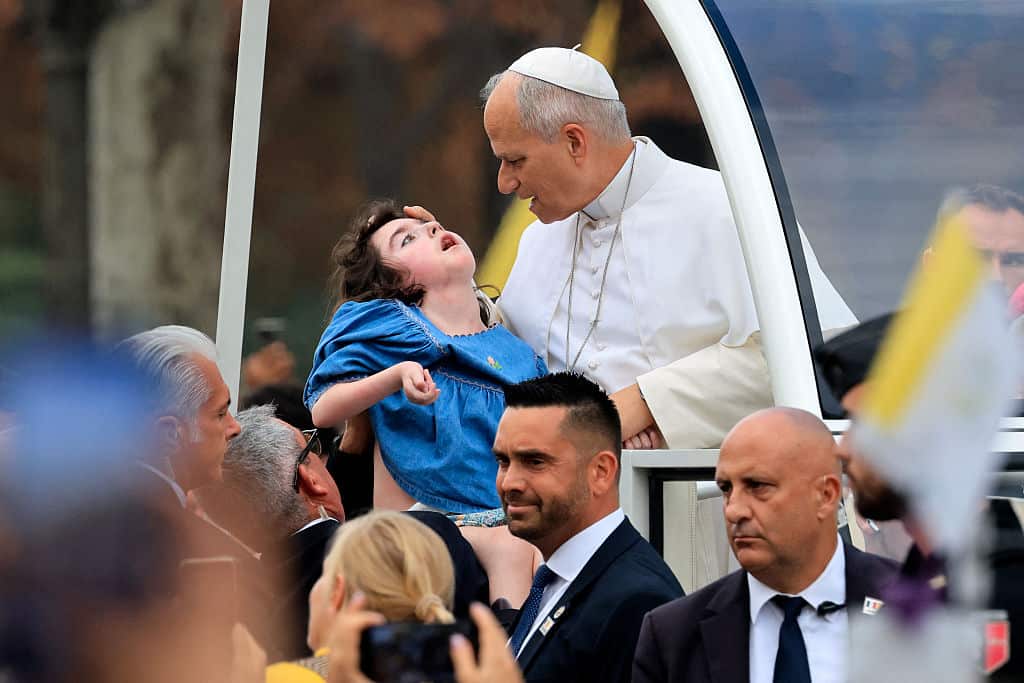
Marie-Garance was adopted by a French Catholic family known for caring for children with disabilities. Clotilde and Nicolas Noël are parents to six biological children and three adopted children with disabilities: Marie, who has Down syndrome; Marie-Garance, who has multiple disabilities; and Frédéric-Moïse, who has a cerebellar disorder.
The moment served as a beautiful witness to life, and in stark contrast to Netherlands doctor’s recent decision to legally euthanize a two-year-old child purely because of his disabilities.
Pope Leo also chose six boys with Down syndrome to serve as altar servers while he celebrated Mass at Place de la Concorde. Rachel Campos-Duffy, co-host of “Fox and Friends Weekend,” commended the move.
Then on September 27, Pope Leo spoke in Lourdes, France, where many Catholics go on pilgrimage to seek healing of physical maladies.
Addressing the staff and sick community at Lourdes’ Accueil Notre Dame, Pope Leo again denounced euthanasia as “false compassion”:
He also decried abortion, saying, “No one ever has the right … to decide the life of a given embryo or elderly person! Medicine must never become the servant of programmed death!”
On the flight back to Rome, Pope Leo addressed criticism from some that his journey became “political.” He emphasized that his goal was not to be “political,” but to share the Gospel, and its implications for the most important moral issues of our time.
“When the Church speaks about defending life … we are not entering into politics, we are applying the Gospel to people’s lives,” Pope Leo explained. “The defense of life is something that, as you all know, the Church teaches and believes very deeply. … So, I would say that if that is considered politics, then I did it.”
Pope Leo’s historic visit to France will be remembered as a significant moment in the defense of human life at all stages and in all circumstances.
Hopefully the French people, the French government and the nations of the world, will take the pope’s paternal correction to heart.
Related articles and resources:
Pope Leo Warns Technology Must Serve Human Dignity
Vatican Reaffirms: Marriage is Between One Man and One Woman
Pope Leo XIV Warns of ‘Crisis of the Family’ in First Homily
Robert Cardinal Prevost Elected as Pope Leo XIV: Five Things You Should Know
Notre Dame Cathedral Reopens, Reminding Us of Western Civilization’s Christian Heritage
Photo from Getty Images.