Abortion Pill Chemical Mifepristone Found in Drinking Water
The drinking water in two American cities contains mifepristone, the active ingredient in chemical abortions, a bombshell new study shows.
Mifepristone is the first in the two-step chemical abortion regimen. It kills preborn babies by preventing them from absorbing progesterone, an essential hormone for fetal development.
The peer-reviewed report, which the Journal of Alliance for Hippocratic Medicine (JAHM) published on July 20, revealed the amount of mifepristone in water samples from Austin, Texas; Carbondale, Illinois and Blacksburg, Virginia.
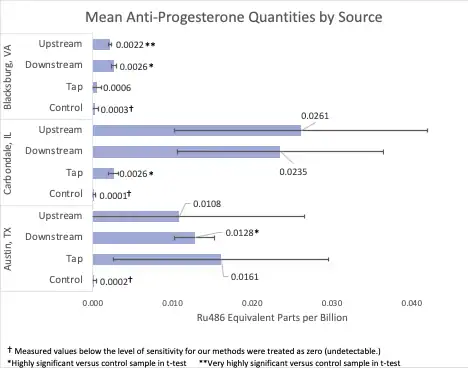
In each city, researchers collected and tested four water samples from upstream of a water treatment plant, four from downstream of a water treatment plant and four from the tap.
Researchers found statistically significant amounts of mifepristone in the upstream and downstream water samples from every city and in the tap water samples from Austin and Carbondale.
The chart below shows the mean concentration of mifepristone found in water samples from the three cities.
“Quite frankly, I didn’t expect it to be at the tap,” Kristan Hawkins, the president of Students for Life, who commissioned the collection of the water samples, told the Daily Citizen.
“I don’t know, maybe I just had great faith in our wastewater treatment plants.”
The report itself concluded:
Conventional water treatment was not effective for removing this endocrine-disrupting compound [mifepristone] from water in all cities we tested.
The findings are incredibly concerning. Progesterone, the hormone mifepristone prohibits, helps support biological systems in babies, women and men. Though progesterone is more commonly known for the role it plays in women’s health, the report emphasizes, “Low progesterone levels in men have been associated with multiple medical problems including alopecia, bone loss, erectile dysfunction, fatigue and obesity.”
“This is an everybody problem,” Hawkins emphasizes. “This is something that every American, regardless of how they view abortion, should be very concerned about.”
“You don’t have to be pro-life to want clean drinking water.”
The true amount of mifepristone-related chemicals in drinking water may be even higher than scientists measured.
The report measured unmetabolized mifepristone in the water, or mifepristone which hasn’t been metabolized by the body.
The average woman absorbs only about 70% of a mifepristone dose. The remaining 30% enters the water system unmetabolized.
Researchers believe most of the unmetabolized mifepristone in public water system enters through the waste of women who ingest chemical abortion pills, because mifepristone is almost exclusively used to end the lives of preborn babies.
Chemical abortions now account for more than 60% of American abortions.
But researchers also did not test the water samples for mifepristone metabolites — the chemical products of a person metabolizing mifepristone.
Though chemically different, mifepristone metabolites still suppress progesterone, just like their parent chemical. It is still dangerous for them to build up in our water.
Mifepristone metabolites enter public waterways through human waste, too. Tragically, they also enter through the physical remains of chemically aborted babies. Whereas hospitals might have protocols to dispose of human remains, chemical abortions enable mothers to dispose of their babies into the public waste system.
When Hawkins and Students for Life were commissioning the report’s research beginning in 2020, they gave a lot of thought to the ethical and medical implications of mifepristone metabolites in the remains of babies.
“I got contacted by a supporter of ours who was on our Students for Life email list,” she recalled of the beginning of their work. “She said, ‘I have a friend who works at a wastewater treatment plant here in California and he’s seen these babies [in wastewater].’”
The email continued:
Despite its groundbreaking — and troubling — findings, the JAHM report is not without critics. Many cite the 1996 environmental assessment of mifepristone which found the drug could be “used and disposed of without any expected adverse environmental effects.”
It’s important to note the assessment was conducted and submitted to the Food and Drug Administration (FDA) by the Population Council, the same group trying to get mifepristone approved for sale.
Glaring conflict of interest aside, the ’96 assessment based its conclusion off an equation which factored in:
- The estimated amount of mifepristone produced each year.
- The estimated amount of mifepristone entering the public water system each day.
These numbers have increased dramatically following the normalization of abortion, the gutting of mifepristone’s safety checks and the popularization of chemical abortion.
Beyond referencing the assessment, most critics repeated a version of the same refrain: “There is no scientific evidence that [chemical abortion pills] cause harm to the environment.”
Hawkins wonders why abortion supporters feel emboldened to attack the water treatment study when the abortion industry can’t produce any of its own:
Hawkins hopes the report will prompt the FDA to conduct its own, independent environmental assessment of mifepristone.
“[The] FDA needs to go back and do an environmental assessment,” she says. “The drug should be pulled from the market while they’re doing this environmental assessment.”
She also recommends the Environmental Protection Agency (EPA) add mifepristone to the contaminants of concern listed in the Safe Drinking Water Act. Students for Life generated more than 3,000 comments in June encouraging the EPA to take this step.
As the Daily Citizen previously reported, a coalition of 14 AGs wrote a letter to the EPA in June in support of Student for Life’s campaign.
Hawkins knows this issue can change hearts and minds. She recommends Daily Citizen readers use water cleanliness as a way to broach the subject of life with pro-abortion friends and relatives.
“As Christians, we’re always [wondering], ‘How do we talk to our pro-abortion friends and get them to reconsider their views on abortion?’ I think this is a wonderful one.”
Hawkins continues:
She concludes:
Additional Articles and Resources
The Abortion Pill: How Does It Work?
14 AGs Press EPA on Abortion Pill Water Contamination
Abortion Pill Chemicals May Be Contamination America’s Tap WaterFDA Will Reportedly Conclude Abortion Pill Safety Review by September


ABOUT THE AUTHOR