Supreme Court Oral Arguments Wednesday in Louisiana Abortion Case. What You Should Know.
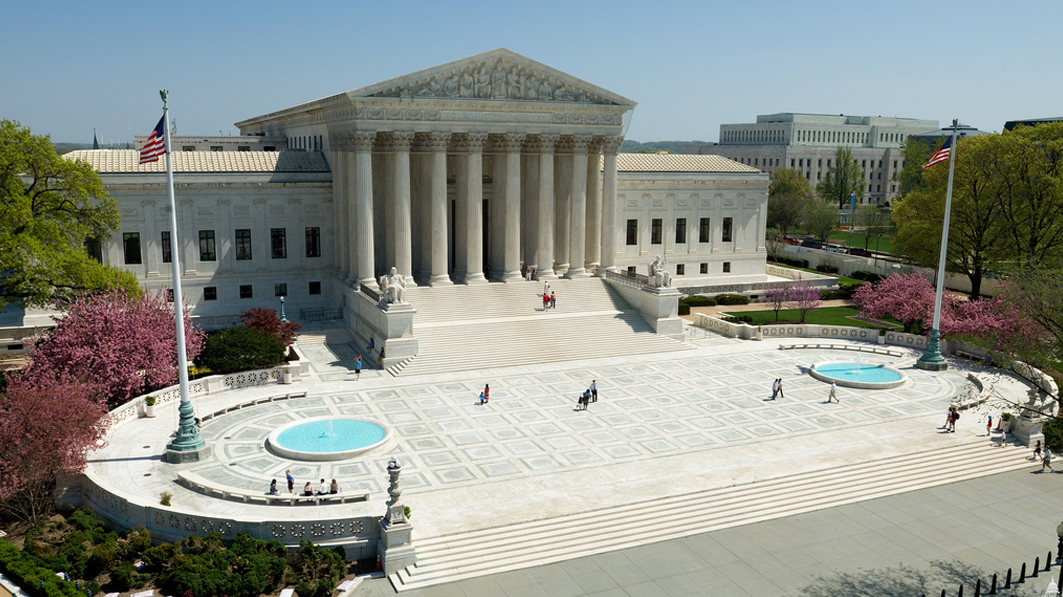
Wednesday will be a huge moment at the Supreme Court as the constitutionality of an abortion regulation from Louisiana is tested before a court that has shifted slightly more conservative since the last abortion case was heard.
Here’s how the case got to the high court. The state legislature of Louisiana was concerned that women seeking abortions were at risk from under-qualified medical professionals in unsanitary settings. Following its own investigation of the facts, the legislature passed the Unsafe Abortion Protection Act (aka Act 620). The law requires abortionists to obtain admitting privileges at a local hospital. Besides ensuring a continuity of care should a woman suffer complications from an abortion, a hospital’s procedures for granting admitting privileges offer some sort of minimum guarantee that the abortionist is a qualified doctor. This is a very reasonable requirement.
The legislature gathered evidence, for example, that in at least one case an abortion facility hired an ophthalmologist and radiologist and trained them to do abortions. It, along with other facilities, performed no background checks on the credentials of the abortionists they hired. An abortion clinic was caught and cited in the past for improper administration of intravenous medications and gas, failure to document patients’ physical examinations, administration of anesthesia by employees who were not qualified, inaccurate reporting of abortion procedures to the State, and “irregularity” in calculation of medication dosages, among other violations.
The abortion industry refused to own up to its own negligence. Rather than cleaning up its act and hiring qualified, credentialed doctors who could obtain hospital admitting privileges, abortionists complained that such basic regulations would interfere with a “woman’s right to choose” abortion. (Notice the industry’s deflection away from the main issue of women’s health and safety). And so they filed this lawsuit.
And there’s an irony there that has also become a major issue in the case. Should abortion clinics, the very places putting women in situations of medical risk, be the ones who are allowed to speak on behalf of the women they are neglecting by challenging laws like Louisiana’s? In legal terms, the question is whether abortionists have “standing” (i.e., the legal ability to bring a lawsuit) in these types of cases? If the Supreme Court agrees they don’t have standing, it will create a gaping wound in the industry’s ability to protect its own coffers.
The abortion business that brought the suit challenging the Louisiana law argues that the Supreme Court has already decided a case exactly like this one, in its 2016 Whole Woman’s Health v. Hellerstedt decision which struck down a Texas requirement that abortionists obtain admitting privileges at a nearby hospital. In that case, decided before Justice Neil Gorsuch and Justice Brett Kavanaugh joined the high court, the Texas law was struck down as creating an “undue burden” on a woman’s right to obtain an abortion. It was a 5-3 decision (oral argument occurred after Justice Scalia’s death but before Justice Gorsuch was confirmed), with Justice Anthony Kennedy joining the liberal wing of the court in deciding against the Texas law.
But that decision was based on the specific facts concerning Texas’ vast size and driving distances. The Supreme Court in Hellerstedt never suggested or held that admitting privilege requirements were per se unconstitutional. And Louisiana’s case is based on evidence that its abortionists were underqualified and providing substandard medical care.
We may know more about how the justices are leaning following oral arguments. We will keep you informed of any developments. A formal written opinion will be produced sometime before the end of June.
The case is June Medical Services v. Russo.
Related:
Supreme Court Temporarily Blocks Louisiana Abortion Law
Louisiana Abortion Law Back at the Supreme Court
Supreme Court Takes Up Louisiana Abortion Law; What’s at Stake?
Black Pro-Life Leaders Inform the Supreme Court that Abortion is Racist


ABOUT THE AUTHOR