• Skip to main content
Daily Citizen
  • Subscribe
  • Categories
    • Culture
    • Life
    • Religious Freedom
    • Sexuality
  • Parenting Resources
    • LGBT Pride
    • Homosexuality
    • Sexuality/Marriage
    • Transgender
  • About
    • Contributors
    • Contact
  • Donate

social media

May 01 2025

National Center on Sexual Exploitation Targets Law Allowing Tech Companies to Profit from Online Sex Abuse

JUMP TO…
  • Section 230 of the Communications Decency Act
  • What Went Wrong
  • Twelve Survivors
  • X Refuses to Remove Explicit Photos of a Minor
  • Why Nothing Has Changed
  • Next Steps

The National Center on Sexual Exploitation (NCOSE) has launched a campaign to reform an outdated law effectively allowing tech companies to aid, abet and profit off online sex abuse.

Section 230 of the Communications Decency Act

Congress passed the Communications Decency Act (CDA) in 1996 to protect children from online exploitation. It included Section 230, a carveout preventing “interactive computer services” from liability for content users posted online.

Section 230 was a direct response to a New York Supreme Court case from 1995 which found Prodigy Services, a web company that hosted online discussion forums, liable for a user’s defamatory content because it had tried to moderate the objectionable posts.

The ruling made tech companies reluctant to censor even the most offensive content. Section 230, lawmakers reasoned, gave moderators freedom to remove indecent posts.

What Went Wrong

CDA would have made it illegal to “knowingly send obscene or indecent messages … as determined by contemporary community standards, to someone under 18.”

In 1997, the Supreme Court found these protections violated the First Amendment. The ruling stripped CDA of its prohibitions against targeting children but left Section 230 intact.

Over the next two and a half decades, tech companies grew to unprecedented size and power. Courts, meanwhile, interpreted Section 230 to excuse websites, browsers and social media sites of all responsibility regarding the content and activity on their platforms.

The difference between lawmaker’s intentions for Section 230 and its contemporary use is stark. NCOSE writes:

[Section 230] of CDA was originally designed to help protect children online in the early days of the internet.
However, this law — which is over 25  years old — has instead become a shield for Big Tech corporations, allowing them to evade accountability even as their platforms are blatantly used to facilitate egregious acts like sex trafficking, child sexual abuse and image-based sexual abuse.
Twelve Survivors

Every year, NCOSE releases a list of “12 mainstream entities facilitating, enabling and even profiting from sexual abuse.” Dirty Dozen alumni include Twitter (now X), Facebook, Google, Instagram, Amazon, HBO, Netflix, Reddit and even the U.S. Department of Defense.

This year, instead of identifying twelve exploitative companies, NCOSE is “highlighting 12 survivors who were denied justice in the courts because of Section 230.”

“These survivors were silenced,” NCOSE writes, “and the companies that enabled their abuse were given immunity.”

X Refuses to Remove Sexually Explicit Photos of a Minor

One of the 12 stories NCOSE highlights is that of a 13-year-old John Doe. A sextortionist posing as a 16-year-old girl convinced John and his friend engage in a romantic exchange of explicit images. The predator attempted to blackmail John and, when John blocked them, spread the pictures and videos across X. They eventually reached parents and peers at John’s school.

John and his mom contacted X to get the photos taken down. They sent pictures of John’s ID to prove he was a minor. X responded:

We’ve reviewed the content, and didn’t find a violation of our policies, so no action will be taken at this time.

NCOSE is one of three groups representing John and his friend in court against X. They argue the social media juggernaut “knowingly possessed child sexual abuse material and knowingly benefitted from sex trafficking.”

A federal district court initially dismissed the case under Section 230.

The Ninth Circuit Court of Appeals heard the case in February. NCOSE recounts X’s argument:

X’s attorney himself acknowledged that the platform did not remove the [child sexual abuse] content, even after reviewing [John’s] report.
He continued to maintain that X should be immune anyway, stating that holding tech companies accountable for illegal third-party content being uploaded to the site is “antithetical” to what Congress intended with Section 230.

It continues:

The mere fact that Twitter can admit to partaking in a despicable crime and maintain that they should still be protected shows that Section 230 urgently needs to be reformed.
Why Nothing Has Changed

Lawmakers from both sides of the political aisle support reforming — or repealing — Section 230. Democrat and Republican senators blasted blanket immunity for big tech in a Senate Judiciary Committee hearing on the issue in February.

Congress has gathered near-unanimous support for at least six child internet safety bills in recent years. Only two — the REPORT Act and the Take It Down Act — have passed.

Even the Department of Justice (DOJ) has recommended revising Section 230, writing in a 2020 report,

The expansive statutory interpretation [of Section 230], combined with technological developments, has reduced the incentives of online platforms to address illicit activity on their services and, at the same time, left them free to moderate lawful content without transparency and accountability.

The DOJ specifically noted that platforms had used Section 230 to get immunity “even when they knew their services were being used for criminal activity” and to “evade laws and regulations applicable to brick-and-mortar competitors.”

If changing Section 230 is such a popular issue, why has nothing changed?

According to Senator Dick Durbin: money.

When Congress tried to curtail tech companies’ immunity or institute child internet safety protections, “Big Tech opened up a $61.5 million dollar lobbying war chest to make sure [those] bills never became law,” Senator Durbin told the committee in February,

Next Steps

NCOSE asks citizens to encourage Congress to remove Section 230’s immunity protections for tech companies. The snowballing reckoning around social media’s effect on children, and this year’s legislative and congressional activity around Section 230, could indicate fertile ground for change.

The Daily Citizen will continue reporting on Section 230 and efforts to hold tech companies accountable.

Additional Articles and Resources

First Lady Melania Trump Celebrates House’s Passage of Take It Down Act

Proposed SCREEN Act Could Protect Kids from Porn

Kid’s Online Safety Act — What It Is and Why It’s a Big Deal

TikTok Dangerous for Minors — Leaked Docs Show Company Refuses to Protect Kids

Instagram’s Sextortion Safety Measures — Too Little, Too Late?

Zuckerberg Implicated in Meta’s Failures to Protect Children

Teen Boys Fall Prey to Financial Sextortion — Here’s What Parents Can Do

Instagram Content Restrictions Don’t Work, Tests Show

Horrifying Instagram Investigation Indicts Modern Parenting

REPORT Act Becomes Law

Written by Emily Washburn · Categorized: Culture · Tagged: Section 230, social media

Apr 24 2025

Posting Easter Sunday  — A Young Person’s Reflection on Life Lived Through Social Media

Social media trains us to see life through a camera’s lens. Our experiences start to feel unimportant, even intangible, unless we document them online.

I noticed this about myself almost a year after I quit social media, when I went skydiving. Five seconds of freefall followed by twenty minutes of parachuting down from dizzying heights, it remains the most thrilling experience of my life.

I caught myself brainstorming Instagram posts to mark the occasion within minutes of hitting the ground. In that moment, the joy I felt skydiving didn’t matter unless I could tell everyone else I had done it.

I was saddened last weekend to see so many believers falling into the same trap.

On Good Friday and Easter Sunday, I watched dozens (yes, dozens) of people whip out their phones to film worship. I watched them take meticulous photos of the church’s “Welcome to Easter Sunday” banner, each with a slightly different angle and zoom. I watched them line up to take pictures against a plain white background with black block letters reading, “Jesus.”

I know these kinds of pictures well. They are posted to Instagram or Snapchat stories with little to no context.

Their implied message?

“Just in case you forgot, I’m a Christian.”

There’s nothing inherently wrong with proclaiming your faith on social media. Nor is it unusual for people to use clothing or other external signals to identify themselves as part of a social group.

But I think this is a different phenomenon, one driven by the constant “connection” imposed by social networks. It’s not about letting people know you are faithful, it’s about feeling as though you are not faithful unless you post something online.

That, my friends, is not biblical.

Jesus and his disciples were never particularly concerned with what other people thought of them. Jesus frequently went out of his way to subvert religious norms that did not glorify God.

In Matthew 23:1-6, Jesus castigates the Pharisees:

The scribes and the Pharisees sit on Moses’ seat, so do and observe whatever they tell you, but not the works they do. For they preach, but do not practice … They do all their deeds to be seen by others (ESV).

In verses 27 and 28, He continues:

Woe to you, scribes and Pharisees, hypocrites! For you are like whitewashed tombs, which outwardly appear beautiful, but within are full of dead people’s bones and all uncleanness. So you also outwardly appear righteous to others, but within you are full of hypocrisy and lawlessness.

I’m not suggesting that everyone who posted about Easter is a hypocrite — far from it. These verses illustrate how problematic it can be to curate our lives for others’ consumption and approval.

And that’s social media’s business model.

Jesus does not command us to demonstrate our faith by wearing certain clothes or posting certain pictures. The mark of our salvation, Galatians 5 tells us, is the fruit of the Spirit: love, joy, peace, patience, kindness, goodness, faithfulness, gentleness and self-control.

Paul concludes the chapter:

Those who belong to Christ Jesus have crucified the flesh with its passions and desires. If we live by the Spirit, let us also keep in step with the Spirit.

Accordingly, I encourage fellow believers to take stock of themselves and their families — how much control does the camera lens exercise over your life? Do you feel odd, even wrong, for letting a Christian holiday past without letting followers know you celebrate?

These could be signs that your relationship with social media needs to change. I’ve been there, and I’m grateful to say recovery is possible. There’s freedom in enjoying your life as you live it, instead of when you post about it.

For you were called to freedom, brothers. Only do not use your freedom as an opportunity for the flesh, but through love serve one another (Galatians 5:13)

Written by Emily Washburn · Categorized: Culture · Tagged: social media

Apr 16 2025

New York Prepares to Restrict School Smartphone Use

New York could pass a statewide, “bell-to-bell” ban on smartphone use in schools within the month, multiple outlets report.

The policy, introduced by Governor Kathy Hochul in January, is one of many rolled in to the state’s 2026 budget proposal. It would allocate some $13 million dollars for school districts to purchase tools restricting school smartphones use.

Polling suggests most New York voters support all-day restrictions on smartphones in schools, but the specifics have proven difficult to iron out. Mayor Eric Adams stopped pursuing cellphone restrictions in New York City schools less than a year ago after encountering logistical issues.

Hochul’s statewide policy addresses three common objections to Adams’ failed district-wide restrictions:

  • It provides funding for schools to purchase equipment, like these lockable pouches.
  • It requires schools to provide at least one way for students and parents to communicate in an emergency.
  • It includes exceptions for students with learning disabilities and those who use their phones as translators.

But it’s not yet clear how much freedom districts would have to establish their own cellphone restrictions.

Some New York officials argue districts should be able to decide whether students can use smartphones during passing periods, lunch or other non-instructional times.

Hochul, on the other hand, supports what she calls a “bell-to-bell ban” — no cellphone use on school property during school hours.

“No smartphones, no earbuds, no cellphones,” Hochul told Telemundo 47 in March. “Here’s why: The mental health of our children, especially in middle school and high school is really declining.”

While introducing the policy, Hochul argued:

[Kids aren’t] developing the skills [they] need because they are distracted with the cell phones. Our teachers [are] trying to teach algebra and geography, and they’re competing with viral dances, and messages from their friends, and sometimes threats [and] bullying.

There’s no question that smartphone and social media use negatively affect adolescent’s development, mental health and academic achievement.

A 2023 study from Common Sense Media found 97% of teens use their cellphones during school hours, primarily to play video games, browse social media and watch porn.

Students that manage to put their phones down are lured back in with push notifications. The average American teen receives between 192 and 237 every day — about eleven every waking hour. This constant stimuli is so distracting, one study found, that the mere presence of a smartphone in the classroom, even tucked away in a backpack, decreases students’ academic performance.

Once students become distracted by their phone, a 2017 study from the Association of Consumer Research found it can take up to 20 minutes to recover their focus.

Constant distraction, or attention fragmentation, prevents adolescents from developing the parts of their brains responsible for self-control, decision-making and critical thinking, social psychologist Jonathan Haidt writes in his book The Anxious Generation.

Smartphones can also hamper adolescents’ social development. A 2023 surgeon general’s advisory on social media found excessive screentime hampers the development of the amygdala and prefrontal cortex, the parts of the brain controlling “emotional learning, behavior impulse control, emotional regulation and ability to moderate social behavior.”

When Orange County school district in Florida instituted a total cell phone ban in November 2023, teachers and administrators saw improvement in kids’ focus and behavior. One teacher told The New York Times that students seemed “more talkative and collaborative.” Others found students made more eye contact and seemed more engaged. A principal claimed bullying decreased because students could no longer film embarrassing or harmful videos of their classmates to post on social media.

The surgeon general’s advisory cites studies supporting Orange County teachers’ experiences. A small study of college-aged kids found the severity of subjects’ depression lessened when they reduced their social media use to just thirty minutes a day.

Another small study found young adults and adults who abstained from social media for four weeks reported higher levels of subjective wellbeing, like happiness and life satisfaction. The improvements were equivalent to between 25% and 40% of benefits from other mental health interventions like therapy.

New York legislators are still finalizing the city’s 2026 budget — more than two weeks after the April 1 deadline. But outlets like Politico report the school cellphone policy isn’t causing the delay.

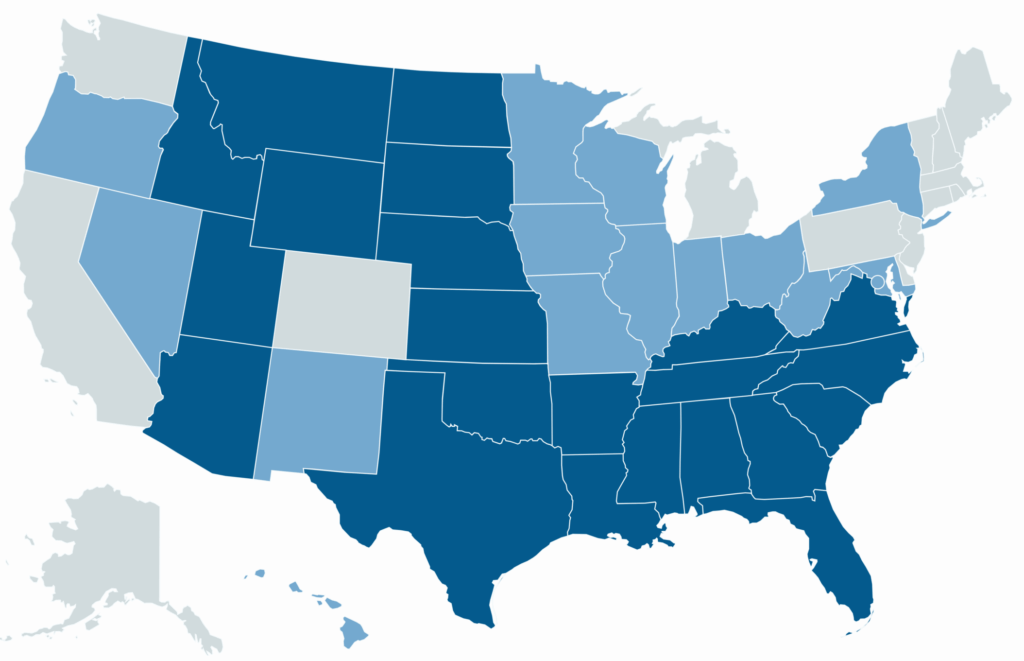
If the policy makes it into the state’s finalized budget, as expected, it will become the tenth state to restrict or ban school cellphone use at the state level, joining Arkansas, California, Florida, Indiana, Minnesota, Ohio, Virginia, Louisiana and South Carolina.

To learn more about how you can protect your kids from the harmful effects of social media and excessive screentime, check out the articles linked below.

Additional Articles and Resources

Parent-Run Groups Help Stop Childhood Smartphone Use

Four Ways to Protect Your Kids from Bad Tech, from Social Psychologist Jonathan Haidt

New York City Passes on School Cellphone Ban — For Now

Surgeon General Recommends Warning on Social Media Platforms

Social Psychologist Finds Smartphones and Social Media Harm Kids in These Four Ways

The Harmful Effects of Screen-Filled Culture on Kids

Survey Finds Teens Use Social Media More Than Four Hours Per Day — Here’s What Parents Can Do

Florida School District Bans Cellphones, Gets Results

‘Big Tech’ Device Designs Dangerous for Kids, Research Finds

Plugged in Parent’s Guide to Today’s Technology

Do Your Kids Have Healthy Phone Habits

Written by Emily Washburn · Categorized: Culture · Tagged: smartphone, social media

Apr 04 2025

Video: Seven-Year-Old’s Confidence Soars After Ordering Chick-Fil-A By Himself

A heartwarming video of a mom sending her seven-year-old into a restaurant to order by himself shows kids can still learn independence and responsibility in a technological age.

The short clip, circulated by conservative podcaster Benny Johnson, begins with an unnamed mother watching her small son walk into a Chick-Fil-A alone, cash clutched in his fist.

“I just finished the Anxious Generation,” she told the camera, referencing social psychologist Jonathan Haidt’s book exploring the effects of smartphones and social media on childhood.

“At the end, they challenge you to let your kid do something age-appropriate on their own [to build their] confidence,” she continued. “So, all of my kids came up with an idea that they wanted to do that they could do alone.”

Seven-year-old Wells decided he wanted to order Chick-Fil-A — so off to Chick-Fil-A they went.

In the Anxious Generation, Haidt argues smartphones and social media deprive children of the face-to-face, unsupervised group play they need to develop social skills and resilience. He presents research showing screens ruin the sleep kids need to learn and grow, eviscerate their attention spans and prime them for addiction.

Haidt quotes Anna Lembke, an addiction researcher at Stanford University:

The smartphone is the modern-day hypodermic needle, delivering digital dopamine 24/7 for a wired generation.

To mitigate these dangers, Haidt recommends parents allow kids to complete more tasks independently. He knows this is hard ask — not necessarily because the child is incapable, but because it requires the parent to relinquish control.

Wells’ mom felt that anxiety first-hand.

“The worst part is I can’t watch,” she told the camera, chagrined. “Even if the blinds weren’t shut, I could just peek and see, ‘Okay, he’s okay. He’s next and line. He’s got this.’”

“[But] no,” she flashes a disappointed smile. “No phone. No way to communicate with me. I can’t see if he’s in trouble.”

Despite her discomfort, Wells’ mom seems to recognize his success hinges on completing the task by himself, with no parental safety net.

Her self-control paid off. Wells soon emerged from the store with more Chick-Fil-A than he could carry.

“I want to do that again,” he told his elated mom with a big smile, handing her the drink he chose to upsize.

“Really?” she asked.

“Yeah, that is so fun.”

When his mom asked if the experience boosted his confidence, Wells replied with an emphatic yes.

Yeah, for sure. Like, my legs are still shivering. But yeah, that was so fun.

This video encapsulates so much more than a cute moment between mother and son. It proves parents can overcome anxiety for their kids’ benefit. It illustrates kids’ ability to do hard, uncomfortable things — and the joy they feel conquering them.

Most importantly, it shows that screens and social media don’t render parents powerless. It’s more than possible to raise resilient, independent kids in the technological age with love, time, courage and some elbow grease.

To learn more about the Anxious Generation and Haidt’s recommendations for parents, click on the links below.

Additional Articles and Resources

Social Psychologist Finds Smartphones and Social Media Harm Kids in These Four Ways

Four Ways to Protect Your Kids from Bad Tech, From Social Psychologist Jonathan Haidt

Parent-Run Groups Help Stop Childhood Smartphone Use

The Harmful Effects of Screen-Filled Culture on Kids

‘Big Tech’ Device Designs Dangerous for Kids, Research Finds

Pornography Age Verification Laws: What They Are and Which States Have Them

Written by Emily Washburn · Categorized: Family · Tagged: social media, technology

Mar 05 2025

First Lady Supports Bill Targeting Deepfakes, Sextortion and Revenge Porn

The House of Representatives is preparing to pass a bill targeting revenge porn, online sextortion and pornographic deepfakes, multiple sources report, following exhortations from America’s first family.

The bipartisan Take It Down Act (H.R. 633) makes it illegal to share, or threaten to share, nude images and videos without consent. It passed the Senate on February 13 in a rare unanimous vote.

First lady Melania Trump joined Speaker of the House Mike Johnson at a Congressional roundtable Monday to support the bill.

“I am here with you today with a common goal — to protect our youth from online harm,” Mrs. Trump began, continuing:

In today’s AI-driven world, the threat of privacy breaches is alarmingly high. As organizations harness the power of our data, the risk of unauthorized access and misuse of a person’s information escalates.
We must prioritize robust security measures and uphold strict ethical standards to protect individual privacy.

Johnson echoed the first lady, acknowledging “laws need to keep up” with the “unspeakable evils” spawned by the “dark side of tech.”

“We are anxious to put it on the floor in the House, to get it to President Trump’s desk for his signature, because we’ve got to do what we can to stop [nonconsensual sharing of explicit images],” he said.

The president highlighted Melania’s support for the bill in last night’s wide-ranging joint address to congress, calling it “so important.”

“Once it passes the house, I look forward to signing it into law,” he said, thanking Senate Majority Leader John Thune for shepherding it through the Senate.

The House Committee on Energy and Commerce must approve the Take It Down Act before the House can vote on it. Chairman Brett Guthrie said Monday a committee hearing on the bill will occur “very, very soon.”

How It Works

The Take It Down Act addresses three of the most common ways bad actors weaponize nude images online.

Revenge Porn

The first, and perhaps most familiar, way people exploit nude photos is “revenge porn” — when explicit images are shared to harm someone mentally, financially or reputationally. It is most closely associated with aggrieved ex-boyfriends leaking once-private, sexual images of former girlfriends.

The Act makes it illegal to publish sexual images that were:

  • Created or shared with a reasonable expectation of privacy, like those sent to a romantic partner.
  • Shared to cause harm.

Violators would face up to two years in prison for sharing images of an adult, and up to three years for sharing a minor’s.

Deepfakes

The same penalties apply to what the Act calls “digital forgeries” —  images and videos edited to make it appear as though a person is performing a sexual act. They are more commonly known as deepfakes.

Elliston Berry (15), who attended the joint address to congress with the first lady, is one of the many victims of pornographic deepfakes. When she was just 14 years old, Berry discovered a peer edited one of her Instagram posts to make it look like she was posing nude.

Berry told Monday’s congressional roundtable how the violation affected her life:

Fear, shock, and disgust were just some of the many emotions I felt.
I felt responsible and began to blame myself. I was ashamed to tell my parents, despite doing nothing wrong.
As I attended school, I was scared of the reactions of [people] or [that] someone could recreate those photos.

The Take It Down Act imposes the same penalties on people who share deepfakes as on those who share real photos, consistent with the real damage doctored images do to victims like Berry.

Online Sextortion

Threatening to leak explicit photos can be just as harmful as actually exposing them. Since 2021, at least 20 teenage boys have reportedly committed suicide after falling victim to sextortion.

Online sextortionists create fake social media accounts to convince users to strike up a romantic exchange of nude images. Once they get their hands on a someone’s explicit photos, the scammers ask for money in exchange for keeping the images quiet.

In 2022, Gavin Guffey, a 17-year-old from South Carolina, ended his life less than two hours after being contacted by a sextortionist. His dad, Representative Brandon Guffy (SC), is one of the bill’s biggest supporters. He described his experience in an article for The Hill.

As a father, I believe it is my job to protect our kids. Since Gavin took his life, I have been focused on continuing to use my voice to advocate, help victims, fight child online sexual abuse and focus on teen mental health. Our children’s safety is an issue that transcends party lines.

Under the Take It Down Act, sextortionists would face up to 18 months in prison for targeting an adult, and up to 30 months for targeting minors like Gavin.

A Pathway to Take It Down

H.R. 633 would also require websites and social media companies to remove explicit images within 48 hours of a victim’s request.

Representative Maria Salazar (FL), who sponsored the bill in the House, said of this provision:

The act, finally, is sending a very big message to Big Tech that they have to bring down these images within 48 hours. No more time than that. No more excuses. If not, Big Tech will be just as guilty as the aggressor.
Why It Matters

The internet is not a safe place for kids. At the very least, the Take It Down Act demonstrates Congress’ desire to help parents protect their kids from exploitation.

That’s something to celebrate.

Additional Articles and Resources

Teen Boys Falling Prey to Financial Sextortion — Here’s What Parents Can Do

Meta Takes Steps to Prevent Kids From Sexting

Instagram’s Sextortion Safety Measures — Too Little, Too Late?

Zuckerberg Implicated in Meta’s Failures to Protect Children

Instagram Content Restrictions Don’t Work, Tests Show

‘The Dirty Dozen List’ — Corporations Enable and Profit from Sexual Exploitation

Taylor Swift Deepfakes Should Inspire Outrage — But X Isn’t to Blame

Written by Emily Washburn · Categorized: Culture · Tagged: pornography, social media, Trump

  • « Go to Previous Page
  • Page 1
  • Page 2
  • Page 3
  • Page 4
  • Go to Next Page »

Privacy Policy and Terms of Use | Privacy Policy and Terms of Use | © 2025 Focus on the Family. All rights reserved.

  • Cookie Policy