Ten Commandments Can Remain in Texas Classrooms
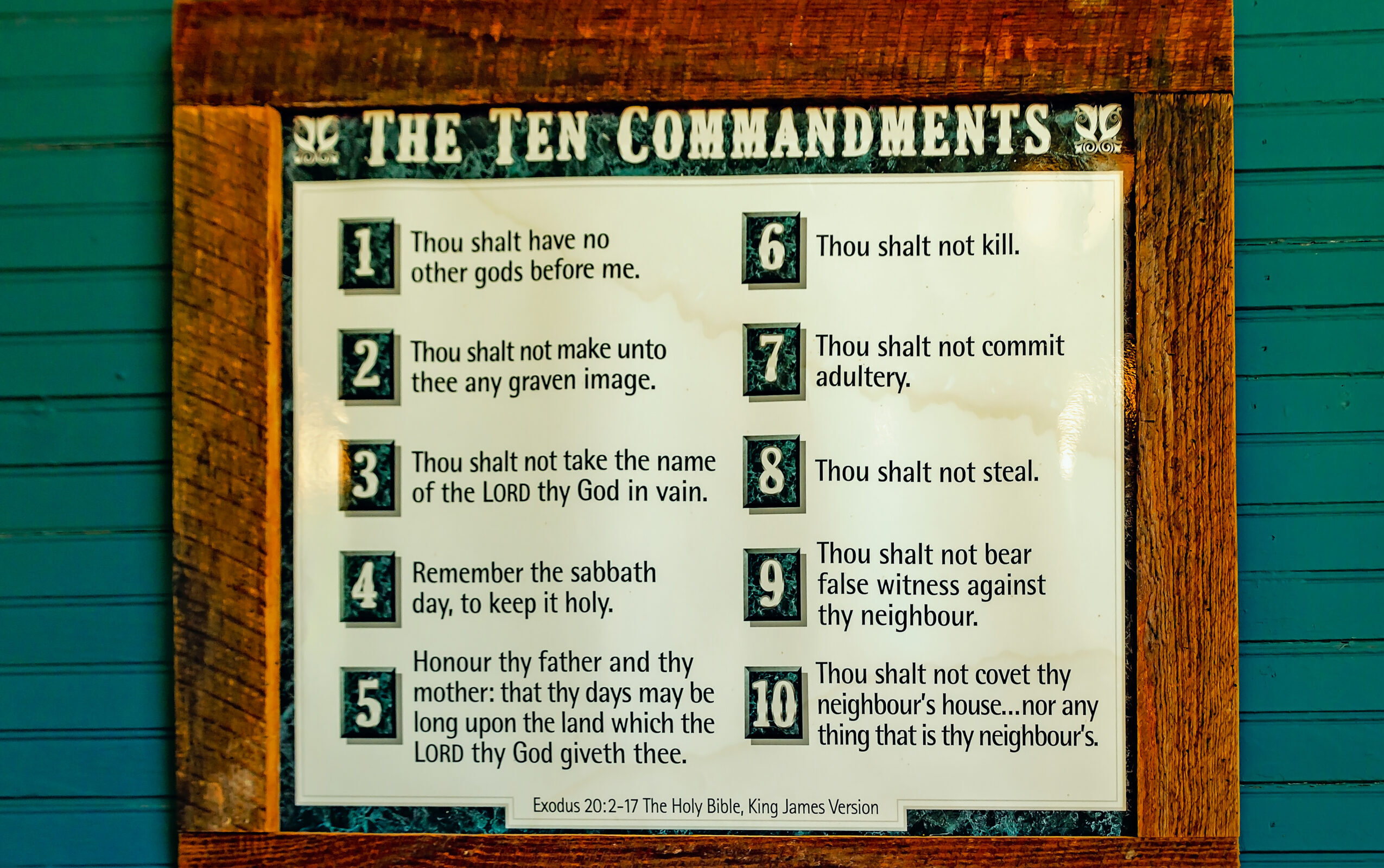
According to the U.S. Court of Appeals for the Fifth Circuit, it’s constitutional to require public schools in Texas to display the Ten Commandments.
Tuesday’s ruling was by the narrowest of margins (9-8) but it nevertheless upheld a 2025 Texas law that was immediately challenged in court. Critics cried foul, claiming the legislation violated the Establishment Clause.
In the ruling, a majority of judges disagreed. Circuit Judge Stuart Kyle Duncan wrote:
“S.B. 10 looks nothing like a historical religious establishment. It does not tell churches or synagogues or mosques what to believe or how to worship or whom to employ as priests, rabbis, or imams. It punishes no one who rejects the Ten Commandments, no matter the reason.”
He continued:
“Students are neither catechized on the Commandments nor taught to adopt them. Nor are teachers commanded to proselytize students who ask about the displays or contradict students who disagree with them.”
Both legal and popular debate over historical displays of faith goes back decades, of course. Ironically, though, when it comes to the Ten Commandments and the classroom, Hollywood deserves credit for both popularizing and promoting the display of God’s laws in school.
When the 1956 film, “The Ten Commandments,” came to the big screen, promoters partnered with the Fraternal Order of Eagles to fund, create, and place more than 150 granite depictions of the Scripture verses – including in public schools.
Secularists challenged the public expression of faith in the 1960s, leading to the banning of prayer in the classroom (Engel v. Vitale) and Bible reading (Abington School District v. Schempp). In 1980’s “Stone v. Graham,” the Supreme Court built upon that antagonism towards faith and ruled certain ways of displaying the Ten Commandments were unconstitutional. Basically, it said an existing Kentucky law constituted an endorsement of religion and thus a violation of the Establishment Clause of the First Amendment.
But on Tuesday, a majority of the Fifth Circuit found that the Texas law threaded the constitutional needle.
Such strong opposition to the posting of the Ten Commandments raises the question: What do opponents find so troubling about posting such fundamental and foundational directives?
In short, is it really a problem to post something that encourages students to …
Put God first, respect His name, observe a rest day, honor your parents, don’t murder, be faithful in marriage, don’t steal, don’t lie, don’t cheat, and don’t be jealous of others?
Kelly Shackelford, who serves as president and CEO of the First Liberty Institute, and whose group filed an amicus brief in the case, stated:
“The Ten Commandments have been a part of our nation’s history and tradition; banning them from schools because they are religious is not justified by the Constitution and would undermine a comprehensive education for America’s students.”
Louisiana currently has a similar law on the books and other states are expected to soon follow suit. Don’t be surprised if the ongoing debate continues and eventually finds itself at the United States Supreme Court.


ABOUT THE AUTHOR