What is Democratic Socialism? Here’s What You Need to Know
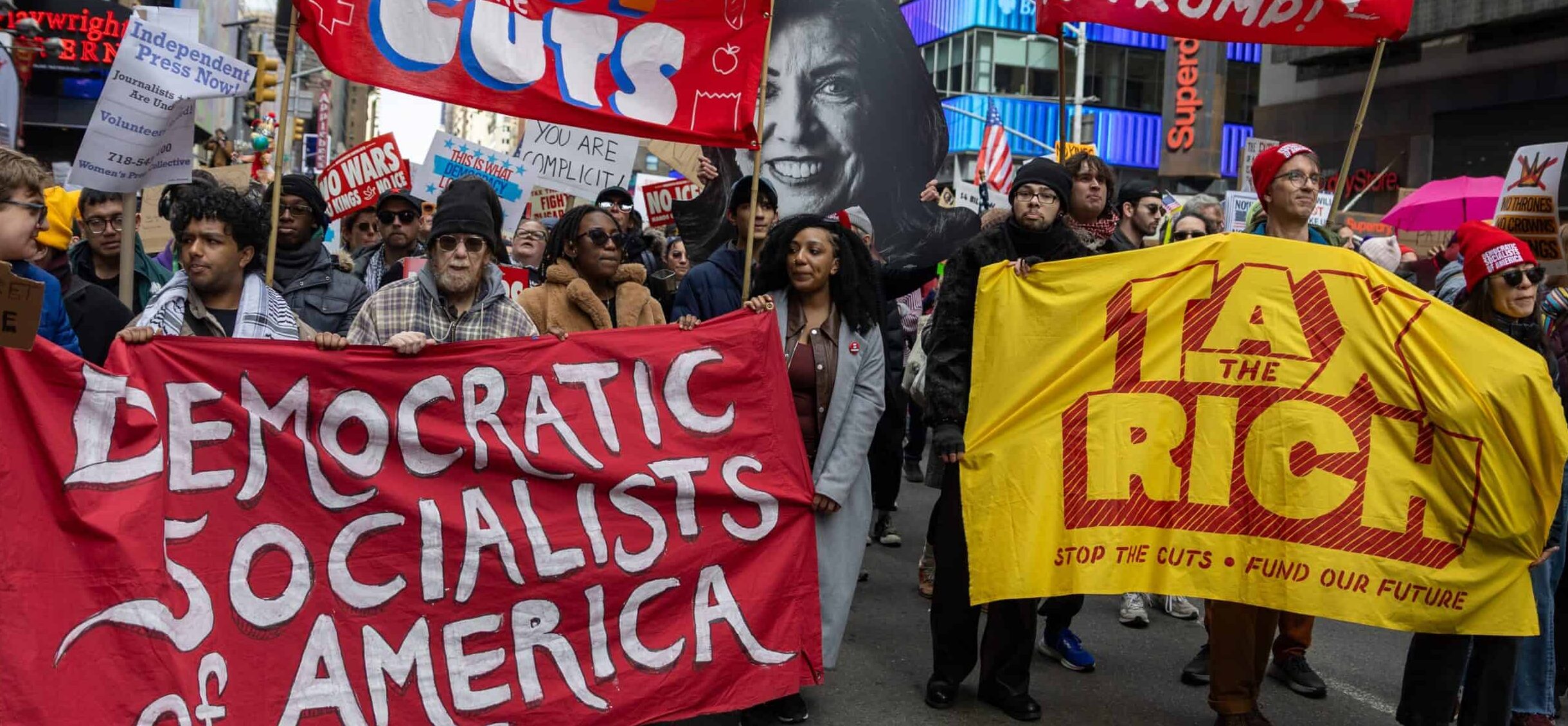
Marxism is enjoying a political renaissance this year under the banner of “democratic socialism.”
Nearly forty self-described democratic socialists have won local, state and federal primaries against their Democrat counterparts as of publishing.
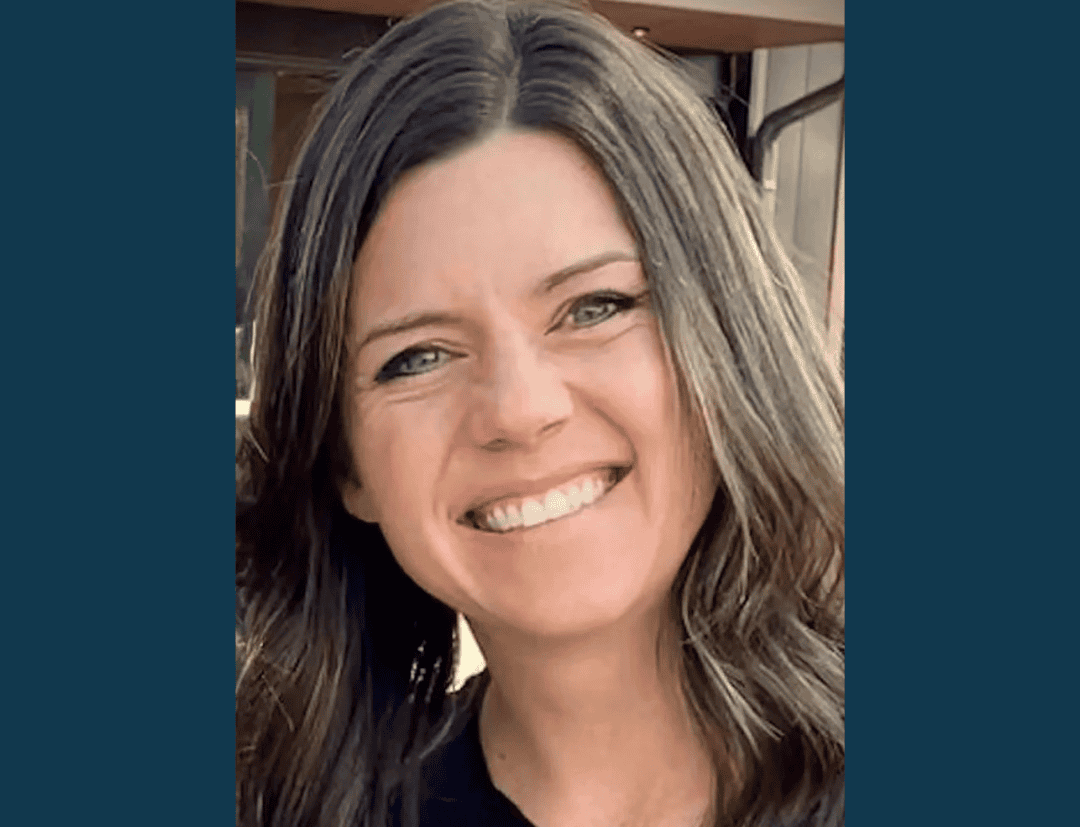
In Colorado, 29-year-old Melat Kiros defeated Diana DeGette, a 30-year incumbent, to represent the state’s first congressional district in the House of Representatives.
In New York City alone, 13 democratic socialist candidates won their respective elections.
Some might associate “democratic socialism” with infamous tragedies like the killing fields of Cambodia, Tiananmen Square or the collapse of Venezuela. Others might think of pro-Hamas protesters or other hardline issue activists.
But what is “democratic socialism,” really? How does it differ from socialism and communism? And how does it incorporate the modern left’s social agenda?
Let’s break it down.
Democratic socialism is a derivative of socialism — an economic and political ideology which originated with German philosopher Karl Marx in the 19th century.
A socialist economy replaces private property with government ownership of shared goods and resources. Instead of free markets, workers in a socialist economy own the goods and services they produce.
Socialism purports to address wealth disparities between the rich and poor. Marx believed selfishness and greed stemmed from capitalism, which inspired the upper class to oppress the working class in pursuit of profit.
He understood all human history to be a series of violent working-class rebellions against the upper class which would inevitably lead to the defeat of the upper class and abolishment of capitalism.
Marx believed government itself would become obsolete when the influence of capitalism was removed.
Democratic socialism developed after Marx’s death in 1883. It has several distinct characteristics.
As their name suggests, democratic socialists advocate for a socialist economy administered by a political democracy.
Unlike Marx, democratic socialists do not believe violent revolution is inevitable or necessary to establish a socialist system.
This softening of Marx’s doctrine emerged with the Revisionists. True to their name, the Revisionists revised Marx’s original theory to allow for peaceful, incremental transition to socialism after finding socialist parties and candidates could succeed at the ballot box.
Perhaps most importantly, democratic socialists want to abolish capitalism. Jacobin founding editor Bhaskar Sunkara told “Interesting Times” podcast host Ross Douthat:
A politician who believes in simply expanding the welfare state or regulating free markets is not a true democratic socialist.
At the same time the Revisionists were softening Marx’s original position on violent revolution, Vladimir Lenin was creating his own ideological faction of Marxism which would become known as communism.
Unlike democratic socialism, communism — or Marxism-Leninism — adheres to Marx’s belief that abolishing capitalism requires violent revolution. But unlike Marx, Lenin did not believe revolution was inevitable. Instead, Lenin thought the working class had to be taught to revolt by a leading group of “professional revolutionaries.”
Lenin’s ideology overtook Russia’s socialist party, culminating in the Bolshevik Revolution in 1917. His communism has gone on to create some of the most brutal regimes in documented history — including that of his successor, Joseph Stalin.
Though socialism, as conceived by Marx, involved issues of economic class, today’s democratic socialists often align themselves with a broad array of ideological interests.
Encyclopedia Britannica traces the “cross-pollination” of socialism and issue advocacy to the 1960s, after the brutality of Stalin’s rule came to light. Seeking to distance themselves from the dictator, a flood of activists, anarchists and disenfranchised socialists left the “socialist” banner and declared themselves members of the “New Left.”
This period of reorganization smushed social issues like LGBT rights, feminism and environmentalism and economic proposals like socialism into one agenda, which democratic socialists continue to draw from.
Though democratic socialists share the three broad characteristics outlined above, they vary widely on policy prescriptions, particularly regarding social issues.
To understand what a democratic socialist policy platform might look like, the Daily Citizen referred to the Democratic Socialists of America (DSA), one of the fastest growing, most visible democratic socialist membership organizations in America.
The group, which now boasts over 120,000 members, published a sweeping new vision for a socialist future earlier this month. Their goal is ambitious:
“Complete victory will require building a new society from the ground up,” it acknowledges.
The platform is broken into economic, foreign policy and political demands.
Under its economic demands, the government would:
- Forgive all student debt.
- Provide universal healthcare.
- Pay to teach and train medical professionals.
- Build and run new hospitals, clinics and housing developments.
- Establish national rent control.
- “Take control of the largest corporations and essential industries.”
- Enact “aggressive wealth taxes on the richest individuals and corporations to spend on public goods and infrastructure.”
Corporations would:
- Pay workers a living minimum wage.
- Provide paid family leave for all workers.
- Institute a 32-hour work week with full pay and benefits.
Sunkara, in his conversation with Douthat, recommended nearly all the same policies, suggesting the DSA’s economic vision, at least, reflects broader democratic socialist thought.
DSA’s foreign policy and political demands reveal a broad range of ideological stances. The organization’s requests include, but are not limited to:
- Removing all restrictions on abortion.
- Making abortions and sex-rejecting procedures part of government-funded health care.
- Enacting race-based reparations.
- Abolishing Immigration and Customs Enforcement (ICE), the police and prison system.
- Decriminalizing drug offenses.
- Phasing out fossil fuels.
- Defunding the Department of War.
- Ending all overseas wars and closing all overseas military bases.
- Acknowledging Israel’s occupation of land belonging to Palestine.
- Ending all funding and military support to Israel.
- Granting all illegal immigrants permanent U.S. citizenship.
- Making all forms of entrance into the United States legal.
- Abolishing the Senate.
- Making the executive and judicial branches subordinate to the House of Representatives.
Sunkara defends some of these positions as consistent with traditional anti-militarization and anti-imperialism strands in democratic socialist thought. But he also suggests not all democratic socialists feel passionate about the same social issues.
“I imagine socialists will adopt different rhetoric on different things,” he told Douthat.
“They obviously have to adopt rhetoric that they believe in, because authenticity is a big part of our brand.”
It’s also unclear whether all modern democratic socialists strictly disavow violence.
Douthat pushed Sunkara on problematic trends within the movement, noting several members of the DSA self-identify as communists, which ostensibly believe violent revolution is the only way to establish a socialist system.
The podcast host also brought up cultural acceptance and celebration of Luigi Mangione, the man accused of shooting United Health Care CEO Brian Thompson to death on a Manhattan street in December 2024.
Mangione’s alleged manifesto castigated United Healthcare and other insurance companies for prioritizing profit over people.
Douthat could have further mentioned Tyler Robinson, who allegedly assassinated conservative activist Charlie Kirk. The young man allegedly carved lyrics from a popular socialist song into one of bullets found at the scene.
Sunkara flatly denied Mangione — or anyone else — carried influence in the DSA, arguing his actions, while undeniably disturbing, were more reflective of populist and youth culture.
Sunkara also denied anyone in DSA wanted to pursue “Stalinism.”
“I don’t think those currents exist even in the smallest margin in DSA,” he told Douthat. “I think you have a lot of youthful, ultra-leftist people who like the word [communism] because it’s more transgressive.”
Whether or not members of the DSA identify as ideological communists may be beside the point. Americans increasingly believe political violence, including destruction of property, can be at least partially justified. The problem is more pronounced on the left.
In 2025, a nationally representative survey of nearly 1,300 American adults by the Network Contagion Research Institute and Rutgers’ University Social Perception Lab found 32% and 39% of respondents felt it would be at least partially justified to murder Elon Musk and President Donald Trump, respectively.
Nearly 40% felt it would be at least partially justified to destroy Tesla dealerships.
Respondents who identified themselves as politically left of center showed significantly higher willingness to accept political violence. More than half of respondents in this group said it would be at least partially justified to murder Musk (50%) and the president (56%). Nearly 60% felt it would be at least partially justified to destroy a Tesla dealership.
These data points do not implicate democratic socialists directly — but democratic socialism’s connection to historically violent ideologies, and the left’s growing acceptance of political violence, doesn’t bode well.
Democratic socialism does well at the ballot box because it makes all the right promises. But history bears witness — when socialism and its derivatives are applied to a sinful, broken world, they produce tragic, evil outcomes every time.
The problem is that socialism relies on humanity’s essential goodness. Karl Marx believed capitalism was responsible for all the evil humans do to one another. In its absence, he believed we would no longer need government at all.
Democratic socialists believe the capitalist system forces humans to make bad choices. If we didn’t experience need and want, for their reason, we would no longer make bad choices.
As Christians, we know this is simply untrue. Humans are made in the image of God, but Romans 3:23 tells us, “All have sinned and fall short of the glory of God.” Christian believers are saved through Jesus Christ’s sacrifice. His grace is sufficient each day to cover all of our sins, but we continue to make mistakes.
Good governance harnesses humanity’s triumphs and guards against its flaws. A system which relies on relative perfection is an inevitable recipe for disaster.
Additional Articles and Resources
What Does Fascism Actually Mean? Here’s What to Know About Politics’ Latest Buzzword
4 Ways to Protect Your Kids from Assassination Culture
Charlie Kirk’s Accused Assassin and His Links to Transgenderism.
‘Assassination Culture’: Many Believe Killing and Destruction Are Justified
Mangione Defense Fund Inexplicably Passes $150K
Luigi Mangione: Alleged Killer Apprehended With All-Too-Familiar Manifesto
Lorenz Feels ‘Joy’ at UnitedHealthcare CEO’s ExecutionA Year’s Slide into Antisemitism, Examined