Is America Growing More or Less Pro-Life?
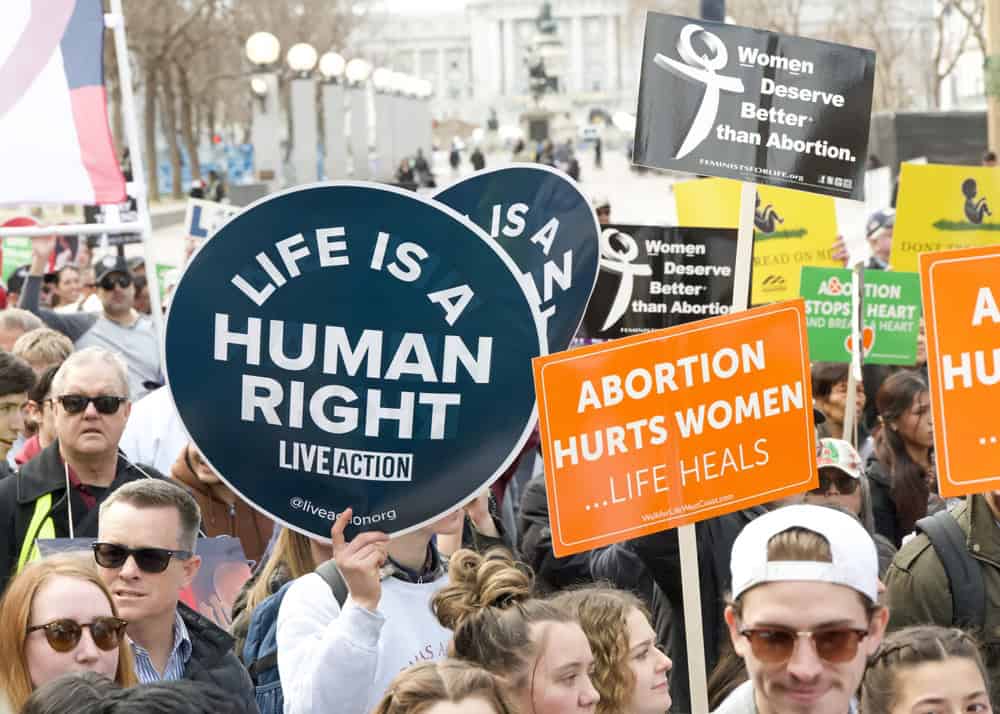
One of the primary marks of a nation is how it cares for its most vulnerable. Few are more vulnerable and helpless than the preborn. Every child in a mother’s womb is humanity’s tomorrow. That is, after all, how each of us started. Those tiny humans demand our care and protection.
So how are we doing as a country in protecting human life in the womb? For all the seriously heroic pro-life efforts going on across the nation, are our fellow citizens’ views on abortion moving in a positive direction?
New polling data from the Pew Research Center paints a good news/bad news story.
Some good news is that among white evangelicals, 74% say abortion should be illegal in all or most cases. This is up from 62% who said this in 2008. (Pew provided no data for black or Hispanic evangelicals.)
The bad news is that in the long run, convictions appear to have not really moved much in the past 30 years. In fact, Pew’s data show the number of Americans who say abortion should be legal/illegal in “all/most cases” is precisely the same today as it was 31 years ago in 1995, as this graph shows.
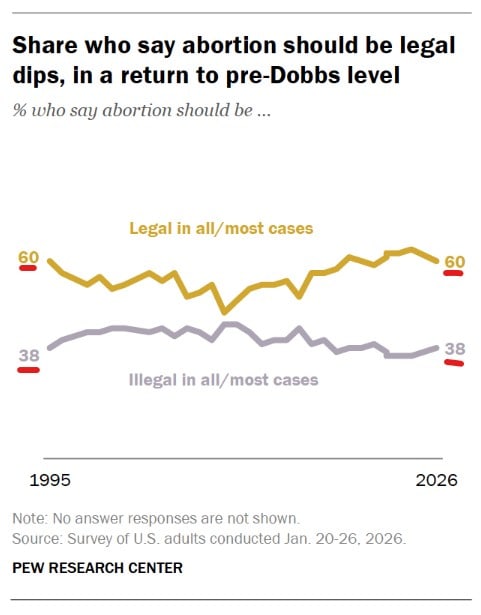
But there is also good news here. As this chart indicates, there have been recent marked declines in the number of Americans who support abortion and increases in those who want to see it significantly restricted. Pew’s data tells us that in 2024, 63% of Americans thought abortion should be legal in “all/most cases” and that number has now declined to 60%. On the pro-life side, those numbers have shifted from 36% in 2024, up to 38% today. Yet they were exactly as they are today — 60 versus 38% — as they were in 2020 and 1995.
You see a slightly different perspective on the overall consistency from this long trendline:
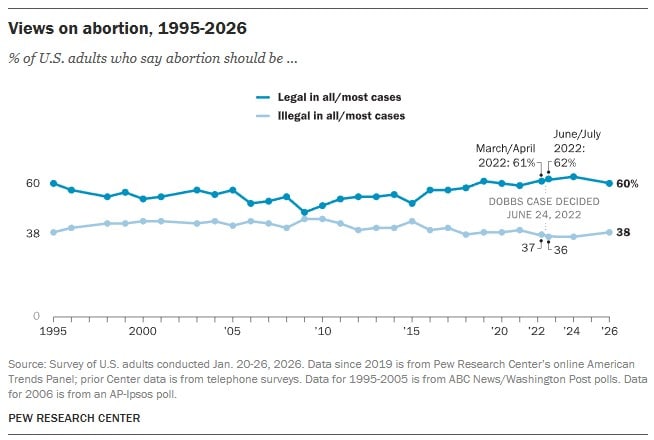
The year these two conflicting views closed the narrowest gap was in 2009 when 47% of Americans believed abortion should be protected and 44% believed it should be substantially restricted. The highest point the pro-life view reached since 1995 when Pew started tracking this question was 44% in 2009 and 2010. It nearly regained that height with 43% in 2015. The peak for the pro-abortion view was 63% in 2024, and it only hit the low 60s in 1995, 2019 (61%), 2020 (60%), 2022 (62%), and 2026.
Additional good news is that Pew finds a full 76% of Americans believe there should be at least some legal limits on abortion. This is contrary to what pro-abortion activists advocate for and have successfully passed in a great many states in the U.S. When asked, their leaders are not inclined to mention any limitations they favor. In fact, they typically resist basic medical health and safety standards being applied to abortion businesses.
Of this new Pew data, Professor Michael New of the Catholic University of America and the Charlotte Lozier Institute in Washington DC wrote over at National Review,
Abortion by Politics
Finally, Pew documents how abortion has been faring among the two major parties in the U.S. Support for abortion has increased among Republicans and Democrats, yet to very differing degrees.
The Republican party removed “right to life” convictions from its party platform in 2024 and 41% of GOPers supported the full legality of abortion that year. Yet Pew notes a decline since then in the number of Republican or Republican-leaning citizens who believe abortion should be legal in all or most cases down to 36%. Although that conviction has remained pretty steady over the last twenty years.
However, Democrat and Democrat-leaning voters favoring no or few limitations on abortion have risen dramatically from 63% in 2007 to 84% in 2026.
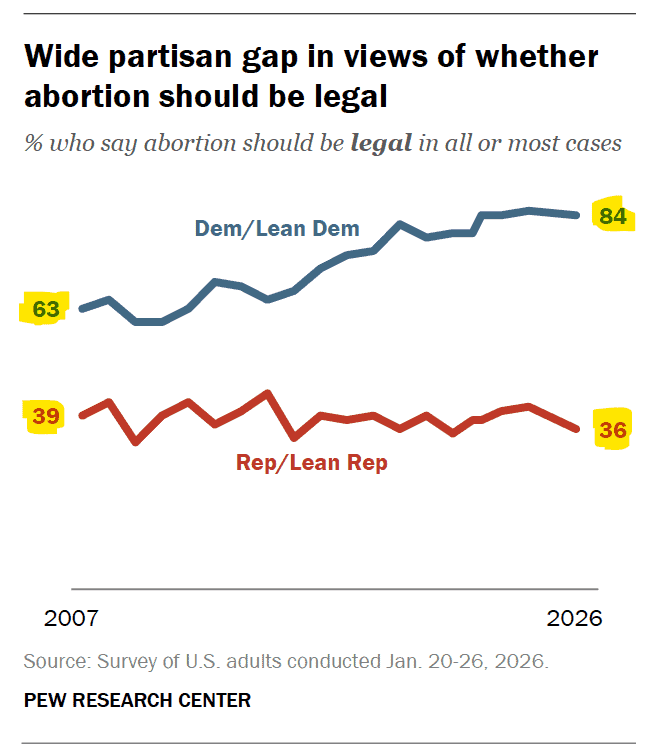
This is a 48-point difference between the two parties on the need to protect preborn life. In 2007, they shared a 24-point gulf.
We should celebrate the good news here and be sobered by the bad. But we must also realize we still have much work to do to recover a nation that values all life, no matter how young. The collective work of this very vibrant pro-life movement must continue — and grow!