Sen. Ben Sasse: I’m Not Dead Yet
There are times in life when one feels as if he is standing on holy ground. Perhaps at the time of salvation, the birth of a child, or the funeral of a loved one who is assured to be in heaven.
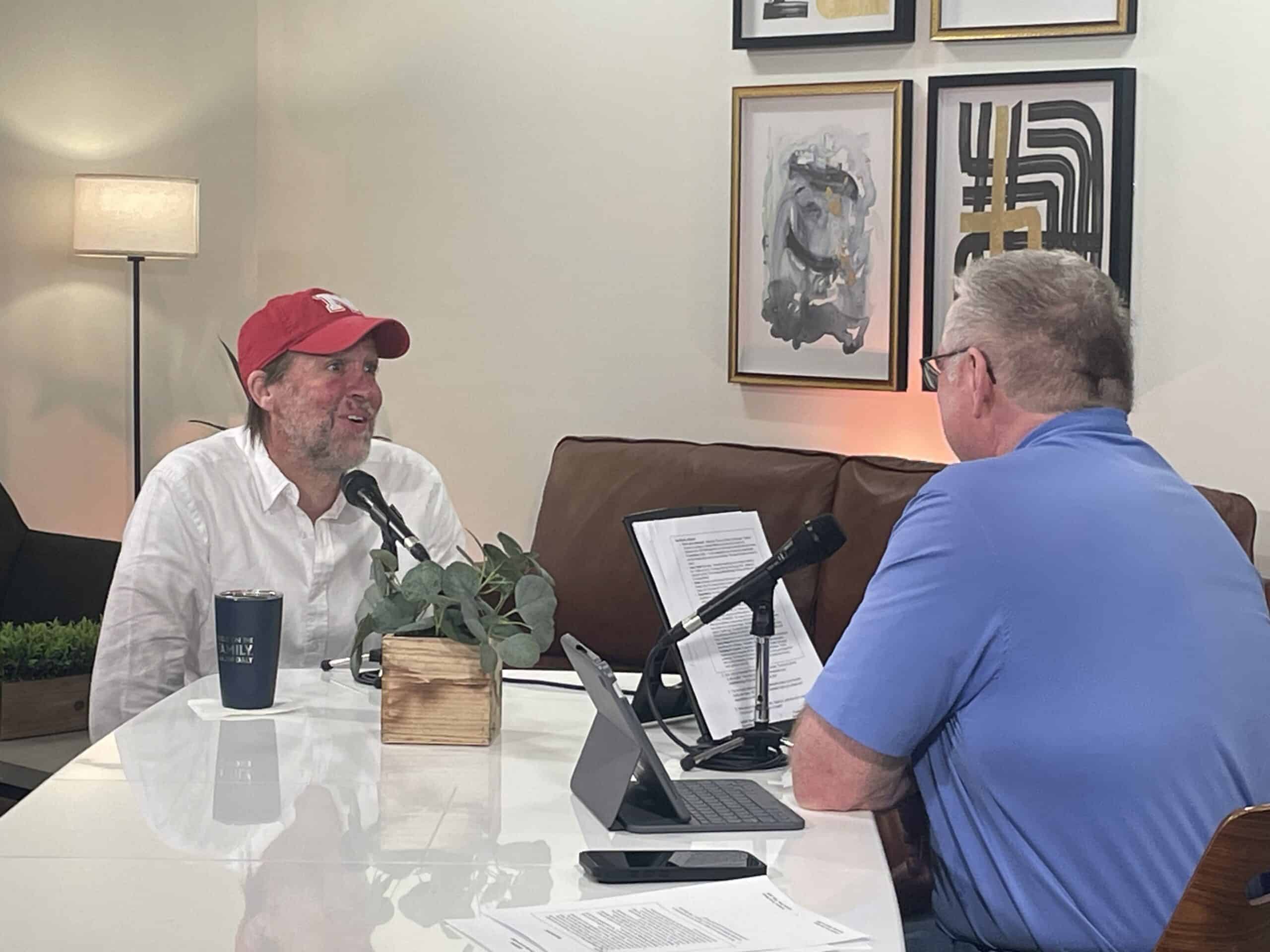
Recently, I experienced one of those times when I was present for Focus on the Family president Jim Daly’s interview of former U.S. Senator, Ben Sasse of Nebraska for both his daily radio program, Focus on the Family with Jim Daly, and its accompanying podcast, ReFocus.
I greeted Mr. Sasse outside the door of the church where the interview was held, and he said, “Hi, I’m Ben.” I could not, did not, want to call him by his first name, but in keeping with his stature and my long involvement in the political sphere, referred to him in the manner most comfortable to me, if no longer expected by him, ‘Senator.’
Senator Sasse was diagnosed last December with Stage 4 pancreatic cancer, which had already metastasized to other organs, including his liver. The first sign, last October, was anguishing pain in his midsection caused by numerous tumors that have grown around his spine.
Given about four months to live, which will be hopefully prologued by a clinical trial he is undergoing, the former senator and University of Florida president, and current husband and father of three is eternally focused. Ben Sasse says that God’s creation, including our bodies, is glorious, but as time progresses grows strongly dim — his more dim than others.
Mr. Sasse said his prognosis has given him a renewed value in things that he considers most important, and he gave observance of the Lord’s Day, as an example. His family, wife, Melissa, two adult daughters and a teenage son, always went to church on Sunday, but now observe the entire day. Their sabbath is about being restful, keeping their devices quiet, and doing things together. Psalms 46 tell us three primary things: to not fear, to not strive, and to be still.
On the subject of suffering, Mr. Sasse said that God tells us everything we need to know in Scripture, but not everything we want to know. So, we do not often know why people suffer. However, He will use our suffering for His good. We are finite, but He is omnipotent. The duty for us during suffering is to remain faithful, keep reading the Bible, keep praying, and use the suffering to make us stronger, as if we are in God’s gymnasium.
The Sasse family practices a philosophy of “not dead yet” – a phrase from a movie. They attend church and visit both nursing homes and cemeteries in a desire to purposely embrace mortality. We are on a pilgrimage, a bridge to eternity, but we cannot place our hopes on the temporal. “We don’t build our dream house on a bridge,” he said.
He feels that we should respect all things God created, including government — considering his former vocation — as it exists to restrain evil. But he emphasized that those things are to be celebrated but not made idols of. He quoted St. Augustine that a person can even love a pet so much that they make an idol of it.
Finally, Mr. Sasse acknowledges that all humans have a death sentence, i.e., we cannot get out of this world alive (short of the rapture) but that his death sentence has a finite time stamped on it, barring a miracle, and how that has given him focus. And suffering is part of his timeline, a way in which he can further glorify God with his life, and now, with his impending death.
Our calling is to be human, made in God’s image, but we too often fall into rebellion. We should seek to be like the Second Adam. Suffering came through the first Adam. Life came from the Second. Death is our last enemy to conquer, and then there will be no more tears. And while it grieves him to think of leaving his wife a widow, his daughters with no father to walk them down the aisle, and his son without a dad with whom to pal around, he knows that one day, they will be together again.
Joel D. Vaughan is the Chief of Staff for Focus on the Family.