David French Makes Allie Beth Stuckey’s Case Regarding ‘Toxic Empathy’
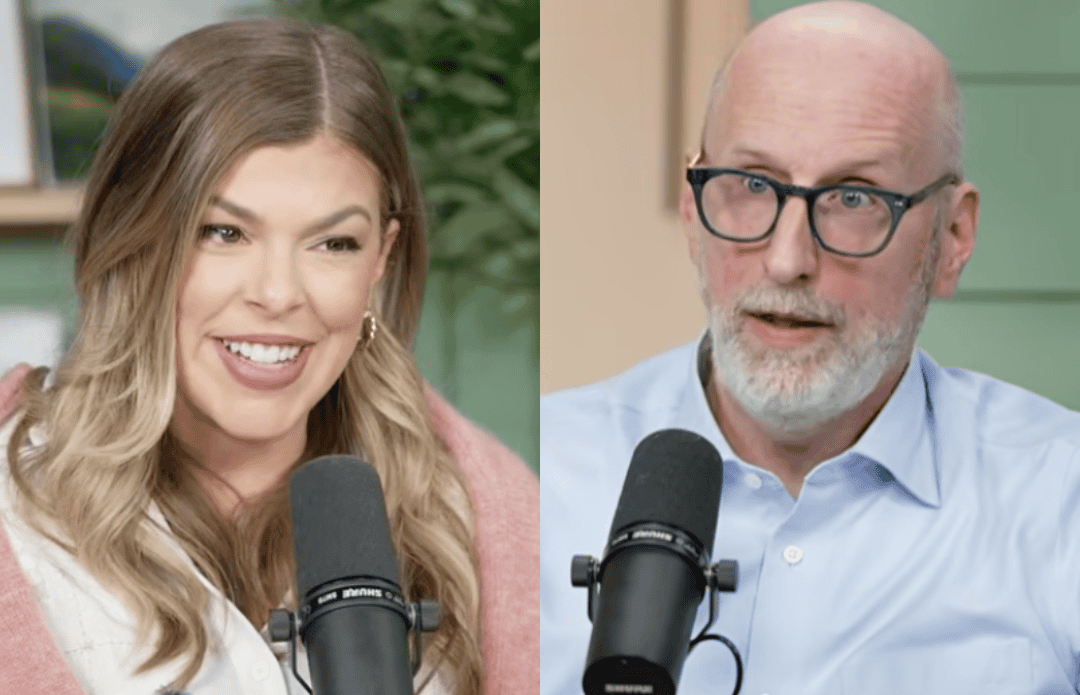
It’s a tried-and-true tactic of detective work and journalism to let your interviewee talk – the more they say, the more they tend to reveal, especially what they might otherwise prefer to conceal.
That’s what came to mind after watching popular Christian podcaster Allie Beth Stuckey’s recent interview with New York Times columnist and evangelical gadfly David French.
Fidgeting nervously in his chair opposite Stuckey, the former conservative writer attempted to address a variety of issues ranging from his decision to refer to a sexually confused man as a “she,” his objection to the term “toxic empathy,” and his reluctance to call out the radical theology from those on the left as heretical.
For the last few years, David French has made his living critiquing culture, specifically conservatives, and nobody more so than President Donald Trump. He is clearly not a fan. In his role at the Times, French considers himself something of the movement’s conscience, and seems regularly more bothered by the actions of those on the right than the left.
His sit down with Allie Beth Stuckey on her podcast, “Relatable,” was civil, polite, and respectful from beginning to end. But maybe the most ironic aspect of the conversation, though, centered around their debate over “toxic empathy” – the name of Stuckey’s bestselling book, and a topic that clearly bothers David French.
According to Stuckey, “toxic empathy” is empathy that overrides truth or moral judgment and “encourages the affirmation of lies, sin, or destructive politics.” Empathy becomes harmful when it leads to someone affirming something that is harmful and wrong – especially sexual confusion.
Pressing David French on why he used the preferred pronoun “she” to describe a “he” he replied, “I don’t see the value in saying something that I know and they know is going to be hurtful to them. It’s just normal, complete politeness and manners.”
In other words – he was being toxically empathetic.
Southern Seminary’s Andrew Walker pointed this out in the days following the interview.
“She (Stuckey) indexes her understanding of emotion and empathy on a biblical axis, whereas French elevates emotion and empathy to a disproportionate degree. The consequence is to unmoor emotion from truth. There’s simply a difference in rhetorical strategy: Stuckey focuses more on logos; French on pathos.
“Along those lines, another reason I think Allie Beth had the stronger hand is that she refuses to play the game of pitting love against truth (1 Cor. 13:6; Eph. 4:15). She’s no less interested in kindness or empathy, but properly indexed by Scripture. French’s focus on catering to emotional equilibrium (and thus hewing to progressive niceties) requires him to blur biblical categories. Biblical ethics requires both logos and pathos, but our loves must be ordered and governed with a proper foundation. And notably, French’s empathy tends in one direction, toward those to his left. In short, Allie Beth focused on objectivity, reason, and right and wrong as the grounds of what constitutes love and kindness, whereas French’s instinct is to defer to emotion and aesthetics.”
When Allie Beth Stuckey pushed back on French for calling out her use of the term, the New York Times opinion writer acknowledged her definitions in the book made sense, but that “I have seen you online, when people talk about the plight of others, you bring up toxic empathy.”
Stuckey asked French for an example. He couldn’t provide one.
In another spirited exchange, Stuckey asked French about his provocative claims that abortions in America have gone up under President Donald Trump. Never mind that reporting on such things has always been unreliable, especially in states like California, but Allie Beth asked, “What did he (Pres. Trump) do that caused abortions to rise?”
French suggested President Trump has fanned “libertinism” – “an unrestrained pursuit of pleasure, self-indulgence, and a total disregard for conventional social, moral, or religious constraints.” But then Stuckey asked the million-dollar question:
“Do we have data that shows us that it’s more people on the right that were getting abortions under Donald Trump?”
“We don’t have that data,” French admitted.
Allie Beth Stuckey went into her debate with David French well prepared. She also modeled well how to engage with those who can be selective when critiquing culture, especially those challenging socially conservative thoughts and actions.
If The New York Times was truly interested in providing their readers with a thoughtful and fair perspective from a biblically based social conservative point-of-view, they would be contracting with Allie Beth Stuckey to write a weekly column in the Old Grey Lady.


ABOUT THE AUTHOR