Supreme Court Approves States’ Use of DHS Database to Exclude Illegal Voters
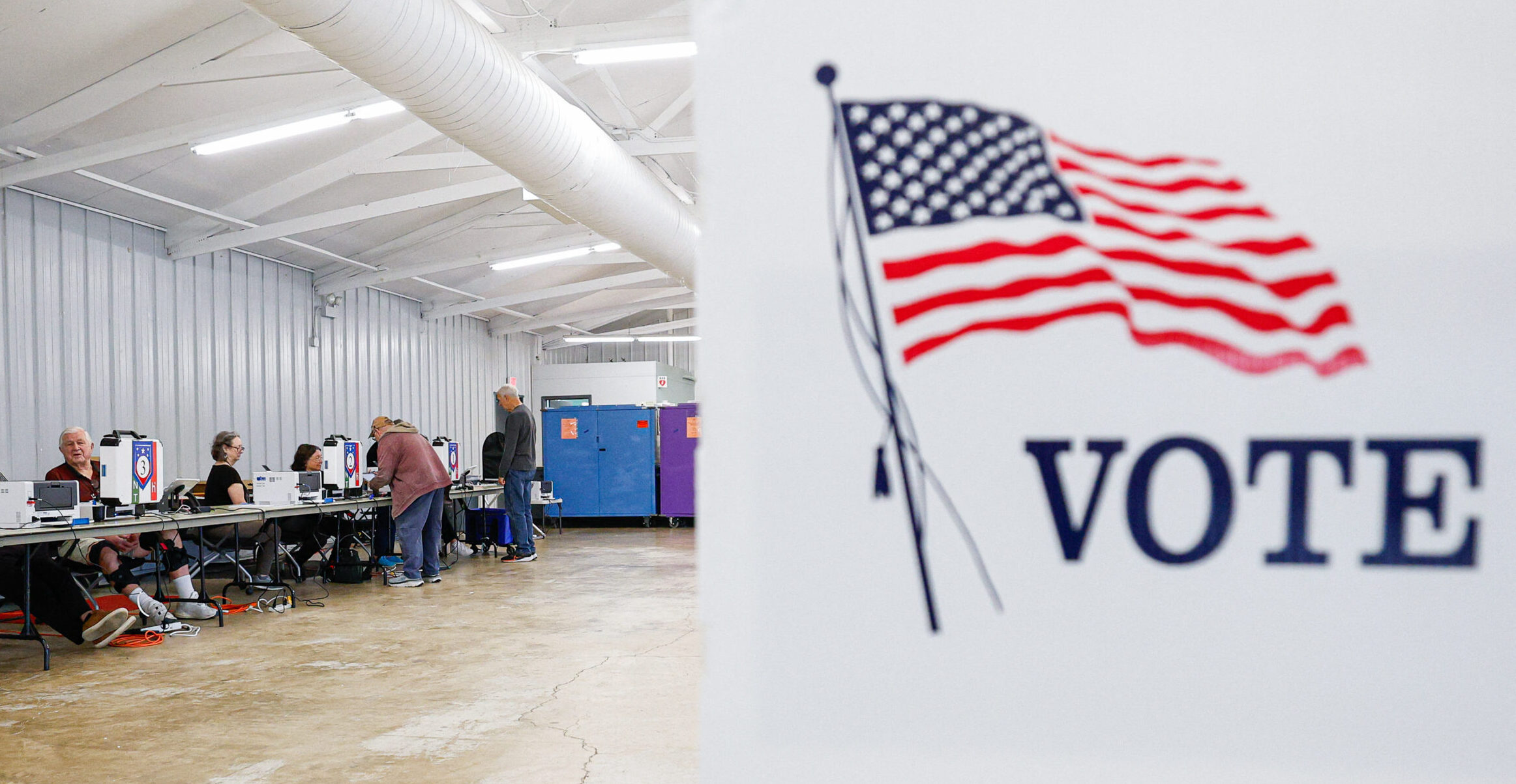
The U.S. Supreme Court decided in favor of allowing states to use the Department of Homeland Security’s database to check registered voters’ citizenship.
In a 6-3 per curiam decision (an opinion issued in the name of the Court and not an individual justice), the justices overturned an injunction from District Court Judge Sparkle L. Sooknanan, a Biden appointee, blocking states from using the Systematic Alien Verification for Entitlements (SAVE) system.
The majority decided the government was likely to succeed in its case, which was sent back to the district court for a full review.
Justice Ketanji Brown Jackson wrote a dissenting opinion, joined by Justices Sotomayer and Kagan.
The Court explained that SAVE was created as part of the “Immigration Reform and Control Act” of 1986” to allow “federal, state, and local government agencies to verify the citizenship and immigration status of noncitizens applying for public benefits.”
President Trump signed an executive order on March 31, 2026, “Ensuring Citizenship Verification and Integrity in Federal Elections,” instructing the DHS to modify SAVE and compile data from more federal databases, including the Social Security Administration and federal citizenship and naturalization records.
The order directed DHS to send state election officials a State Citizenship List, at least 60 days before an election, to ensure that only citizens voted in federal elections.
SAVE was also modified to allow bulk searches, rather than individualized searches, so that election officials could more easily compare state and local voter rolls with the SAVE database.
The League of Women Voters, its local affiliates and the Electronic Privacy Information Center challenged the modifications, alleging that the changes violated Social Security confidentiality rules, the Privacy Act of 1974, and “were arbitrary and capricious under the Administrative Procedure Act.”
The Court disagreed, citing the Illegal Immigration Reform and Immigrant Responsibility Act, passed by Congress in 1996, which forbid state, local and federal agencies from blocking DHS from sharing information about citizenship and immigration status.
The justices pointed out, however, that the decision may not have a big impact on the 2026 mid-term elections. The National Voter Registration Act prohibits states from creating new programs that “systematically remove the names of ineligible voters from the official lists of eligible voters” within 90 days of an election.
But states can still use the SAVE program to make individualized inquiries about a voter’s citizenship. In addition, before Sooknanan blocked the use of the program, DHS had already flagged around 30,000 registered voters, in 12 different states, as possible non-citizens. States can still investigate their eligibility.
Reuters reported that most of the errors came from “bureaucratic errors.” For example, New Jersey recently announced that 6,600 non-citizens were added to voter rolls through a “technology glitch” that automatically registered them as they applied for IDs and drivers licenses.
Reports like this lead to voter uncertainty about election results. The mistrust is compounded when the huge number of noncitizens in the U.S. is taken into consideration.
A September 22 report from the Congressional Research Service stated that in 2024 “an estimated 50.2 million foreign-born people resided in the United States, representing approximately 14.8% of the total U.S. population.”
Almost 26 million of these are naturalized citizens, leaving about 24 million noncitizens. Around 12 million of these are “lawful permanent residents” and approximately 14 million are illegal aliens, although that number may be greatly underestimated.
That leaves a lot of room for error when registering voters.
The Supreme Court decision, allowing states to work with DHS to create more accurate voter lists, is one step in the right direction.
Related articles and resources:
9 Election Reforms States Can Implement to Prevent Mistakes and Vote Fraud
Are Elections Secure? 10 Examples of Election Issues Around the Country
Can the US Postal System Be Trusted with Our Ballots?
The Facts About Election Integrity and the Need for States to Fix Their Election Systems
How To Restore Faith in Our Federal Elections
Is it ‘Voter Suppression’ to Require Proof of Citizenship to Vote?
Why (and How) Christians Should Vote


ABOUT THE AUTHOR