• Skip to main content
Daily Citizen
  • Subscribe
  • Categories
    • Culture
    • Life
    • Religious Freedom
    • Sexuality
  • Parenting Resources
    • LGBT Pride
    • Homosexuality
    • Sexuality/Marriage
    • Transgender
  • About
    • Contributors
    • Contact
  • Donate

Fertility

Jul 09 2026

New Dire Fertility Prospects for the United States and Real Hope for a Fix

It has been well documented that fertility is falling in the U.S. and in nearly every part of the world. The Daily Citizen has tracked this well, here, here, here and here.

Sustained declining fertility violates God’s first command to humanity to not only be fruitful and have children, but to actually multiply – to have more children than the couple themselves. A demographic truism is that a population that is not moderately multiplying is slowly dying. That is the present fact of global fertility.

Leading UPenn demographer Jesús Fernández-Villaverde has explained, “Humanity has entered a new era of rapid population decline.” He adds, “If we are unable to address our fertility crisis, the US will face an existential economic crisis driven by a steep decline in fertility rates – one that could have an impact measured in the quadrillions of dollars.”

Fewer people means more economic troubles because people are producers. They work. They create ideas, goods and resources that make life better for other people. Humans innovate. In fact, Paul Romer won the 2018 Nobel Prize in economics for mathematically demonstrating how people are much stronger, more powerful producers of goods and solutions to real problems than they are dangerous consumers. As Romer showed, our minds are more beneficial to the future of humanity than our stomachs are a threat. This fact turned what most people wrongly believed about population growth on its head. God is right. Population growth is not a problem. It is essential to human thriving and an improved and growing civilization.

A new report from the scholars at the Institute for Family Studies (IFS) further documents just how serious the problem of fertility decline is for America. They note that as we celebrate our nation’s 250th birthday, we must recognize what got us to “our current scale and strength as a nation – families raising their own children.”

IFS laments, “Without a new birth of family life in America, the greatest days of freedom will indeed be behind us.” They properly add, “The future of liberty for all of us depends on the future of family.”

Their report, entitled The Demographic Dead End: 2026 State of Fertility, shows the U.S. is now in its third historic period of extended below replacement fertility. And this third period is longer and more sustained than previous declines. They chart national U.S. fertility since 1800 to the present and it looks like this:
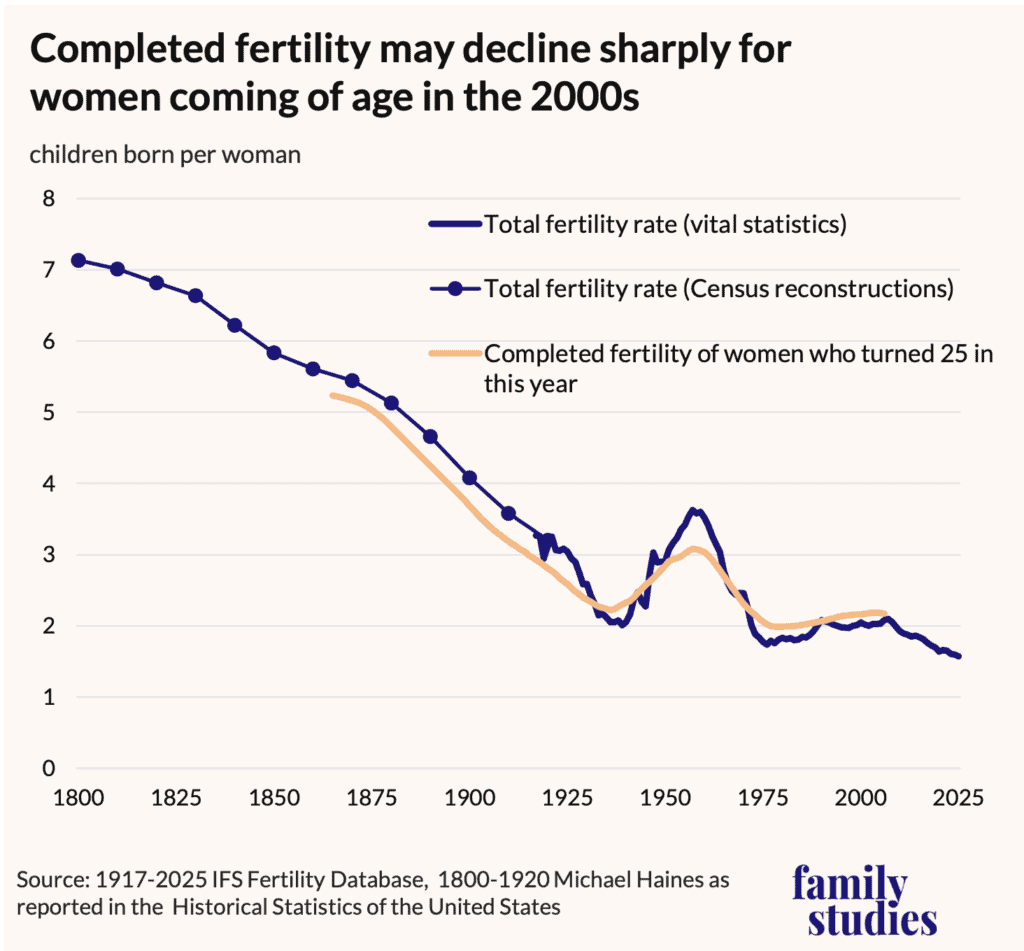
This is certainly not a growth trend line. IFS reports that if this downward trend continues, the U.S. population will peak in 2054, decades ahead of projections, and then start declining in the 2080s.

Once a population starts to decline, it is nearly impossible to bring it back up to replacement level. In fact, a leading group of Gates Foundation funded demographers reported in a major study from 2020 that “once global population decline begins, it will probably continue inexorably.” The Cambridge dictionary defines “inexorably” as “in a way that continues without any possibility of being stopped.”

This fact is sobering, as it means this sustained trend will likely be the eventual end of humankind.

Desired Fertility vs. Actual Fertility

Yet, IFS expresses hope.

Data consistently shows that actual fertility – babies actually being born – is lower than desired fertility, the number of children young couples or singles say they want to have one day. For Americans, actual fertility is 1.6. Desired fertility is, according to Gallup, 2.7.

And beliefs about God and life impact this. States with higher levels of church attendance, happy marriages and family strength tend to have higher birth rates than states with lower rates of faith,marriage and intact family formation. An additional IFS report, The Ideological Fertility Divide, explains how “liberals are more likely to hold views linked to fewer kids.”

But the fact is, no generation has ever had all the children they say they desire. Every age lags between the family size they say they want and what they actually have. For various confounding reasons, this is a human truism.

But it is good that the stated desire is there. It is something to work with.

This is even more meaningful when we consider that IFS, in their new Demographic Dead End report, explains that fertility is not so much a function of economics, but of social dynamics.Drawing from this IFS report, Rob Henderson, a senior fellow at the Manhattan Institute, concludes the trick to getting more babies is having more friends, and ideally, more friends who have babies themselves. Henderson states, “Americans are not having fewer children because they want fewer children.” He adds, “They are having fewer children, in part, because friendship has thinned and social support for family life has weakened.”

The decline of social familism drives down fertility. Thus, according to Henderson, “The gap between desired and actual family size is the widest it has been since the early 1970s.”

So it is not really economics and housing costs that limit fertility. IFS found that for Americans under 30 with a small circle of friends who are generally less supportive in helping with common life struggles, their fertility rate is about 1.7. For those reporting a larger, more supportive friend base, their fertility rate was 2.8, just above what Gallup reports as desired fertility. As Henderson explains, “having friends with kids predicts wanting more kids yourself.” Philosophical anthropologist René Girard would say this is because of mimetic desire, the fact that humans tend to desire what they observe other people enjoying. We need to see more young couples enjoying having kids.

We humans must revive the culture of fertility, having and enjoying plenty of children. Others will catch on to the craze. Human civilization depends on this shared habit. It is, after all, the first thing God told us to do. And demographers are now telling us how much it matters. Our very future depends on it.

Related articles and resources: 

The Pressing Need to Fix Global Fertility Decline and How to Do It

Is Inflation Driving Fertility’s Decline?

American Deaths to Exceed Births Faster Than Expected, CBO Reports

U.S. Fertility Rate Falls to Lowest on Record – Again

Global Population Has Passed ‘Peak Child’ – an Ominous Milestone

Why Americans Over and Under 50 Say They Don’t Have Kids

Death of the West? U.S. Fertility Rate Falls to Record Low.

China’s Population Drops by 2 Million in 2023 Due to Record Low Birth Rate

Discarding Genesis 1, U.S. Population Set to Decline This Century Amid World Population Collapse

The Importance of God’s Design for Marriage and Family

New Report Gives Update on Family Formation and Child Well-Being
Written by Glenn T. Stanton · Categorized: Culture · Tagged: Fertility, population decline

May 27 2026

The Courageous Christian Doctor Waging War Against the Fertility Industry 

Dr. John David Gordon was a reproductive endocrinologist without a home.

With a medical degree from Duke and his residency at Stanford, the Boston native, who was raised Jewish and converted to Christianity in 2000, is a skilled physician committed to helping infertile couples have children. His credentials and skills are unassailable and unbeatable.

But there was a problem – and it was a moral and ethical one of major proportions. 

Serving in a leadership role at a fertility clinic just outside of Washington, D.C., for over twenty years, Dr. Gordon began having significant misgivings about how his facility was doing business.

Like almost every fertility clinic these days across the reproductive medicine industry, the establishment was employing nearly every available technology to help maximize success. This included creating as many embryos as possible with each patient, a strategy that allows physicians to be choosy when it comes to selecting which ones to transfer to the mother.

At fertility clinics across the world, embryos are literally graded and evaluated, and those statistically most likely to implant and grow are the winners. Those that don’t make the cut are either frozen or discarded.

While nobody knows for sure, it’s estimated that more than thirty million embryos are created around the world each year because of IVF technology. A typical IVF cycle in a traditional clinic will result in up to 15 embryos. Most clinics recommend transferring only three or four.

Although his motives were redeeming, Dr. Gordon began feeling the ethical burden of being part of this industry that had grown increasingly reckless and mercenary. “It’s too morally problematic,” Gordon concluded. “I don’t know where you draw the line.”

After consulting with his wife, Allison, who also shared his deep Christian convictionsand unease over the direction of reproductive medicine, Dr. Gordon decided to leave the Washington, D.C. clinic and open one that would operate within biblical moral and ethical boundaries.

Setting up shop in eastern Tennessee, “Rejoice Fertility was created with a clear vision: to deliver an unparalleled patient experience where couples could openly discuss their moral, ethical, spiritual, and religious concerns about reproductive medicine.”

Specifically, Rejoice Fertility is a “no-discard” IVF clinic. Patients are encouraged to create only the embryos they will transfer or use for a future IVF. 

Any embryos created are either used for fresh transfer or preserved for future frozen embryo transfer.

For decades, Focus on the Family has been asked by married couples on how best to navigate the myriad of ethical considerations and challenges surrounding IVF. The ministry has recognized that across Christendom, believers may view the issue very differently.

While the Catholic Church has remained steadfast in their opposition to it, the Southern Baptists traditionally supported it but have since expressed a growing concern. The denomination’s convention passed a resolution decrying the ethical lines most clinics regularly cross. In doing so, they were correctly calling out the rise in embryo destruction, elective reduction, genetic screening, and the astronomical number of frozen embryos. They stopped just short of calling for an all-out ban. 

Given that the Bible doesn’t offer clear guidance on the overarching technology, we’ve thoughtfully and prayerfully studied the question. We’ve long said that doctors can take proactive steps to address many of the moral and ethical concerns associated with IVF – steps that Dr. Gordon and his team appear to be acknowledging and grappling with on a daily basis.

In the instances where couples may be unable to transfer frozen embryos, Rejoice Infertility strongly advocates for the couple agreeing to make the baby available for adoption. “Snowflake” embryo adoption has been a wonderful program that seeks to find forever homes for these babies locked in a perpetual frozen state.

In a world swirling with countless moral and ethical conundrums, we applaud Dr. Gordon for his efforts to care for his patients and prayerfully address and wage a fight that far too many medical professionals have long ago abandoned. 

Related articles and resources:

IVF: Moral and Ethical Considerations

Christians Must Consider the Moral and Ethical Hazards of IVF

Written by Paul Batura · Categorized: Life · Tagged: Fertility, IVF, Life

Apr 30 2026

Fertility Decline is Widespread Across Education Levels

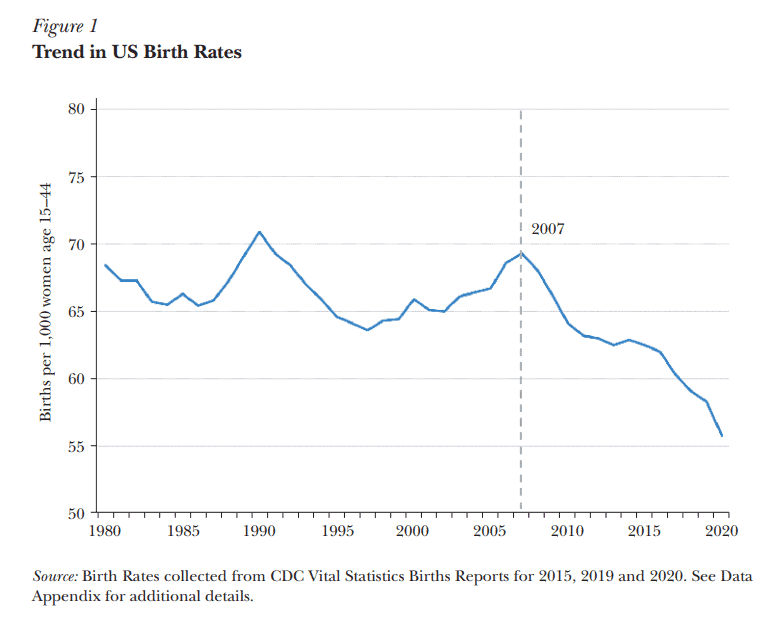
As fertility levels continue to tank in the United States, and across nearly all of the developed world, it is important to ask what population groups are experiencing these declines.

Is it working-class women facing economic struggles deciding to forego childbearing because of increasing costs and the need to work full-time? Or is it elite, professional women who simply have so many other life options to pursue, so becoming a mother loses to other intriguing options?

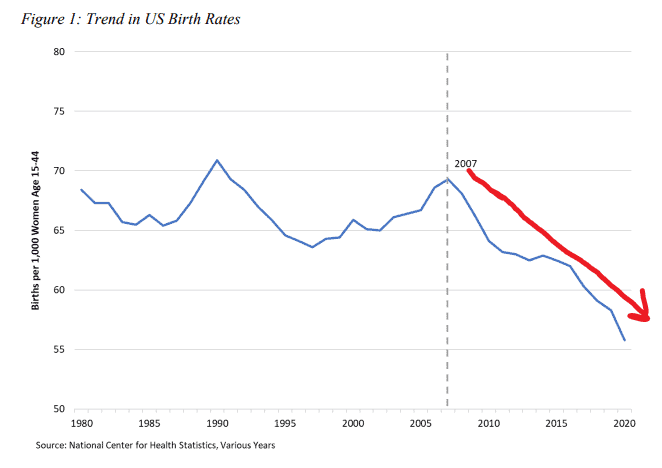
Two leading economists, Melissa Kearney and Phillip Levine, who have done important work in the world of global fertility, have newly taken up this very question and come to some interesting answers. In 2022, they explained just how dramatically U.S fertility is declining.

Things have only continued to slide further since 2020.

You simply cannot sustain a growing and prosperous nation with such trendlines. Tomorrow’s workers, teachers, health care providers, national leaders, inventors and investors, military and police force, business entrepreneurs and every other service provider any society needs always come to us as babies, being born today or tomorrow. If that doesn’t happen, we have no future. This makes fertility decline an extremely serious problem.

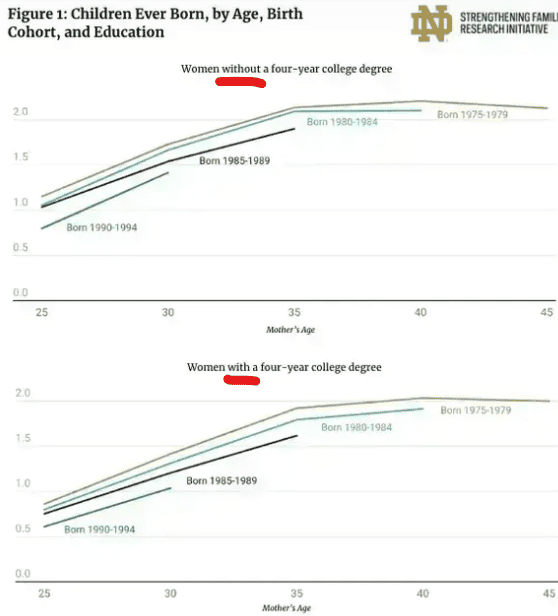
Working through University of Notre Dame’s Strengthening Families Research Initiative, Drs. Kearney and Levine present some concerning news on how fertility decline is widespread across various educational levels. “The decline in fertility is not concentrated in any one group.” They explain, “Instead, it is broad-based, with strikingly similar trends across women with and without a college degree.”

They tracked women born in the 1970s, 80s, and 90s, finding that fertility has fallen off substantially among more recent generational cohorts, regardless of educational attainment.

The trend lines look like this for women with and without a four-year college degree.

Kearney and Levine note, “Taken together, these results point to a clear conclusion: young adults today are having fewer children, are more likely to remain childless, and are less likely to be married by ages 30 and 35 than women of the same age in earlier cohorts.” And these shifts are happening across various demographic groups. More evidence that young men and women are unfortunately placing less importance on marriage and parenthood.

This is likely because of “a range of underlying forces, including changing social norms, evolving expectations about careers and relationships, increased uncertainty in the economic and social environment, and shifts in how young adults evaluate the timing and desirability of marriage and children.”

These scholars conclude, “The decline in fertility in the United States is not a story about one group of women delaying or foregoing childbearing.” They add, “It is a broad, population-wide shift that cuts across educational lines, reflecting deep changes in how young adults are organizing their lives and making decisions about family formation.”

Our nations must find ways to encourage both marriage and increasing fertility among our young adults. Few things drive fertility more powerfully than marriage. And fertility is precisely what drives every country’s tomorrow.

God’s first command to humanity is still very much in effect. Fertility matters!

Related articles and resources: 

Troubling Fertility Decline: Fixed by Pagan or Christian Sexual Ethics?

The Pressing Need to Fix Global Fertility Decline and How to Do It

Married Mothers and Fathers Are Happiest According to Gold-Standard General Social Survey

New Family Study Shows Importance of Married Parenting

Is Inflation Driving Fertility’s Decline?

American Deaths to Exceed Births Faster Than Expected, CBO Reports

U.S. Fertility Rate Falls to Lowest on Record – Again

Global Population Has Passed ‘Peak Child’ – an Ominous Milestone

Why Americans Over and Under 50 Say They Don’t Have Kids

Death of the West? U.S. Fertility Rate Falls to Record Low.

Discarding Genesis 1, U.S. Population Set to Decline This Century Amid World Population Collapse

The Importance of God’s Design for Marriage and Family

New Report Gives Update on Family Formation and Child Well-Being
Written by Glenn T. Stanton · Categorized: Culture · Tagged: Fertility

Apr 15 2026

Troubling Fertility Decline: Fixed by Pagan or Christian Sexual Ethics?

The U.S. Centers for Disease Control reported this month that America’s fertility continues to slide ever downward. In the early 2000s, U.S. births per woman was at the mere 2.1 replacement level, providing no growth, but not much decline either. The Wall Street Journal reports it is now 1.57, well below replacement level. U.S. fertility has never been as low as it is now, and there’s no indication it will begin rising anytime soon.

In fact, over two-thirds of the world’s population lives in countries with below replacement fertility. Some leading demographers say it’s closer to three-fourths. If these trends do not change, and change dramatically, this means very bad things for the future of humanity and human thriving. It has been clearly documented that growing global populations have created a world where serious problems plaguing human well-being have declined substantially in the most important measures. The population doomsayers were infamously wrong.

So, what is likely to reverse the declining tide of new babies coming into the world? An important new article from the Institute for Family Studies (IFS) explains that it is not pagan sexuality values, but rather Christian ones, that are most likely to boost birth rates.

This article is responding to a sadly popular social media provocateur who makes claims about the kind of pagan sexualities needed to boost global fertility. His proposals for the revival of pagan fertility cults cannot and do not need to be detailed here in this G-rated post. These ideas have been tried and been consistently found wanting. It is not too different from what Plato proposed in his Republic where fertility would be left to an elite class and the resulting children would be raised, not in families by parents, but by state-sponsored child-development professionals. What could go wrong?

There is a reason no society has ever sustained such a model.

Lyman Stone, director of the Pronatalist Initiative at IFS, asserts this pagan author’s “emphasis on creating a modern-day sex cult is derived from his belief that ancient societies sustained high fertility via reverencing male virility, and that religious norms suppressing this reverence are a root cause of low fertility.” In other words, Christianity is the problem driving declining fertility. Stone persuasively explains how ridiculous this is.

He notes, based on data from the National Survey of Family Growth, that monogamous men who have only ever had sex with one woman have a completed fertility rate of 2.2 children. Their peers who have had more than 5 or 50 lifetime sexual partners have a completed fertility rate of only 1.7. They are not replacing themselves. Faithfully married men are. Stone observes, “Playboys are going extinct because their life strategy is inferior, from a purely reproductive standpoint.” In another article, Stone demonstrates that humans are genetically wired for monogamy. Settling down and not playing the field is better for everyone.

And monogamy, by practice, improves the lives of men, women, children and society, according to a carefully researched article published in the journal, Philosophical Transactions of the Royal Society. These authors explain, “In suppressing intrasexual competition and reducing the size of the pool of unmarried men, normative monogamy reduces crime rates, including rape, murder, assault, robbery and fraud, as well as decreasing personal abuses.” This is true for families as well. “By increasing the relatedness within households, normative monogamy reduces intra-household conflict, leading to lower rates of child neglect, abuse, accidental death and homicide.”

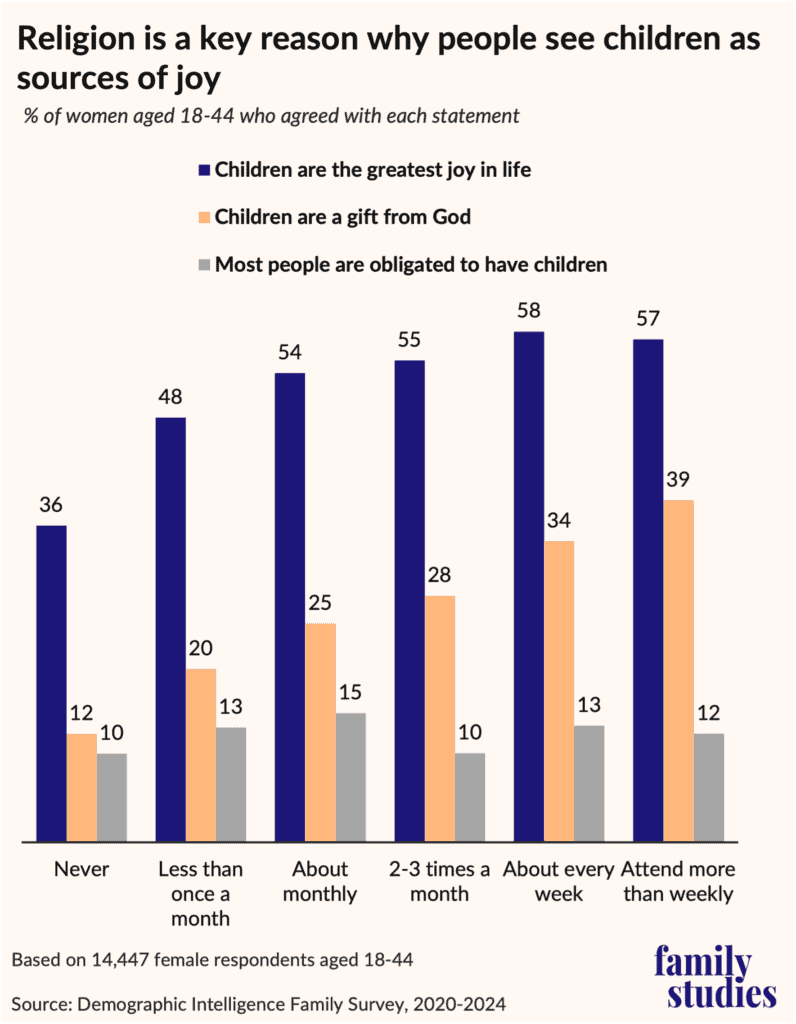
What is more, Americans who take their faith seriously, the great majority of whom are Christians, tend to report children being a joy and divine blessing above those with no or nominal faith, as demonstrated here.

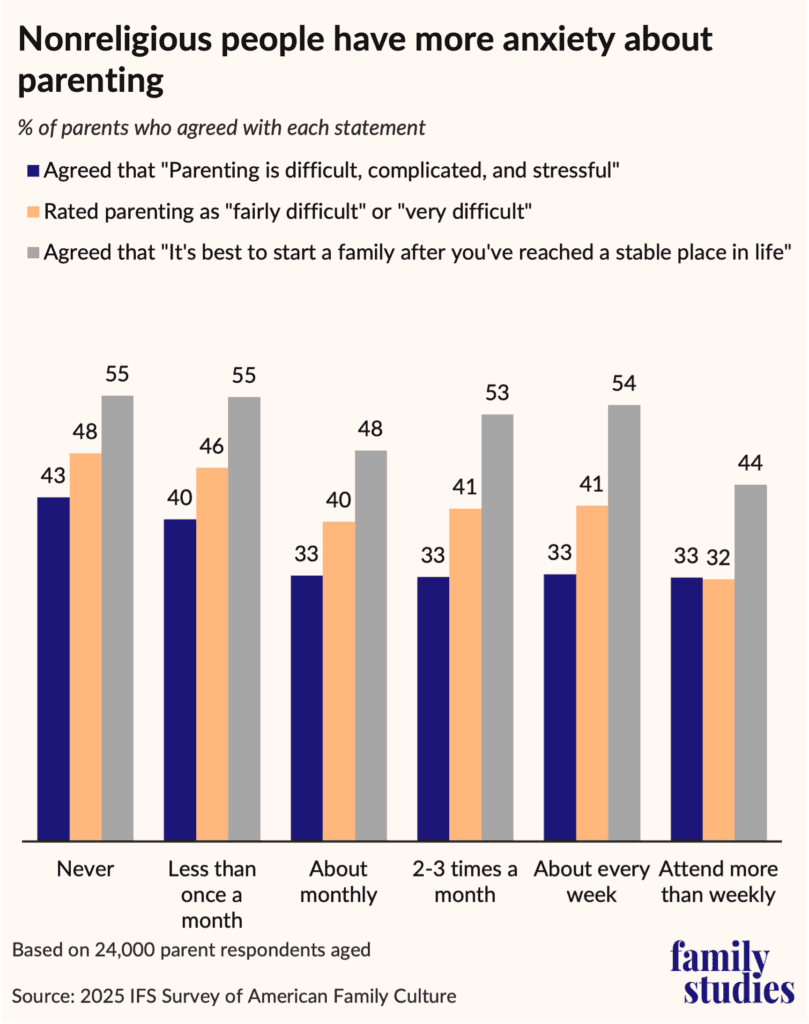
And non-believing people have greater anxiety about parenting and are more inclined to delay the decision to become parents, thus driving depopulation.

Stone documents how people who value children are more likely to have and enjoy raising children. This has historically been true of Christians, because as historians have explained, it was Christianity that established the innocence of childhood and the dogged protection of children. This was not widely true before the arrival of Christianity and its influential spread across the globe.

Speaking of the ennobling power of marriage, Stone rightfully concludes, “The reality is that love for spouse and the children you make together are what actually motivate fertility, not phallus-worshipping recklessness.”

Marriage is what has the best shot at boosting global fertility. It is the premier baby-making institution, and Christianity uniquely informs that fact.

Related articles and resources: 

The Pressing Need to Fix Global Fertility Decline and How to Do It

Married Mothers and Fathers Are Happiest According to Gold-Standard General Social Survey

New Family Study Shows Importance of Married Parenting

Is Inflation Driving Fertility’s Decline?

American Deaths to Exceed Births Faster Than Expected, CBO Reports

U.S. Fertility Rate Falls to Lowest on Record – Again

Global Population Has Passed ‘Peak Child’ – an Ominous Milestone

Why Americans Over and Under 50 Say They Don’t Have Kids

Death of the West? U.S. Fertility Rate Falls to Record Low.

Discarding Genesis 1, U.S. Population Set to Decline This Century Amid World Population Collapse

The Importance of God’s Design for Marriage and Family

New Report Gives Update on Family Formation and Child Well-Being
Written by Glenn T. Stanton · Categorized: Culture · Tagged: birth rate, Fertility

Jan 30 2026

Is Inflation Driving Fertility’s Decline?

It has been well-documented that fertility is declining sharply in the United States and in most parts of the world.

In fact, the Congressional Budget Office recently reported that the U.S. fertility rate has declined so quickly, they advanced their projection of when deaths would outpace births in America by ten years over their 2024 projection. That year they projected this ominous milestone would happen in 2040. They now say births will drop lower than deaths in 2030. It will likely happen sooner as our current fertility trendline is dramatic.

Economists have been very interested in the question of why two-thirds of the world’s population now live in a country with below replacement fertility. What is driving this very concerning decline?

Is it simply because babies are just too expensive in a tightening economy? There is great debate over that question.

One celebrated economics paper recently explored the question, “Why is fertility so low in high income countries?” In fact, they point out fertility “has fallen in recent decades in almost all high-income countries.” They find this decline is not driven solely by increasing costs of living, but “conclude that the decline in fertility likely reflects a complex mix of changing norms around work, parenting, gender roles, and leisure.” To put it directly, they say fertility is declining in high income countries because of “shifting priorities, reducing the priority of parenthood.”

This is very concerning news, given the fundamental importance of parenthood to the present and future betterment of the world.

Unfortunately, there are seriously misleading messages from our government that the costs of raising a child today are beyond most people’s comprehension. But the empirical truth is that they are not. Mothers and fathers have been raising kids and successfully launching them out into the world on extremely little. Just ask your grandparents.

But a new economics paper from two emerging scholars from the University of Mississippi indicates rising costs and unexpected inflation are indeed having a negative impact on U.S. fertility. Writing for the Institute for Family Studies, these economists explain, “The main empirical result of our working paper shows that unexpected inflation had a negative and significant impact on the total fertility rate in the United States from 2004-2023.”

Their paper finds, “A one percentage point increase in unexpected inflation is expected to result in 3-5 fewer births per 1,000 reproductive-age women.”

This is not insignificant. But we must note, it does not mean that these increases make having children unfordable. It just means that it makes people increasingly believe that a child is unaffordable. Much of this has to do with the “shifting priorities” highlighted in the first paper noted above.

And interestingly, these University of Mississippi scholars find men and women respond differently to the challenges of rising prices when it comes to the thought of having children. Youth plays a factor as well. “Our results suggest that young women are mostly responsive to unexpected inflation.”

These scholars conclude their “findings are consistent with the argument that substantial increases in unexpected inflation could prompt households to postpone their childbearing decisions, leading to a reduction in fertility rate.”

These findings leave us with a challenge. We can let fear of an uncertain economic future prevent young adults from engaging in one of life’s most rewarding and essential human activities. Or we can remind young people that having children and starting a family is always an act of sacrifice and some struggle, but is the only way toward a growing human future. We must remind them that they came from parents and grandparents who had very slim resources starting out, and it was scary, but it all worked out well for the most part. After all, these adult children would not exist today without this sacrifice.

God’s command to go forth and be fruitful is still very much in effect, and the age-old problem of rising prices has not put it on hold.

Related articles and resources: 

American Deaths to Exceed Births Faster Than Expected, CBO Reports

U.S. Fertility Rate Falls to Lowest on Record – Again

Global Population Has Passed ‘Peak Child’ – an Ominous Milestone

Why Americans Over and Under 50 Say They Don’t Have Kids

Death of the West? U.S. Fertility Rate Falls to Record Low.

China’s Population Drops by 2 Million in 2023 Due to Record Low Birth Rate

Discarding Genesis 1, U.S. Population Set to Decline This Century Amid World Population Collapse

The Importance of God’s Design for Marriage and Family

New Report Gives Update on Family Formation and Child Well-Being
Written by Glenn T. Stanton · Categorized: Family · Tagged: birth rate, Fertility

  • Page 1
  • Page 2
  • Go to Next Page »

Privacy Policy and Terms of Use | Privacy Policy and Terms of Use | © 2026 Focus on the Family. All rights reserved.

  • Cookie Policy