
• Skip to main content
Daily Citizen
  • Subscribe
  • Categories
    • Culture
    • Life
    • Religious Freedom
    • Sexuality
  • Parenting Resources
    • LGBT Pride
    • Homosexuality
    • Sexuality/Marriage
    • Transgender
  • About
    • Contributors
    • Contact
  • Donate

human trafficking

Nov 03 2025

‘Still Hope’ Movie Tells Story of Hope and Healing After Horrors of Sex Trafficking

WATCH THE TRAILER HERE

Mark your calendars: On February 5-9, theaters across the nation will screen Still Hope — a film seeking to raise awareness about sex trafficking and celebrate the hope and healing victims can find in recovery.  

The movie follows 16-year-old Hope, who is trapped in sex trafficking by a person she thought was a friend. After years of abuse, Hope is rescued and returned to her loving family. The film focuses on her journey toward healing, forgiveness and freedom from her trauma.

Hope’s story is based on the experiences of real victims of sex trafficking who sought help at the Pure Hope Foundation, a nonprofit that offers therapy, education and other resources to survivors seeking to start independent lives.

“The powerful story of these women, portrayed through the character of Hope, shows that healing and forgiveness are possible,” Still Hope director Richie Johns describes the film’s inspiration.

“Our prayer is that Still Hope will give a voice and platform to the courageous individuals who have personally walked this journey and become a rallying cry for those who are boldly with them.”

Johns’ faith-based production company, Studio 523, partnered with Pixels of Hope to bring Still Hope to life. Ray Nutt, CEO of the film’s distributor, Fathom Entertainment, calls the project “one of the most powerful and provocative movies we have ever been associated with.”

Kathrine Lee, co-founder and CEO of the Pure Hope Foundation, praises the movie’s focus on the protagonist’s winding road to restoration.

“Unlike other films, [Still Hope] isn’t just about the rescue piece, but also about redemption, resilience and walking alongside survivors on their journey to healing,” she explains.

“It highlights the bravery of women and men who have endured sex trafficking and the courageous work of recovery. “

Still Hope addresses a moral concern of global significance. The grotesque human trafficking industry generates tens of billions of dollars each year for organized criminal organizations.

As many as 50 million men, women and children are trafficked globally on any given day.

Confirmed instances of child trafficking increased by 30% between 2019 and 2022, according to last year’s United Nations’ report on Global Trafficking in Persons. Experts attribute the dramatic increase, in part, to illegal immigration.

Unprecedented numbers of unaccompanied minors have tried to enter North American and Western European countries illegally in the past five years. Bad actors frequently traffic children in this situation for slave labor and sex.

Human trafficking in the United States mimics global trends.

Last year, officials identified nearly 22,000 confirmed victims of human trafficking through the National Human Trafficking Hotline alone.

In 2023, The New York Times published an exposé on child labor in which dozens of caseworkers at the Department of Health and Human Services “independently estimated that about two-thirds of all unaccompanied migrant children ended up working full time [while awaiting immigration trial].”

Between 2021 and 2023, the department was unable to contact roughly 85,000 unaccompanied migrant children placed with American sponsors, per the Times. The outlet further documented evidence of children as young as 12 working jobs in slaughterhouses, industrial bakeries, construction, roofing and commercial laundries.

Between 2019 and 2023, more than 32,000 unaccompanied minors in U.S. custody failed to appear for their immigration court dates. U.S. Immigration and Customs Enforcement do not know where they are or if they are safe.

The makers of Still Hope endeavor not only to raise awareness about human trafficking, but “encourage viewers to join arms with advocates in the fight against trafficking.”

Tickets for Still Hope will be available starting December 12. You can purchase them online with Fathom Entertainment or at participating theaters nationwide.

The creators recommend parents treat Still Hope as a PG-13 film.

You can read Plugged In’s review of Still Hope upon its release.

Additional Articles and Resources

Counseling Consultation & Referrals

National Center for Missing and Exploited Children (NCMEC) 

NCMEC’s 24/7 call center number: 1-800-THE-LOST (843-5678)

Protecting Your Child From Sexual Abuse

Understanding the Scope of Human Trafficking

Human Trafficking: What You Need to Know

Talking to Your Kids About Sexual Abuse

How to Prevent Sexual Exploitation of Your Child

Reclaiming Hope: Resources and Mentoring for Sex Trafficking Survivors

Crackdown on Illegal Immigration Protects Children

American immigration System loses Contact with Tens of Thousands of Migrant Children

Tom Homan: We Have the Most Secure Border in American History

Over 30 Children Recovered, Trafficking Operations Busted in ‘Operation Lightning Bug’

DOJ Announces Rescue of 10 Children from Trafficking: ‘There is No Greater Evil’

FBI Announces ‘Huge Takedown’ of Child Abusers in Texas, Rescue of 109 Children

DOJ Announces Rescue of 115 Children in ‘Operation Restore Justice’
Written by Emily Washburn · Categorized: Culture · Tagged: human trafficking, Still Hope

Jun 20 2025

Crackdown on Illegal Immigration Protects Children

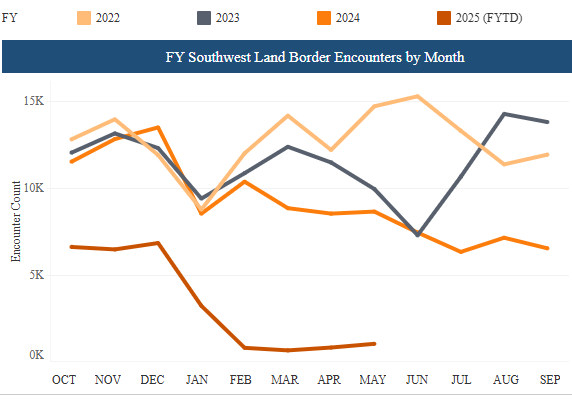
Customs and Border Protection (CBP) agents released no illegal immigrants into America last month — an exponential decrease from the 62,000 released in May 2024.

This astounding discrepancy reflects the government’s broader crack down on illegal migration through America’s southern border. CBP agents encountered less than 12,500 illegal migrants this May, a 93% drop from 180,000 encounters in May 2024.

Migrant children arguably benefit most from tougher immigration enforcement. Child traffickers operated with unprecedented impunity between 2019 and 2024, taking advantage of America’s overwhelmed border to exploit and enslave vulnerable kids.

Immigration and Customs Enforcement (ICE) released 448,000 unaccompanied migrant children into America between 2019 and 2023 to await immigration trial. The federal government lost between 7% (32,000) and 65% (291,000) of them, according to a Department of Homeland Security (DHS) report released last year.

ICE and the Department of Health and Human Services (HHS) get just two opportunities to check in with every unaccompanied migrant child released into the country — a phone call one month after HHS places them with an American sponsor and the child’s immigration court hearing.

An estimated 149,000 kids missed their verbal check-ins between 2019 and 2023, and more than 32,000 missed their court dates. According to DHS, ICE had no “formal policy or process” to track missing children down.

Another 291,000 had yet to be assigned court dates at all; they could be anywhere, for all the government knows.

Per DHS’ report:

[Unaccompanied minors that do not appear in court] are considered at higher risk for trafficking, exploitation and forced labor.

Virtually no one enters America illegally without paying, or being trafficked by, crime rings. A New York Times exposé from 2022 explains:

Migrant smuggling on the U.S. southern border has evolved over the past 10 years from a scattered network of freelance “coyotes” into a multi-billion-dollar international business controlled by organized crime.

Homeland Security Investigations estimates organized crime made $13 billion dollars off trafficking human beings across America’s southern border in 2022 alone. A study from the Coalition Against Trafficking in Women found 60% of unaccompanied migrant children are trafficked by cartels and smugglers for pornography and drug transportation.

Others must pay cartels controlling the border exorbitant prices to enter the U.S. Those who can’t pay must work off their debts in a form of slavery known as debt-bondage.

The few children who manage to escape gang violence and enslavement may still find themselves in debt to their American sponsors. In a Times investigation from 2023, an HHS worker admitted some American hosts illegally charge unaccompanied migrant children rent in exchange for a place to stay.

HHS couldn’t investigate complaints, she explained, because of the overwhelming number of children in its custody.

The investigation found children as young as 12 years old working full-time, dangerous jobs in construction, roofing, commercial laundries, industrial bakeries and slaughterhouses to pay their sponsors and smugglers.

More than 60 anonymous HHS workers interviewed by the Times estimated two-thirds of the migrant children in HHS’ custody ended up with full-time jobs.

CBP agents encountered just 6,575 unaccompanied migrant children trying to enter the country illegally between February and May 2025 — an 85% decrease from last year’s 44,840.

Some viciously criticize the government for detaining children at the southern border. But the data suggests the best thing America can do for these vulnerable kids is disincentivize illegal immigration and keep underage detainees in custody where they cannot be preyed upon.

Additional Articles and Resources

American immigration System Loses Contact with Tens of Thousands of Migrant Children

Trump Sees Lowest Border Numbers in History: ‘The Invasion is Over’

Violent Gang Takes Advantage of American Immigration Policy

Politics is Putting Children at Risk on the Southern Border

Trump’s Border Czar Explains Child Trafficking Under Biden Administration

It’s Compassionate to Oppose Illegal immigration. Here’s Why.

Talking to Your Kids About Illegal Immigration

My Rescue From Human Trafficking to New Life in Christ

Identifying the Signs of Human Trafficking

Written by Emily Washburn · Categorized: Culture · Tagged: human trafficking, immigration

Privacy Policy and Terms of Use | Privacy Policy and Terms of Use | © 2025 Focus on the Family. All rights reserved.

  • Cookie Policy