Blockbuster Supreme Court Ruling: Girls Sports Are for Girls
In a blockbuster decision, the U.S. Supreme Court ruled 6-3 that states are allowed to protect girls and women’s sports with laws that keep sports separate based on biology.
It’s a tremendous victory for common sense and for girls and women who want to compete on a level playing field – without boys and men who claim to be female.
The opinion combined two cases, State of West Virginia v. BPJ and Little v. Hecox, in which “transgender”-identified male athletes challenged West Virginia and Idaho laws protecting girls and women’s sports. The decision upholds 27 other states with laws or regulations safeguarding girls and women’s athletic opportunities, many of which have been challenged by males who claim to be female.
The Supreme Court held that Title IX allows states to protect girls sports from male athletes:
The opinion made clear that “sex” in Title IX, the 1972 federal law that prohibits sex-based discrimination in education programs, “cannot plausibly be interpreted to refer to anything other than biological sex.” The Court added:
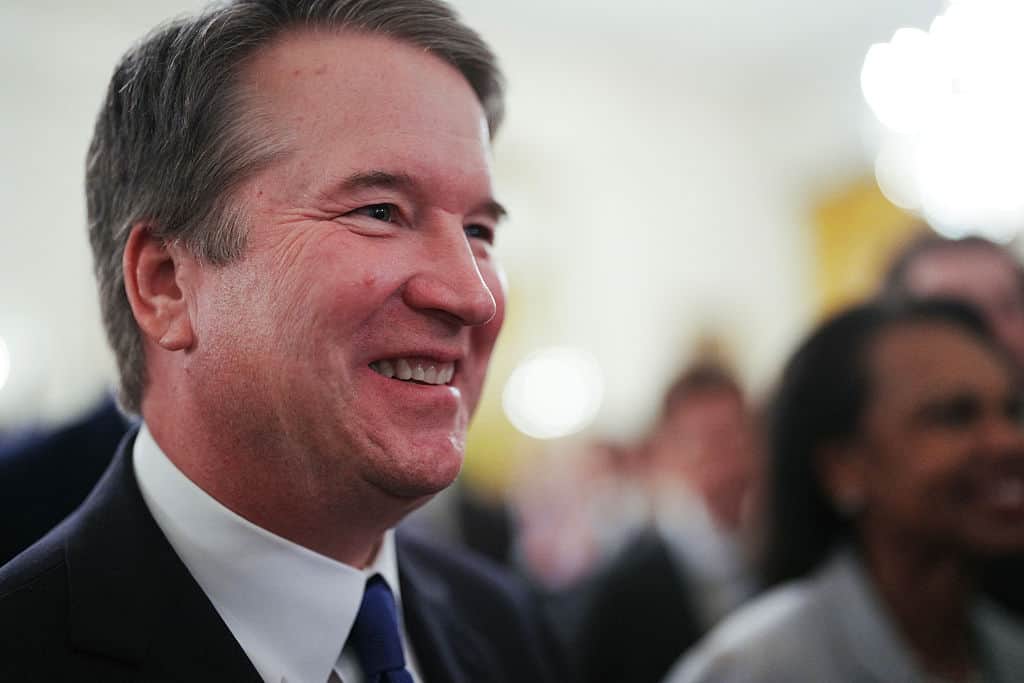
Justice Brett Kavanaugh delivered the opinion for the Court, joined by Chief Justice John Roberts and Justices Clarence Thomas, Samuel Alito, Neil Gorsuch and Amy Coney Barrett. Justices Sonia Sotomayor, Elena Kagan and Ketanji Brown Jackson dissented from the majority opinion.
In a press release, Focus on the Family President Jim Daly praised the decision:
Justice Kavanaugh began his opinion by explaining the impact of Title IX for girls and women:
He noted there are “enduring” and “inherent physical differences relevant to athletic performance,” including, “height, weight, strength, speed, endurance, and jumping ability.” Kavanaugh added:
The Court also considered the transgender-identified male athletes’ contention that West Virginia and Idaho’s laws were unconstitutional, violating the equal protection clause of the 14th Amendment by discriminating against “transgender individuals – specifically, biological males who identify as female.”
The Court rejected this argument, with Kavanaugh writing:
Idaho was the first state in the nation to protect girls sports from male athletes, passing the Fairness in Women’s Sports Act in 2020.
Just two weeks later, the American Civil Liberties Union, which used to support women’s rights in education, filed a lawsuit challenging the Act on behalf of Lindsay Hecox, who was born male but lives as if he were a woman. Hecox wanted to run with the ladies on Boise State University’s cross-country team.
A federal district court halted enforcement of the Fairness Act, and the U.S. Court of Appeals for the 9th Circuit upheld that ruling.
In 2021, West Virginia was the fifth state to pass a law protecting female athletics. The Sports Act, HB 3293, clarified that male and female sports teams in public secondary schools and colleges must be based on biological sex.
Again, the law was challenged in court by the ACLU along with Lambda Legal, another radical LGBT activist group.
The complaint was filed on behalf of Becky Pepper-Jackson (BPJ) and his mother, Heather Jackson, who is raising the now 15-year-old boy as if he were a girl. A federal district judge ruled in favor of the state law, but that sensible ruling was overturned by the U.S Court of Appeals for the 4th Circuit.
Alliance Defending Freedom (ADF), a Christian legal aid nonprofit, intervened in the lawsuit and served as co-counsel with West Virginia Attorney General Patrick Morrisey.
ADF CEO, President, and Chief Counsel Kristen Waggoner applauded the Supreme Court’s decision, saying:
In April 2025, the U.S. Departments of Justice and Education launched a Title IX Special Investigations Team to investigate schools and states that allow boys in girls sports. Since then, the DOJ has filed lawsuits against California, Maine and Minnesota for violating Title IX, and the Special Investigations Team has initiated dozens of investigations into school districts for discriminating against girls and women.
While the Court’s decision does not force these states to change their policies, it does provide ammunition for the federal government as it investigates and challenges these states.
It also lends support to girls and women who filed lawsuits against schools and states that allowed boys to compete against them, and it could open the floodgates for even more lawsuits.
The Court has ruled the 14th Amendment’s equal protection clause and Title IX permit states to enact laws protecting girls sports. In the future, the Court may consider whether Title IX requires states to do so.
The Daily Citizen has been reporting on the problem of boys in girls sports since we first began publishing. We are thankful for this major decision and will continue to keep our readers informed about this issue – along with others that affect faith, families and freedom.
Related articles and resources:
ACLU Lawsuit Challenges Idaho Law Protecting Girl’s and Women’s Sports
Biologically Male Collegiate Athlete Wins Female Runner of the Week Award
Biologically Male Runner Decides to Compete as a Woman in College Cross Country
Collegiate Women Athletes File Motion to Keep Biological Males Out of Women’s Sports in Idaho
Meet Three Heroes Working to Protect Colorado Children
Middle School Girls Who Protested ‘Trans’ Athlete Are Banned From Future Competition
Top 5 Moments From Supreme Court Arguments Over Girls Sports
U.S. Supreme Court Takes Up Cases on Boys in Girls Sports
West Virginia Passes ‘Save Girls Sports’ Act
Yes, Girls Care When Boys Take Their Trophies
Photo from Getty Images.


ABOUT THE AUTHOR